How to Choose the Right Wall Art Size
Choosing the right wall art size for your space is one of the most important decisions when styling your home, office, or commercial interior. Understanding how to choose wall art size for your space ensures your artwork feels balanced, proportional, and visually connected rather than undersized, oversized, or disconnected from the room.
The right wall art size has the power to transform a space — anchoring furniture, guiding visual flow, and creating a strong focal point. Even the most beautiful artwork can feel ineffective if the scale is wrong.
This wall art size guide will help you confidently choose the right size for your interior, whether you’re decorating a living room, bedroom, office, or large feature wall.
Why Choosing the Right Wall Art Size Matters
Choosing the right wall art size for your space is about more than simply filling a wall — it’s about creating balance, proportion, and visual harmony within a room.
In Australian homes and interiors, wall art often reflects natural landscapes, coastal environments, and open spaces. Because of this, scale plays a crucial role in how the artwork feels once installed.
The same image can have a completely different impact depending on its size. A large-scale piece can anchor a living room and create a strong focal point, while a smaller print may feel subtle and understated in a more intimate space.
This is why understanding how to choose wall art size for your space is so important. The right sizing ensures your artwork feels intentional, connected to your furniture, and in harmony with your overall interior design.
In this guide, we break down the key principles of wall art sizing so you can confidently choose the right dimensions for your home, office, or commercial space.
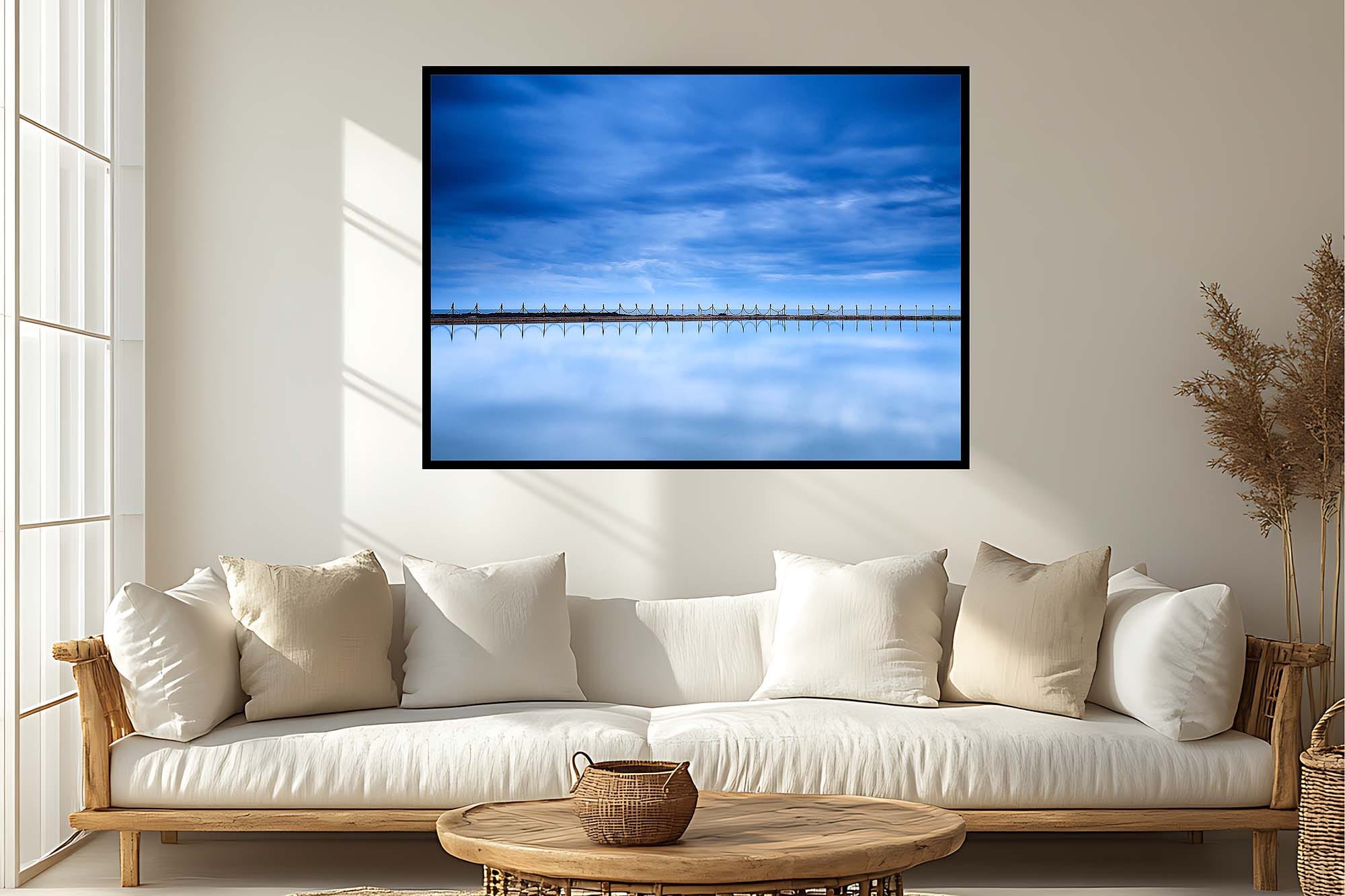
Quick Guide: How to Choose Wall Art Size for Your Space
Choosing the right wall art size for your space is essential for creating balance, proportion, and visual impact in any room. The right sizing ensures your artwork feels intentional and integrated, rather than too small or disconnected from the surrounding интерьер.
✔ Artwork should be 60–75% of furniture width
This is the most important interior design rule. It ensures your wall art is proportionally balanced with sofas, beds, or consoles and creates a strong visual connection between furniture and artwork.
✔ Larger pieces create stronger focal points
Oversized or properly scaled artwork naturally draws the eye and anchors a space. In modern interiors and open-plan living areas, larger wall art often feels more cohesive and impactful than multiple small pieces.
✔ Maintain proper spacing above furniture
Keep approximately 15–25cm between the top of furniture and the bottom of your artwork. This spacing helps the piece feel connected while still allowing it to “breathe” within the space.
✔ Always measure before purchasing
One of the most common mistakes is estimating size visually. Measuring your wall and furniture ensures you choose artwork that fits correctly and avoids undersized prints that can feel lost in the space.
✔ Match size with room scale and function
A small study or bedroom may suit more modest sizing, while living rooms and feature walls can handle much larger statement pieces. The goal is always visual harmony between the artwork, the furniture, and the overall room scale.
How to Choose the Perfect Wall Art Print
Choosing the right wall art print size for your space becomes much easier when you focus on three key elements: interior style, colour direction, and emotional connection.
1. Match Your Interior Style
Start by aligning your artwork with the overall style of your home or space. This creates a cohesive, intentional look rather than something that feels disconnected.
- Coastal homes
Soft, natural landscape photography with relaxed tones - Modern interiors
Bold acrylic prints or minimal, clean compositions - Classic interiors
Framed fine art photography with a timeless, refined feel
👉 Tip: Matching your artwork to your interior style creates immediate visual harmony.
2. Choose the Right Colour Direction
Colour plays a major role in how your wall art interacts with the room and surrounding décor.
- Blend with your space
Creates a calm, cohesive, and balanced atmosphere - Contrast your space
Creates a bold focal point and stronger visual impact
👉 Tip: For feature walls, contrast often delivers the most striking result.
3. Focus on Emotional Connection
The most impactful wall art isn’t just decorative — it’s personal and meaningful.
Choose artwork that:
- Reminds you of a place you love
- Evokes a feeling or memory
- Reflects your lifestyle or personality
👉 Tip: Emotional connection will always outlast trends or purely decorative choices.
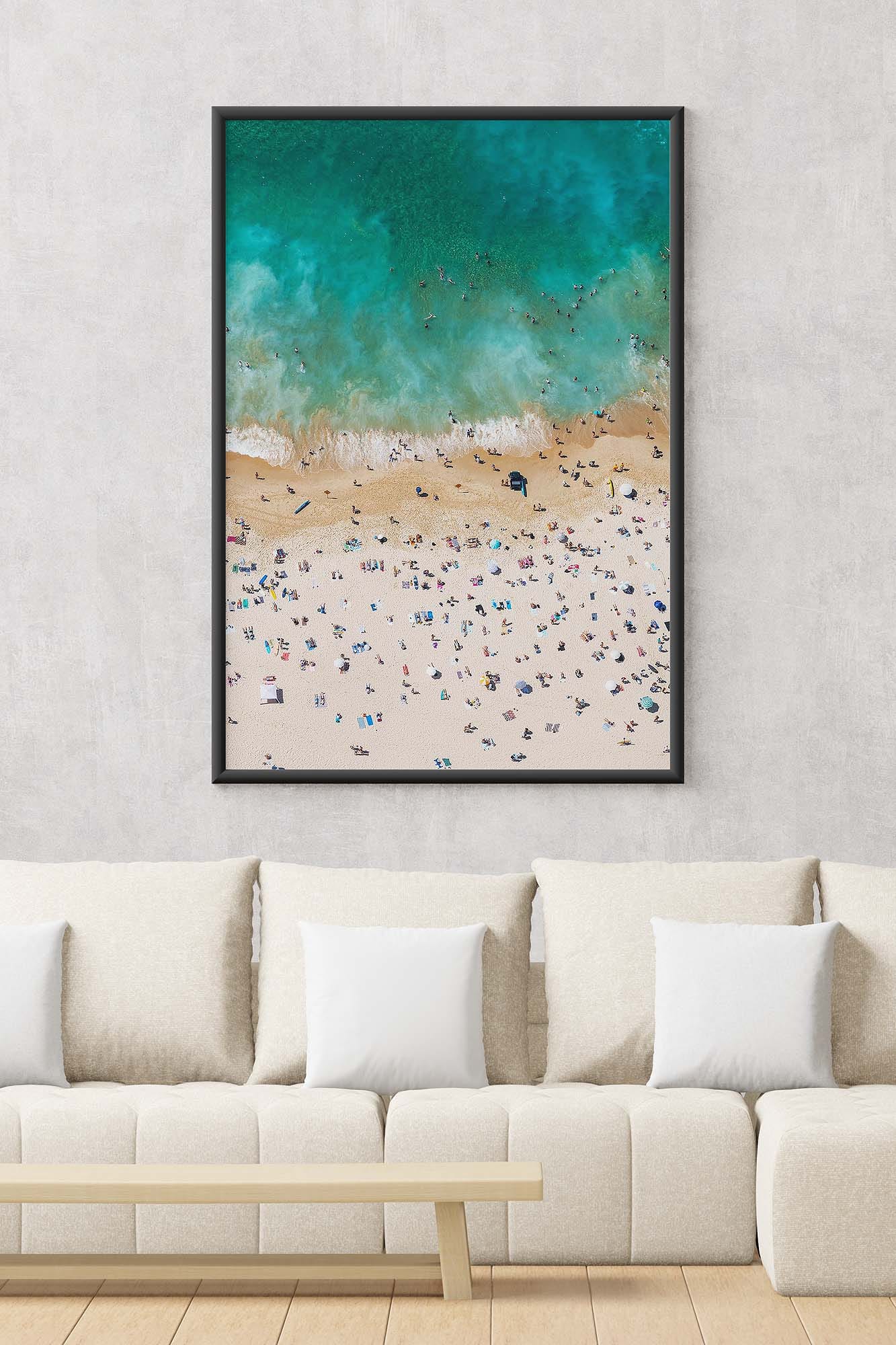
The best wall art size for your space is not just about measurement — it’s about how the artwork connects emotionally and visually within the room.
How to Choose Wall Art Size for Your Space
Choosing the right wall art size is one of the most important factors in creating a balanced and visually impactful space. Even the most beautiful artwork can feel underwhelming if it’s too small or poorly proportioned for the wall. A well-sized print anchors the room, complements surrounding furniture, and creates a strong focal point that elevates the entire space.
One of the most common mistakes is choosing artwork that is too small. Small prints often feel disconnected and lost, while larger wall art creates presence, confidence, and visual balance-especially in modern homes and open-plan living spaces where scale is essential.
The Simple Designer Rule for Wall Art Sizing
To achieve the right proportion, use this widely accepted interior design guideline:
👉 Artwork should be 60–75% of the width of the furniture beneath it
This ensures the artwork feels connected to the space rather than floating above it.
Example guide:
- 2.0m sofa → 120–150cm artwork
- 2.4m sofa → 150–180cm artwork
- Console table (1.5m) → 90–110cm artwork
Wall Art Size Guide by Room
Living Room Wall Art Sizes
Living rooms are ideal for larger statement pieces that anchor the seating area.
- Standard sofa → 120–150cm
- Large sofa → 150–180cm
- Feature wall → 180–240cm panoramic artwork
👉 Larger artwork creates a stronger focal point and enhances open-plan spaces.
For a more detailed breakdown, read our guide on What Size Wall Art for a Living Room.
Wall Art for Small Spaces & Apartments
Smaller rooms still require proper scale to feel balanced.
- Compact spaces → 100–120cm
- Medium living areas → 120–140cm
👉 Landscape photography can help create a sense of depth and openness.
Large Feature Walls (No Furniture)
When there’s no furniture to anchor the space, artwork size becomes even more important.
- Minimum impact → 150cm
- Strong statement → 180cm
- Hero piece → 200–240cm+
👉 Larger pieces prevent the wall from feeling empty or underwhelming.
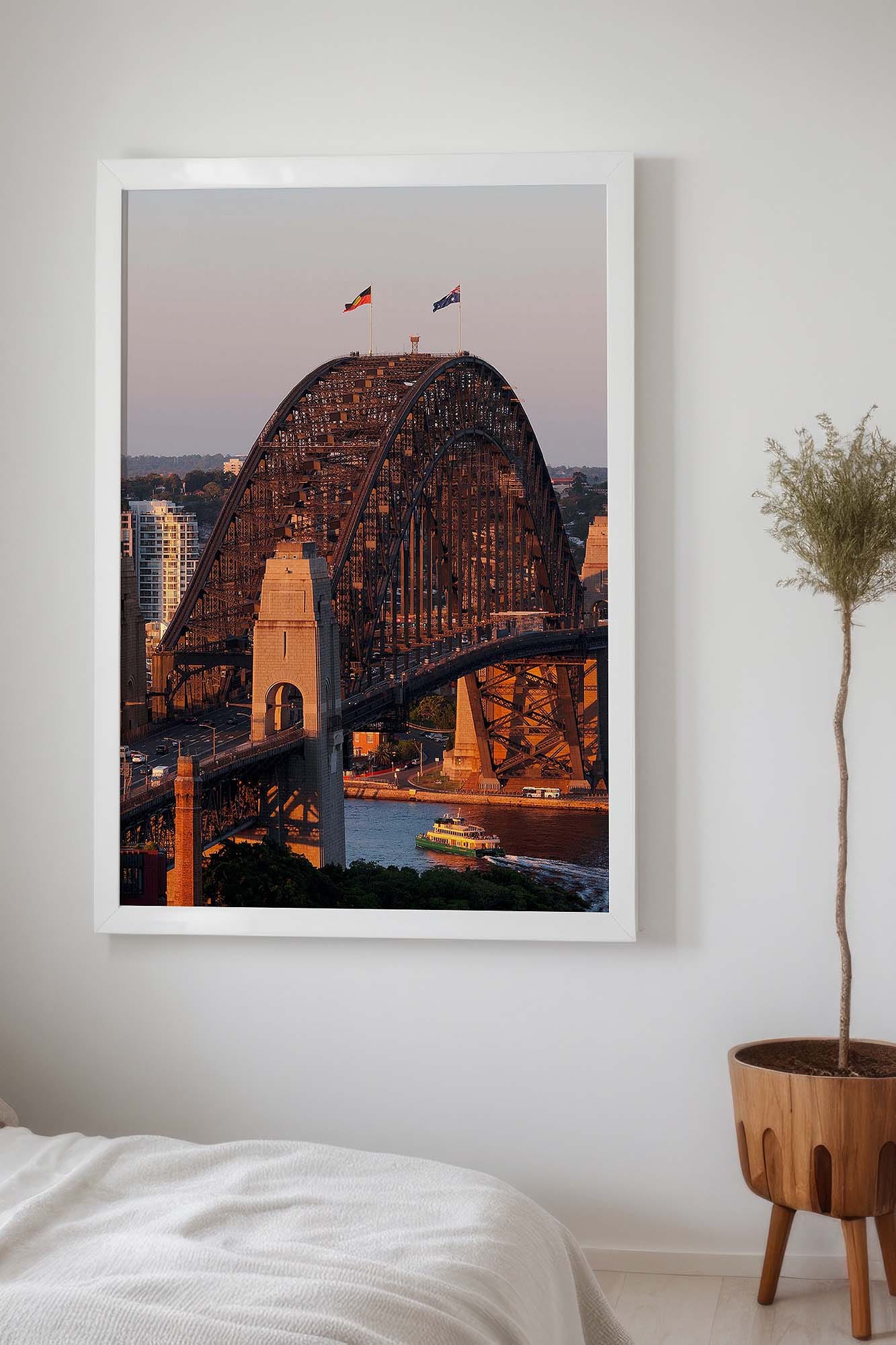
How High Should You Hang Wall Art?
Correct placement is just as important as choosing the right wall art size for your space, because even perfectly sized artwork can feel “off” if it is positioned incorrectly.
The most widely used interior design guideline is to hang artwork so the centre point sits at eye level, typically around 145–150cm from the floor. This creates a natural viewing height and ensures the artwork feels comfortably integrated into the room rather than floating too high or sitting too low.
When placing wall art above furniture such as sofas, beds, or consoles, spacing becomes just as important as height. A good rule is to leave 15–25cm between the top of the furniture and the bottom of the artwork. This visual connection helps the artwork feel anchored to the furniture piece, creating balance and cohesion within the space.
Getting this relationship right is a key part of understanding how to choose wall art size for your space, because size and placement work together — one cannot compensate for the other.
👉 Hanging artwork too high is one of the most common interior styling mistakes, and it often results in a space feeling disconnected, unbalanced, or unfinished.
For larger feature walls or oversized pieces, maintaining proportion and alignment becomes even more important, as scale has a stronger visual impact across the entire room.
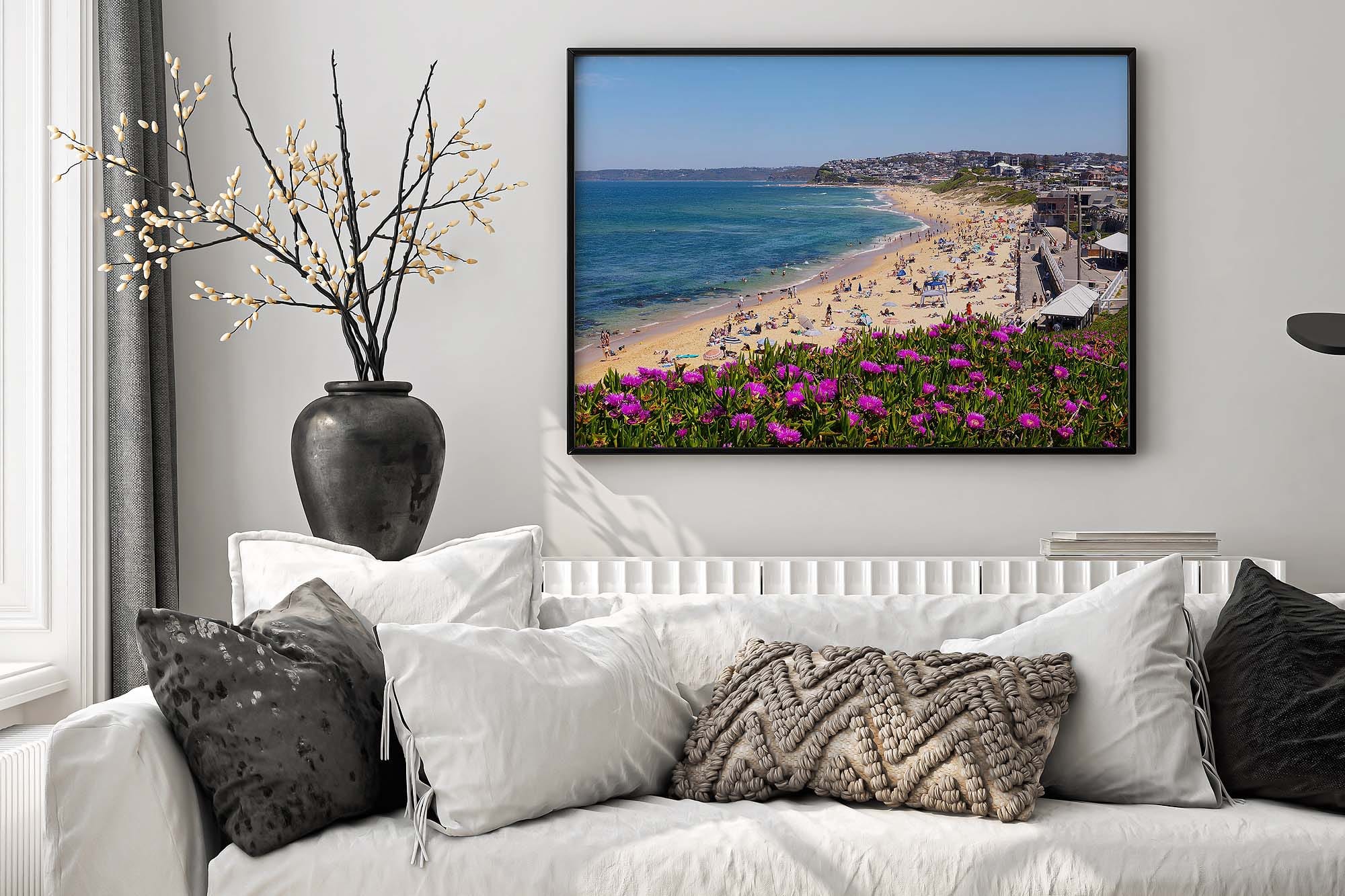
Wall Art Sizing System (Furniture-Based Guide)
Choosing the right wall art size for your space becomes significantly easier when you scale your artwork in proportion to the furniture it sits above. This is a fundamental interior design principle and one of the most effective ways to create a space that feels balanced, cohesive, and professionally styled.
When the scale is correct, your artwork feels visually anchored to the room — not floating, not overcrowded, and never out of proportion. It works in harmony with your furniture, wall dimensions, and overall layout, creating a clear focal point and a more intentional interior.
This wall art size guide is designed to help you understand how to choose wall art size for your space using real-world furniture measurements. Whether you’re styling a living room, bedroom, or large feature wall, these guidelines remove the guesswork and give you the confidence to select artwork that enhances your space rather than competing with it.
Wall Art Sizes for Sofas (Living Rooms)
Selecting the right wall art size for living rooms is all about proportion. Matching artwork to your sofa width ensures a professionally styled space that feels balanced, cohesive, and intentionally designed.
| Sofa Size | Sofa Width | Square / Vertical Print | Horizontal Print |
|---|---|---|---|
| Armchair | 90–100 cm | 60–80 cm | 80–100 cm |
| 2 Seat Lounge | 120–150 cm | 80 cm | 140 cm |
| 2.5 Seat Lounge | 172 cm | 100 cm | 160 cm |
| 3 Seat Lounge | 180–220 cm | 100 cm | 180 cm |
| 4 Seat Lounge | 240 cm | 120 cm | 200 cm |
👉 Designer Tip: For the best visual impact, choose artwork that is approximately 60–75% of the sofa width. This creates the ideal balance—large enough to anchor the space without overwhelming the furniture.
Wall Art Size Guide for Beds (Australian Homes)
Choosing the right wall art size for bedrooms is simple when you match your artwork to the width of your bed. This ensures your space feels balanced, styled, and professionally designed rather than under- or over-scaled.
| Bed Type | Bed Width | Square / Vertical Print | Horizontal Print |
|---|---|---|---|
| Single | 92 cm | 60 cm | 60 cm |
| King Single | 106 cm | 80 cm | 80 cm |
| Double | 138 cm | 80 cm | 120 cm |
| Queen | 153 cm | 100 cm | 140 cm |
| King | 183 cm | 100 cm | 160 cm |
👉 Designer Tip: For bedrooms, horizontal wall art above the bed creates natural symmetry, visually anchors the bed, and helps the room feel wider and more cohesive.
Common Mistakes When Choosing Wall Art Size
Avoiding a few key sizing mistakes can make the difference between a space that feels professionally styled and one that feels unfinished or unbalanced. Even beautiful artwork can lose its impact if the scale or placement is incorrect, which is why understanding proportion is essential when deciding how to choose wall art size for your space.
✔ Choosing artwork that is too small
This is the most common mistake in interior styling. Small pieces tend to “float” on large walls, making the space feel empty and underwhelming. In most modern interiors, especially above sofas or beds, undersized artwork fails to create the visual weight needed to anchor the room.
✔ Hanging art too high
Artwork placed too high disconnects it from the furniture and the rest of the room. It breaks visual flow and often makes ceilings feel lower and spaces feel less cohesive. Proper placement is just as important as size when creating balance.
✔ Ignoring furniture proportions
Wall art should always relate to what sits beneath it. If the scale between furniture and artwork is not considered, the result can feel mismatched or accidental rather than intentionally designed.
✔ Not measuring wall space properly
Relying on guesswork is one of the quickest ways to get sizing wrong. Without measuring both wall width and furniture dimensions, it becomes easy to choose artwork that either overwhelms the space or disappears into it.
✔ Using multiple small pieces instead of one strong focal point
While gallery walls can work in some settings, many spaces benefit more from a single, well-sized statement piece. A strong focal artwork often creates a cleaner, more modern, and more impactful result than several smaller prints competing for attention.
👉 When in doubt, always go slightly larger rather than smaller. Larger wall art creates better balance, stronger presence, and a more intentional design outcome—especially in contemporary Australian interiors where scale plays a major role in visual impact.
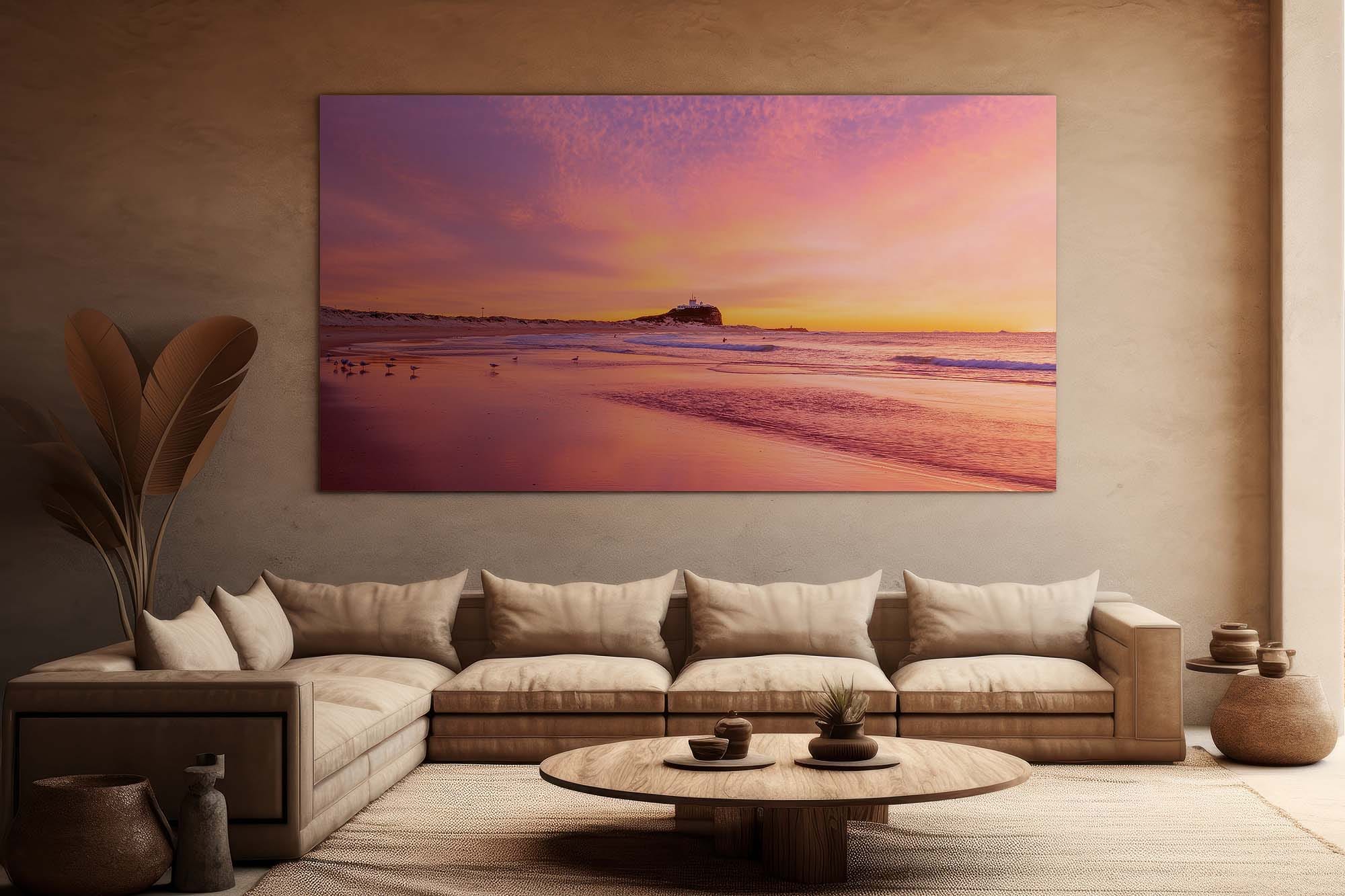
Explore Our Wall Art Prints Collection
Now that you understand how to choose wall art size for your space, you can confidently select artwork that feels balanced, intentional, and perfectly proportioned to your interior.
Explore our curated collection of fine art photography designed for Australian homes and interiors, with pieces available in a range of sizes to suit everything from small spaces to large feature walls.
Each artwork is created to help you achieve the right scale and visual impact within your room—so you can choose the ideal size to complement your furniture, wall space, and overall design style.
Browse the full collection to find the perfect piece that fits your space, enhances your interior, and brings your vision together.


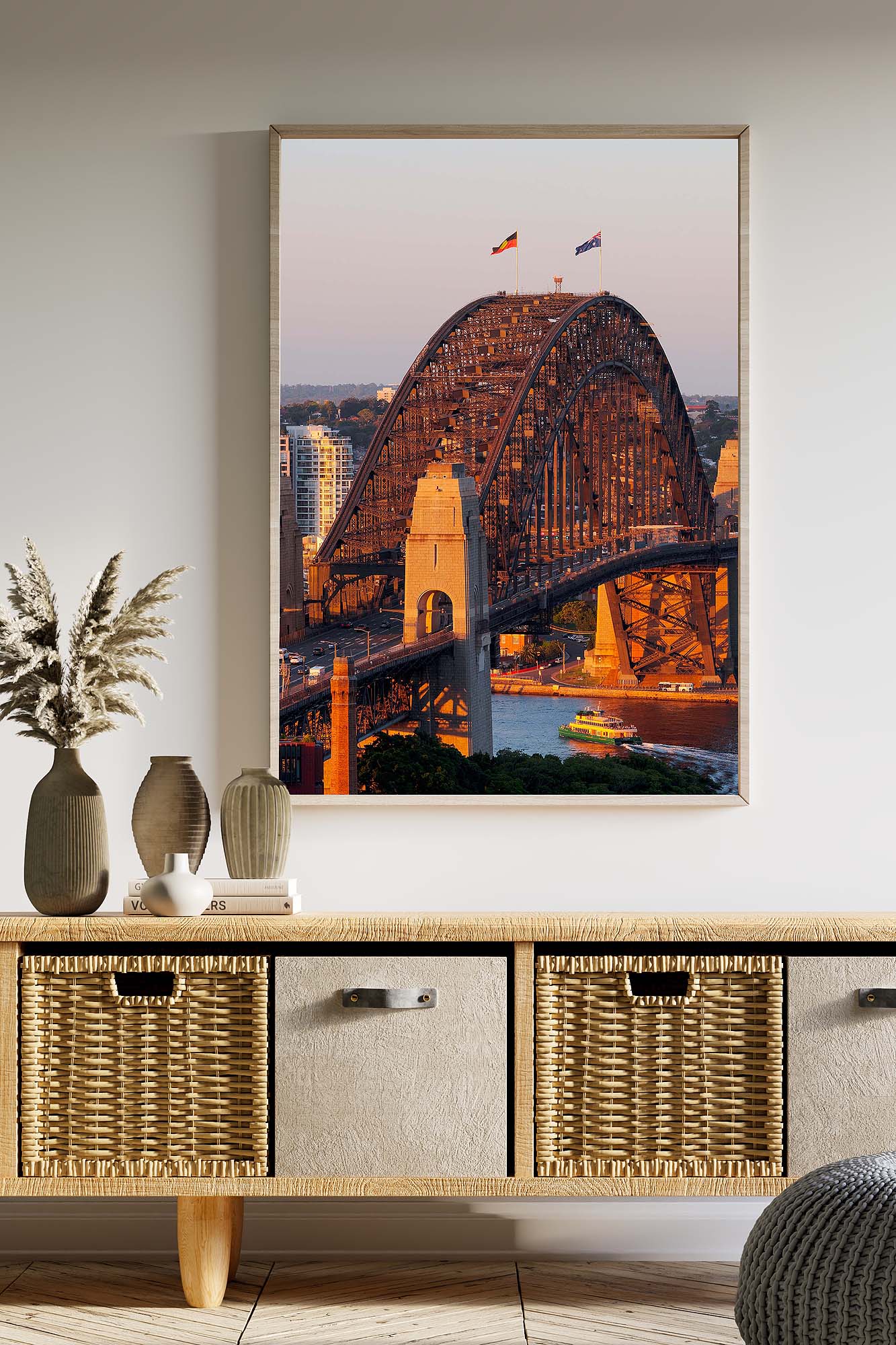
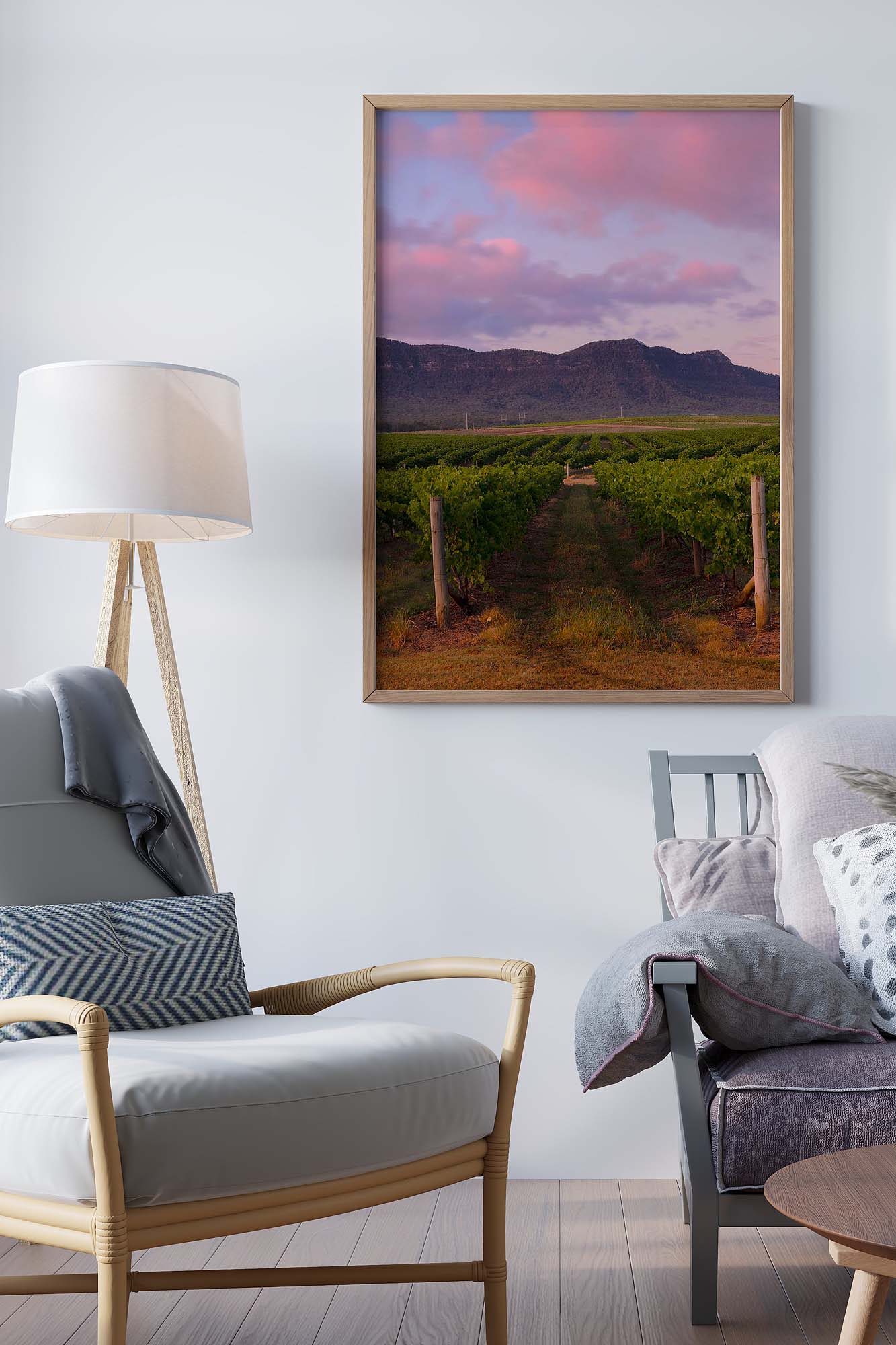


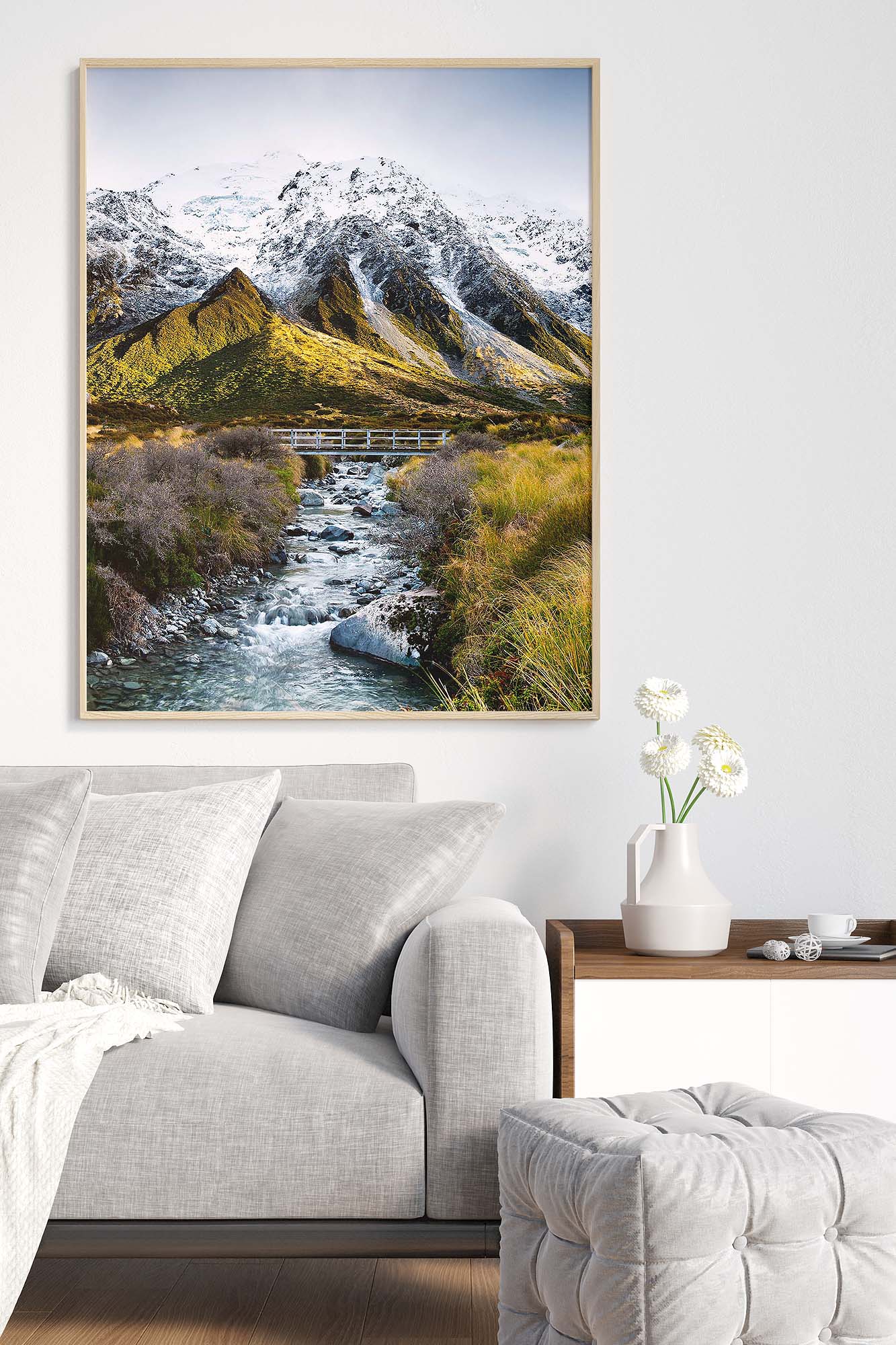
Frequently Asked Questions – Choosing the Wall Art Size for Your Space
What is the best wall art size for above a sofa?
The best wall art size for above a sofa is typically 60–75% of the sofa’s width. This ensures the artwork feels proportionate and visually connected to the furniture.
For example:
- 2m sofa → 120–150cm artwork
- 2.4m sofa → 150–180cm artwork
Choosing the right size is essential when learning how to choose wall art size for your space, as it creates balance and prevents the artwork from feeling too small or disconnected.
How do I choose the right wall art size for my room?
To choose the right wall art size for your space, consider three key factors:
- The width of the wall or furniture
- The scale of the room (small vs open-plan)
- The role of the artwork (feature piece vs subtle styling)
Larger rooms and feature walls generally require larger artwork to maintain visual impact, while smaller rooms still need proportionally sized pieces to avoid feeling empty or unbalanced.
Can wall art be too big?
Yes — but in most cases, artwork is more often too small rather than too large.
Oversized wall art can work extremely well when it is proportionate to the wall and furniture. Large pieces create strong focal points and are commonly used in modern interiors.
When in doubt, slightly larger artwork usually creates a more balanced and intentional result.
What size wall art works best for a bedroom?
For bedrooms, wall art is typically placed above the bed and should follow the same 60–75% width rule.
- Queen bed → 120–150cm artwork
- King bed → 140–160cm artwork
Horizontal artwork works best in bedrooms as it creates symmetry and helps anchor the bed within the space.
How high should wall art be hung?
Wall art should be hung so that the centre of the piece sits at eye level, around 145–150cm from the floor.
When placing above furniture:
- Leave 15–25cm between furniture and artwork
Correct placement is just as important as size when considering how to choose wall art size for your space.
What size wall art should I use for a large feature wall?
For large feature walls with no furniture:
- Minimum size → 150cm
- Strong visual impact → 180–240cm
- Statement piece → 240cm+
Larger artwork prevents empty wall space and creates a bold, intentional focal point within the room.
Does orientation affect wall art size?
Yes — orientation plays a key role when choosing wall art size for your space.
- Landscape → works best above wide furniture
- Portrait → suits narrow or vertical spaces
- Panoramic → ideal for large feature walls
Combining the correct size with the right orientation creates the most balanced and visually effective result.
Should wall art match furniture exactly?
No — wall art should not match furniture exactly, but it should be proportionate.
The goal is to create a visual relationship, not an exact match. Using the 60–75% rule ensures artwork complements the furniture without overpowering or disappearing.
What is the most common mistake when choosing wall art size?
The most common mistake is choosing artwork that is too small for the wall or furniture.
Undersized artwork can make a room feel incomplete and unbalanced. Proper sizing is one of the most important factors in creating a polished and professionally styled interior.