Best Walks in Newcastle
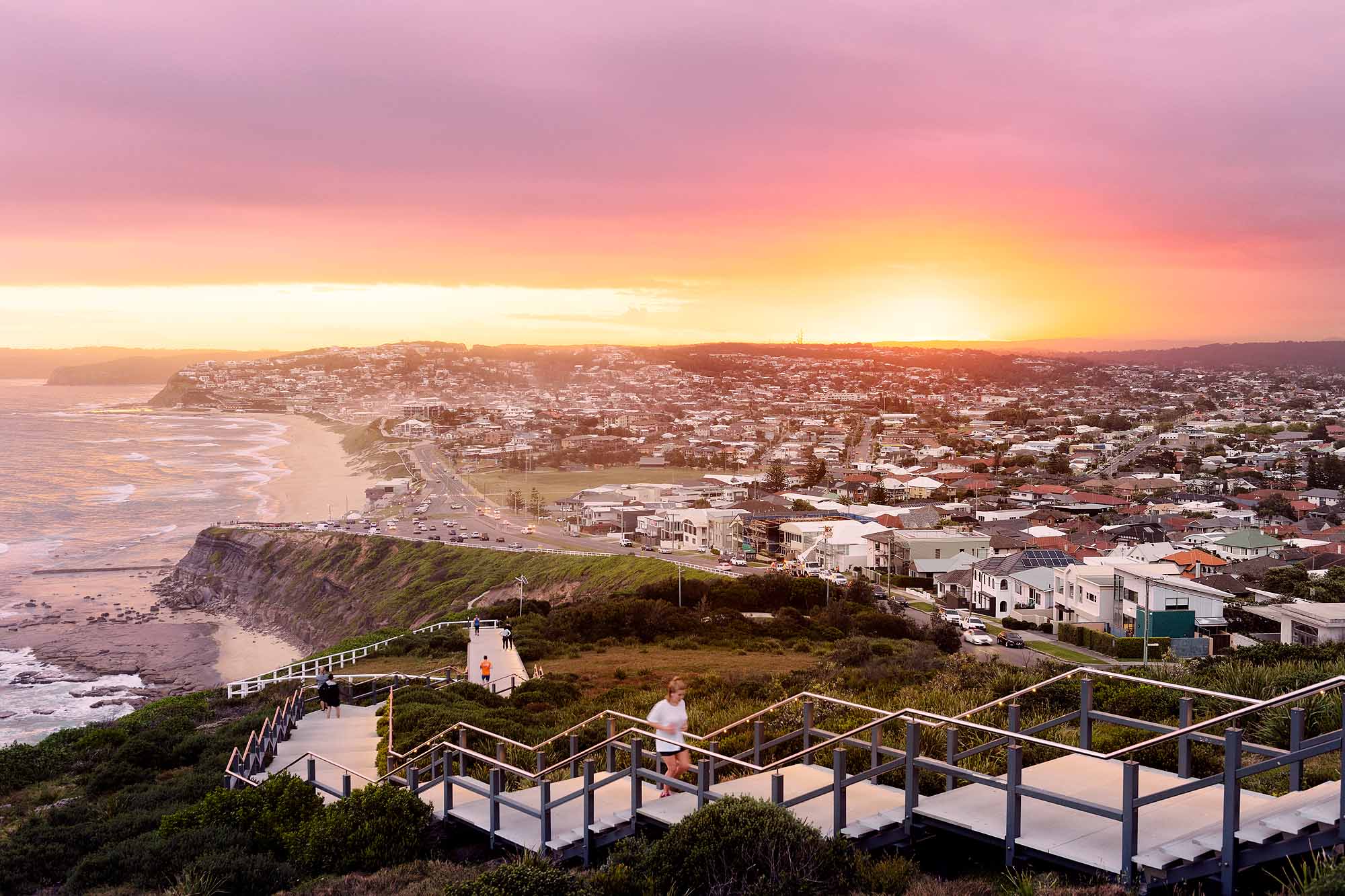
The best walks in Newcastle NSW showcase everything that makes this coastal city such a special place to explore. From dramatic clifftop lookouts and pristine beaches to peaceful bushland, wetlands and scenic harbour foreshore paths, Newcastle offers some of the most diverse and rewarding walking experiences in New South Wales. Whether you’re looking for a relaxing waterfront stroll, a family-friendly nature walk or a more adventurous bushwalk, there’s a trail to suit every visitor.
As a Newcastle landscape photographer, I’ve spent more than a decade exploring and photographing these walks in every season and weather condition. From watching the sunrise along Bathers Way and spotting migrating humpback whales from the ANZAC Memorial Walk to wandering through the coastal rainforest of Glenrock State Conservation Area and enjoying sunset views across Newcastle Harbour, these trails have provided many of my favourite experiences and photographs of the region.
This guide brings together 15 of Newcastle’s best walks, including iconic coastal trails, scenic bushwalks, family-friendly nature walks, harbour foreshore paths and lesser-known local gems. For each walk, you’ll find practical information on distance, difficulty, facilities, highlights and local tips to help you choose the right trail for your next adventure.
Whether you’re visiting Newcastle for the first time or you’re a local keen to discover somewhere new, this guide will help you experience the city’s spectacular coastline, native bushland, rich history and unforgettable scenery—one walk at a time.
Newcastle Walk Comparison Table
| Walk | Distance | Difficulty | Best For |
|---|---|---|---|
| Bathers Way Coastal Walk | 6 km | Easy–Moderate | Coastal views |
| Newcastle Memorial Walk | 450 m | Easy | Whale watching |
| Fernleigh Track | 15 km | Easy | Walking & cycling |
| Yuelarbah Walking Track (Glenrock) | 6.8 km return | Moderate | Bushwalking |
| Nobbys Breakwall Walk | 3 km return | Easy | Sunrise photography |
| Hickson Street to Burwood Beach | 1 km return | Difficult | Secluded beach |
| Blackbutt Reserve Tall Trees Walk | 2.6 km | Easy | Families |
| Nobbys Headland Walk | 1.6 km return | Moderate | Harbour views |
| Shipwreck Walk Stockton | 2 km return | Easy | History |
| Throsby Creek Loop | 3.2 km | Easy | Running & families |
| Honeysuckle Foreshore Walk | 2 km+ | Easy | Waterfront stroll |
| King Edward Park to Newcastle Beach | 2 km return | Easy | Scenic views |
| Hunter Wetlands Rainforest Walk | 4 km return | Easy | Birdwatching |
| Blue Gum Hills Park Walk | 3km Loop | Moderate | Bush walking |
| Newcastle Coastal Geotrail | 10 km | Moderate | Geology & history |
Difficulty Guide
- Easy: Mostly flat paths suitable for most fitness levels and families.
- Moderate: Some hills, stairs, uneven terrain, soft sand, or longer distances.
- Difficult: Steeper climbs, challenging terrain, or a higher level of fitness required.
1. Bathers Way Coastal Walk
Distance: 6 km one-way | Difficulty: Easy to Moderate | Allow: 2–3 hours
Best For: Coastal views, whale watching, swimming, vantage points, photography and first-time visitors | Parking: Merewether Ocean Baths, Bar Beach, King Edward Park and Nobbys Beach | Facilities: Cafés, toilets, ocean baths and picnic areas along the route
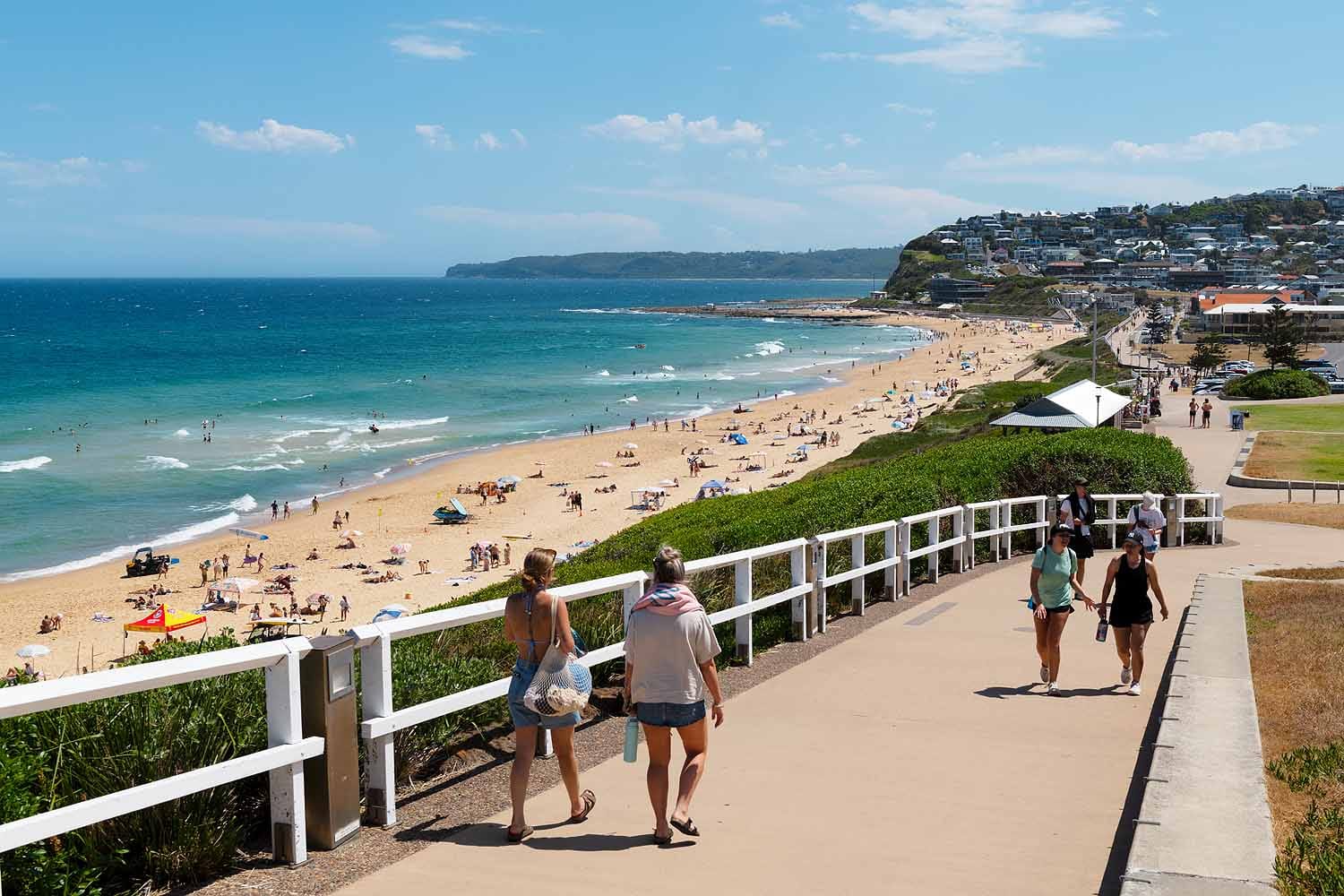
The Bathers Way Coastal Walk is widely regarded as Newcastle’s premier coastal walk, stretching for 6 kilometres between Merewether Ocean Baths and Nobbys Beach. This fully sealed walking trail connects Newcastle’s most iconic beaches, ocean baths, historic landmarks, dramatic clifftop lookouts and Newcastle Harbour in one unforgettable journey. Whether you’re visiting Newcastle for the first time or rediscovering the city as a local, the Bathers Way Coastal Walk is consistently ranked among the best things to do in Newcastle and offers the ultimate introduction to the city’s spectacular coastline.
Beginning at Merewether Ocean Baths—one of the largest ocean bath complexes in the Southern Hemisphere—the walk follows the coastline past Merewether Beach, famous for its world-class surf breaks and status as Australia’s first National Surfing Reserve. Continuing north, the pathway winds past Dixon Park Beach and Bar Beach, where sweeping ocean views, rugged sandstone cliffs and rolling surf create one of Newcastle’s most spectacular coastal landscapes. Along this stretch you’ll find cafés, picnic areas and numerous places to pause, relax and simply enjoy the beauty of the Pacific Ocean.
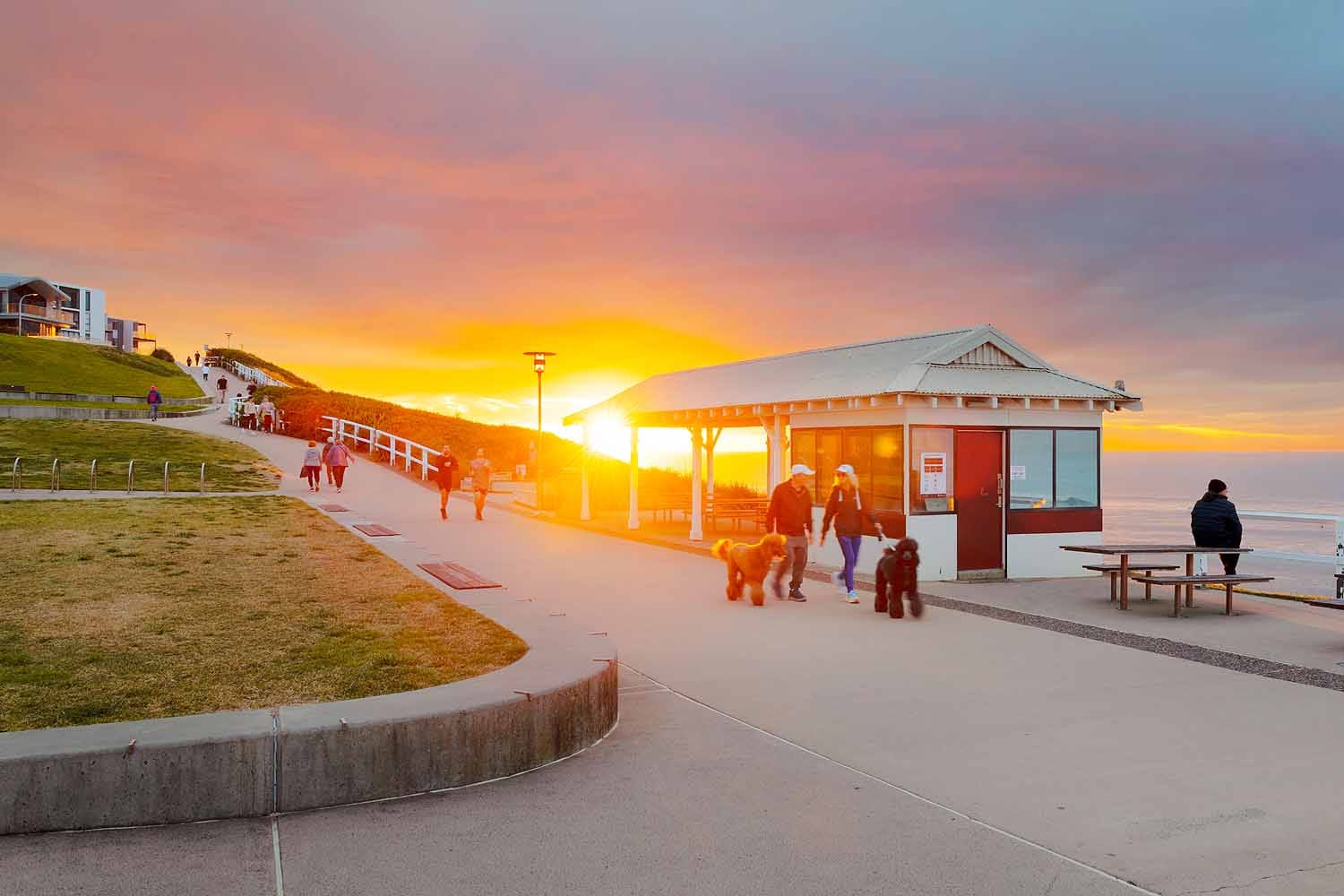
The centrepiece of the walk is the Newcastle Memorial Walk, a spectacular 450-metre elevated boardwalk built to commemorate the ANZACs and Newcastle’s steelmaking heritage. Rising high above the cliffs, the boardwalk provides breathtaking panoramic views stretching south towards Merewether Beach and across the Pacific Ocean. During the annual humpback whale migration between May and November, this section becomes one of the Hunter Region’s premier land-based whale watching locations, with whales regularly seen breaching, tail-slapping and travelling along the coastline. Combined with dramatic seas crashing against the cliffs and uninterrupted ocean views, it’s one of the most memorable sections of the entire Bathers Way Coastal Walk.
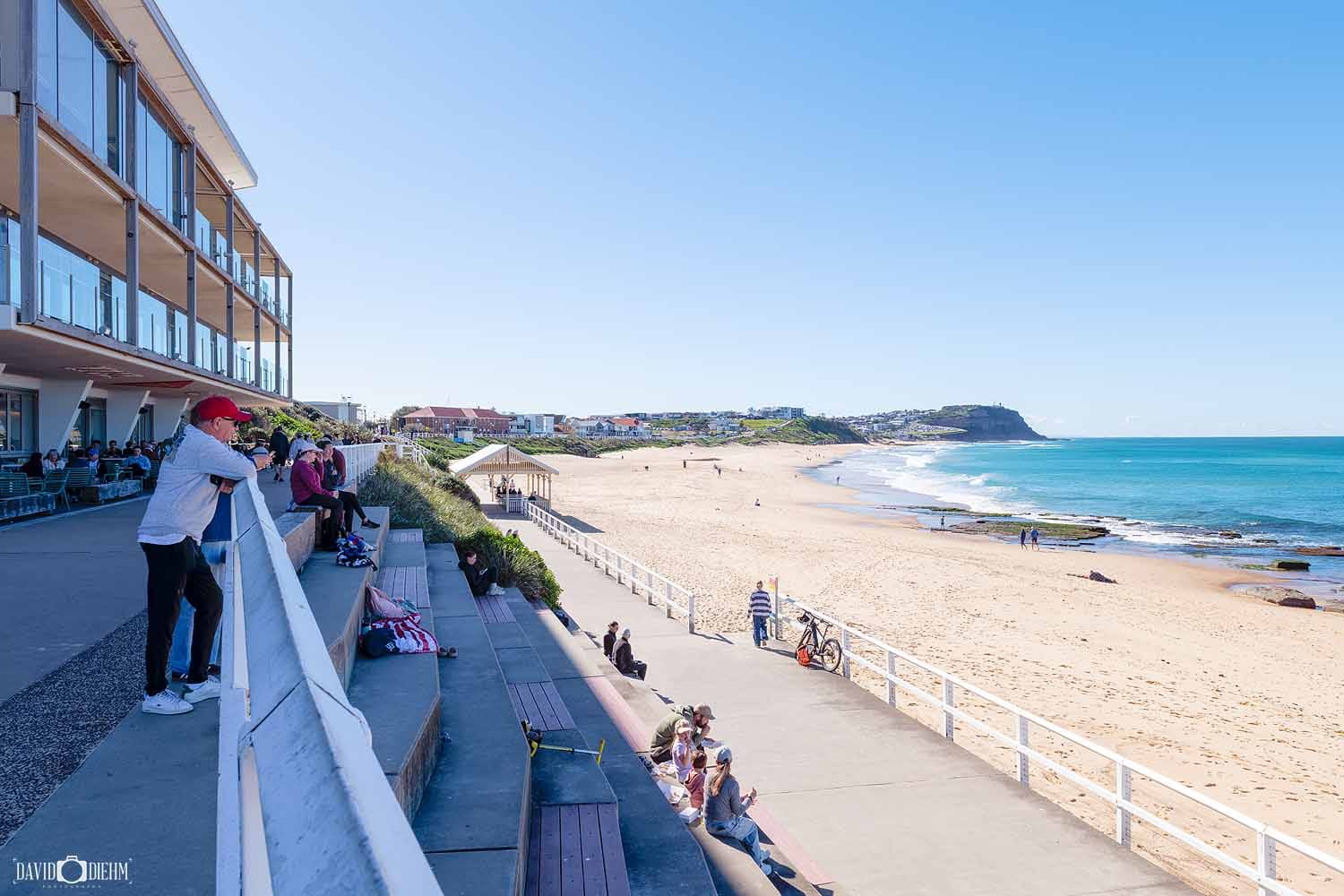
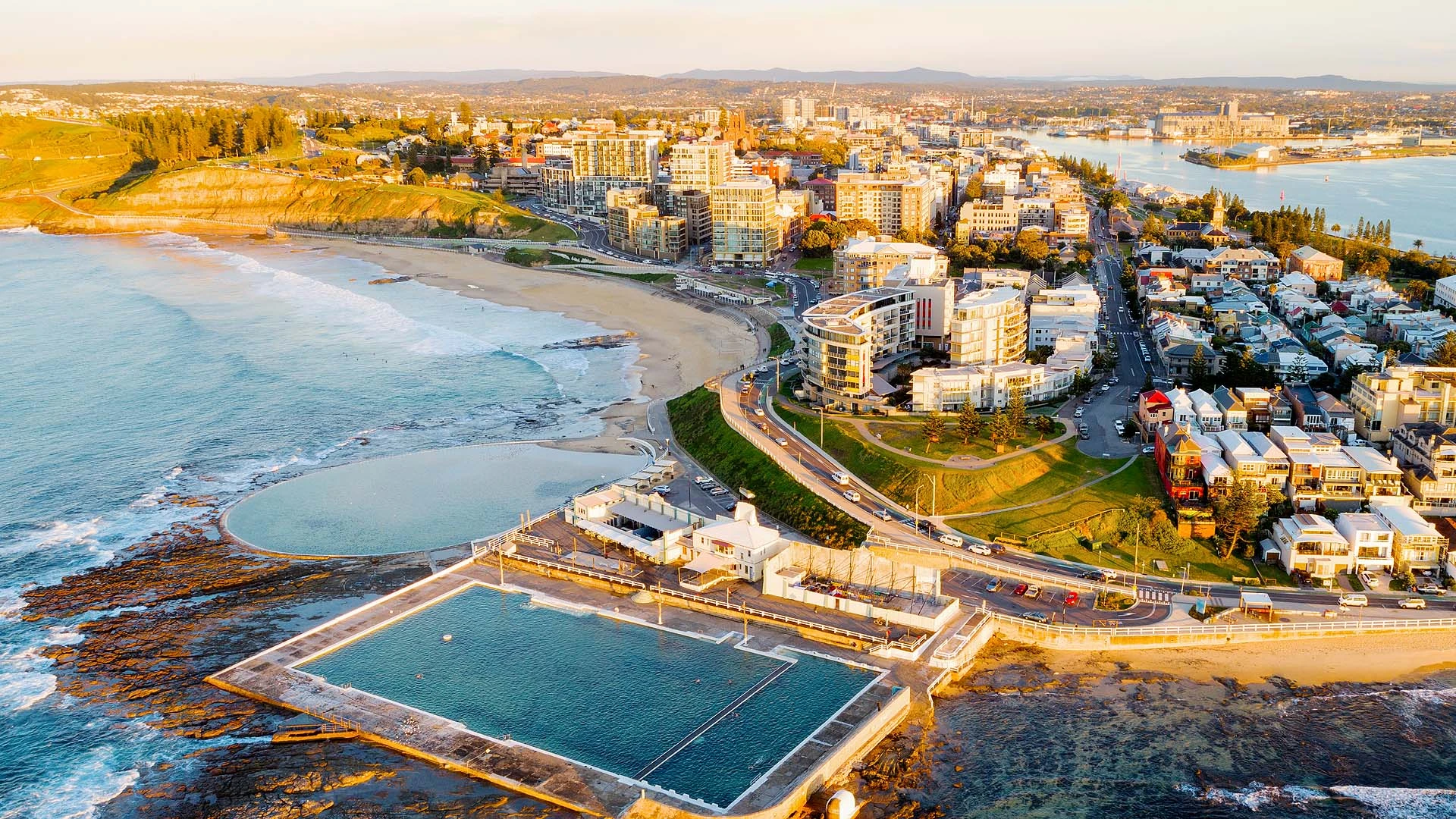
Beyond the Memorial Walk, the trail continues through the beautifully landscaped King Edward Park, one of Newcastle’s oldest public parks. Here you’ll discover the historic Bogey Hole, Australia’s oldest surviving ocean bath, hand-carved into the rock by convicts in 1819 for the commandant of the Newcastle penal settlement. The walk then passes the heritage-listed Newcastle Ocean Baths, a much-loved local landmark that has welcomed swimmers since 1922, before continuing to Nobbys Beach beneath the iconic Nobbys Lighthouse, which has guided ships safely into Newcastle Harbour since 1858. Just beyond Nobbys Beach, Fort Scratchley provides another worthwhile stop, where historic tunnels, military displays and the famous daily cannon firing offer a fascinating insight into Newcastle’s military history.
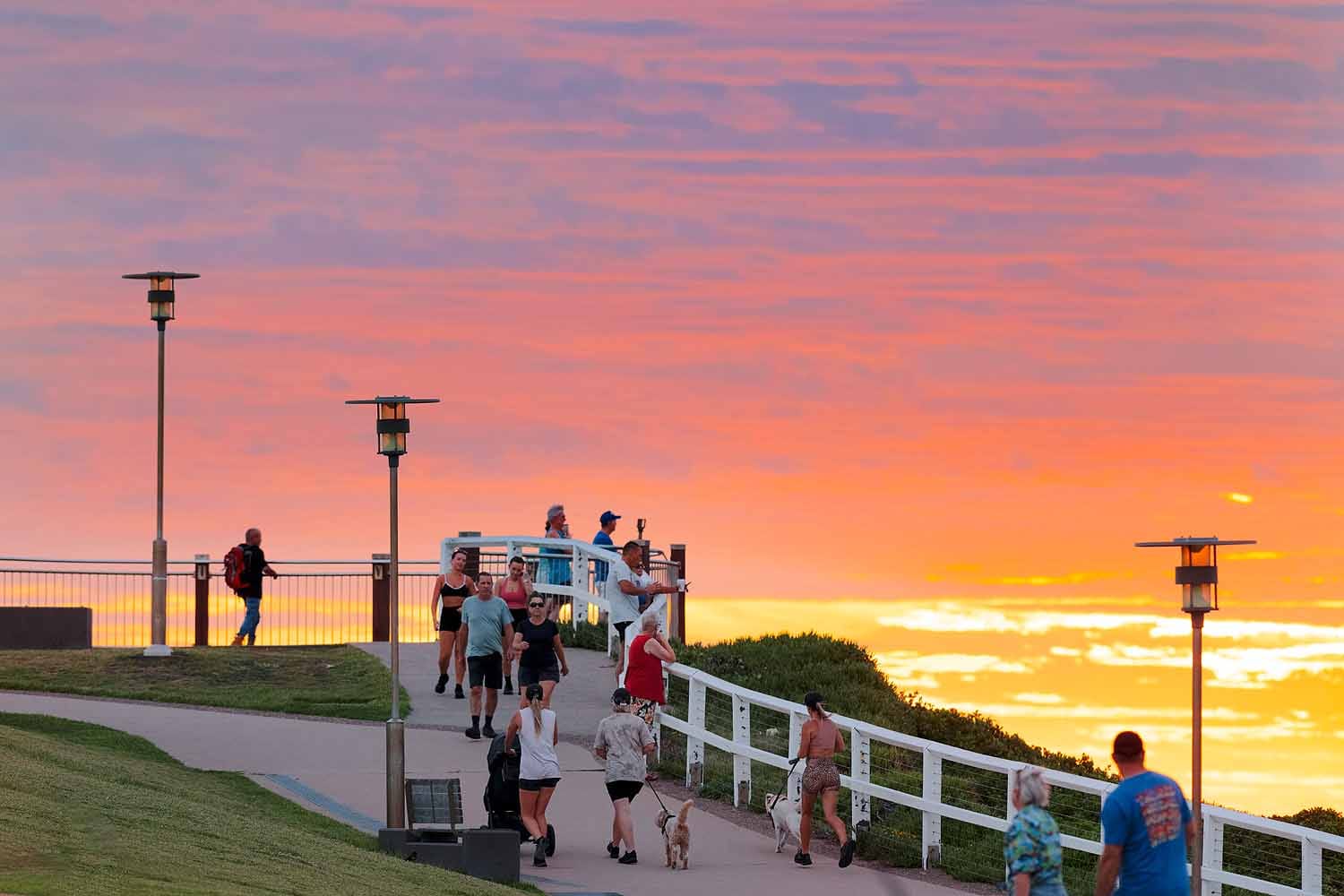
Few walks in Australia combine as many natural, historic and cultural attractions within a single trail as the Bathers Way Coastal Walk. Within just six kilometres, visitors experience patrolled surf beaches, ocean baths, dramatic cliffs, heritage landmarks, coastal parks, harbour entrances, cafés and some of Newcastle’s most spectacular viewpoints. The fully sealed pathway, elevated boardwalks and numerous access points make the walk suitable for almost all ages and fitness levels, allowing visitors to complete the entire route or explore shorter sections at their own pace.

For photographers, the Bathers Way Coastal Walk is one of the most rewarding locations in Newcastle throughout the year. Every season offers something different. Sunrise bathes Merewether Beach, Bar Beach and the Newcastle Ocean Baths in golden light, while winter storms send powerful swells crashing against the cliffs below the Newcastle Memorial Walk. At the northern end of the walk, Nobbys Lighthouse, Newcastle Harbour and passing cargo ships provide outstanding photography opportunities at both sunrise and sunset. Having photographed this coastline for more than a decade from the shoreline, the air and the ocean, I’ve found that no two visits are ever the same, with changing tides, weather and seasons continually transforming the landscape.
Allow approximately 2–3 hours to complete the full walk at a relaxed pace, although many visitors choose to explore shorter sections depending on their interests. With cafés, beaches, ocean baths, picnic areas, playgrounds and spectacular lookouts located throughout the route, there are countless opportunities to stop for a swim, enjoy a meal or simply admire the scenery. Whether you’re walking for fitness, photography, whale watching or sightseeing, the Bathers Way Coastal Walk offers the perfect introduction to Newcastle and showcases why the city is regarded as one of Australia’s premier coastal destinations.

💡 Local Tip
Best Time to Visit: May to November during the annual humpback whale migration. The Newcastle Memorial Walk, King Edward Park and the clifftop lookouts along the Bathers Way Coastal Walk are among Newcastle’s best land-based whale watching locations. Bring a pair of binoculars, allow extra time to stop at the lookouts, and keep an eye on the horizon—you may be rewarded with whales breaching, tail-slapping and cruising along the coastline.
Widely regarded as Newcastle’s best walk, the Bathers Way Coastal Walk connects the city’s most iconic beaches, world-famous ocean baths, historic landmarks and spectacular coastal lookouts, delivering one of Australia’s finest urban coastal walking experiences.
2. Newcastle Memorial Walk
Distance: 450 m return | Difficulty: Easy | Allow: 15–30 minutes
Best For: Panoramic coastal views, whale watching, photography and Newcastle landmarks | Parking: Strzelecki Lookout, Bar Beach and King Edward Park | Facilities: Toilets, cafés, picnic areas and beach access (nearest facilities at Bar Beach and King Edward Park)
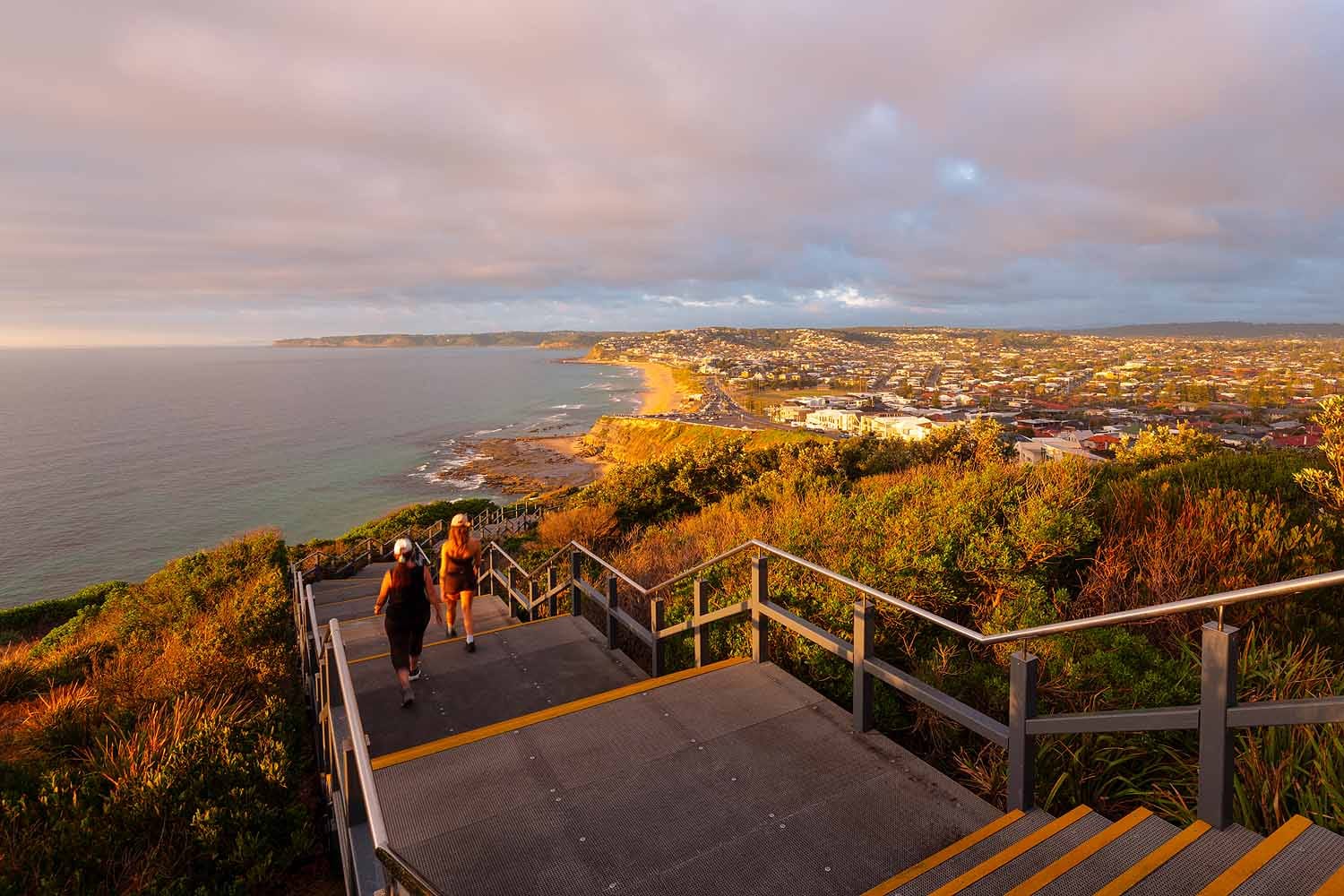
The Newcastle Memorial Walk, also known as the ANZAC Memorial Walk, is one of Newcastle’s most iconic attractions and is widely regarded as one of the best places to experience the city’s spectacular coastline. Officially opened in 2015 to commemorate the ANZAC Centenary, the elevated boardwalk honours the servicemen and women of the Hunter Region while providing breathtaking panoramic views over the Pacific Ocean.
Stretching 450 metres along the clifftops between Strzelecki Lookout and Bar Beach, the fully accessible walkway offers sweeping views north towards Newcastle Harbour, Nobbys Lighthouse and the city skyline, while to the south the coastline unfolds past Bar Beach, Merewether Beach and towards Glenrock State Conservation Area. Along the way, interpretive displays and striking steel silhouettes commemorate thousands of local men and women who served during World War I, adding historical significance to one of Newcastle’s most photographed landmarks.
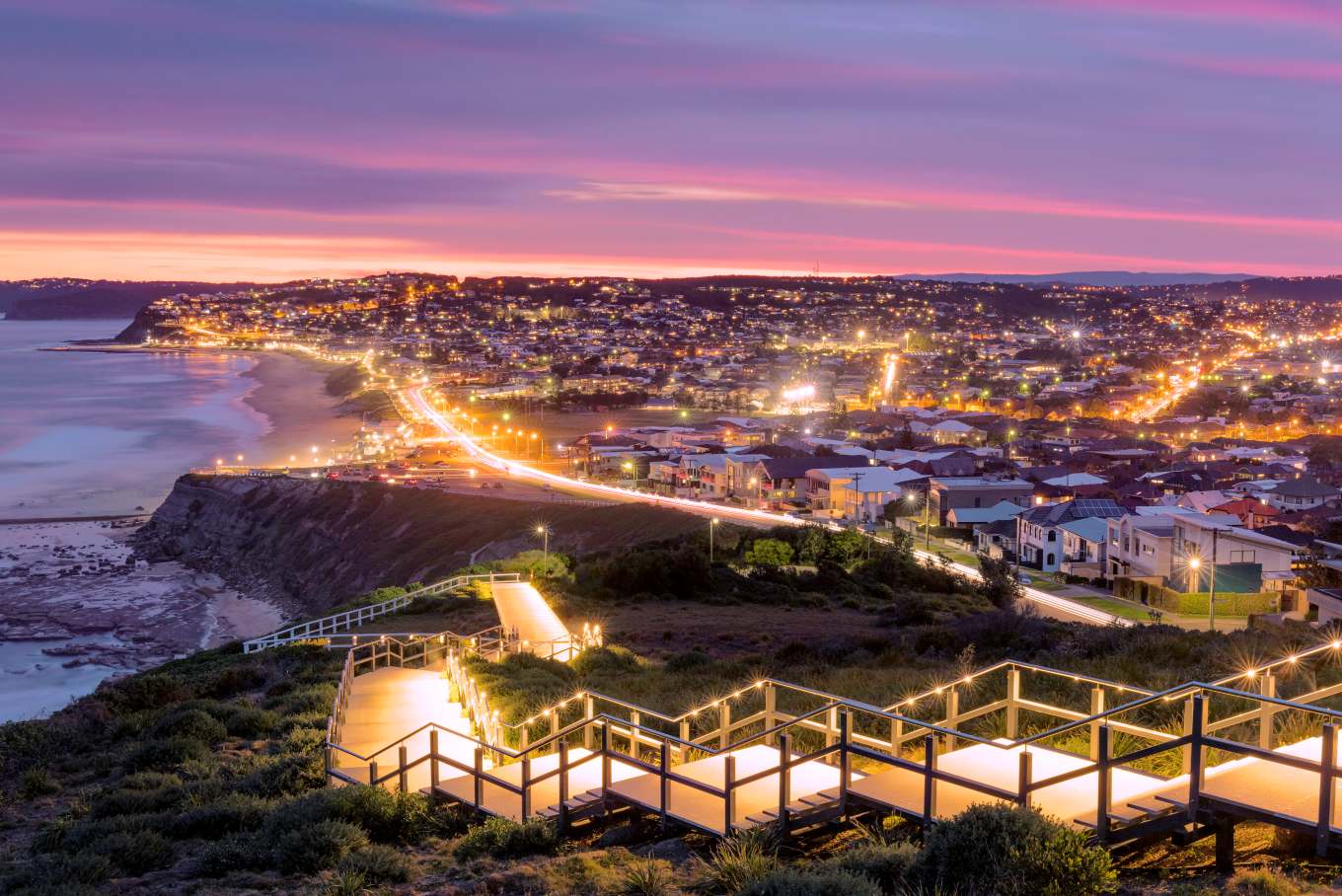
Although relatively short, the Memorial Walk delivers one of the most rewarding walking experiences in Newcastle. Its elevated clifftop position makes it one of the city’s premier locations for land-based whale watching during the annual humpback whale migration between May and November, while photographers are rewarded with spectacular sunrise, sunset and blue-hour views as the coastline, harbour and city lights come alive.
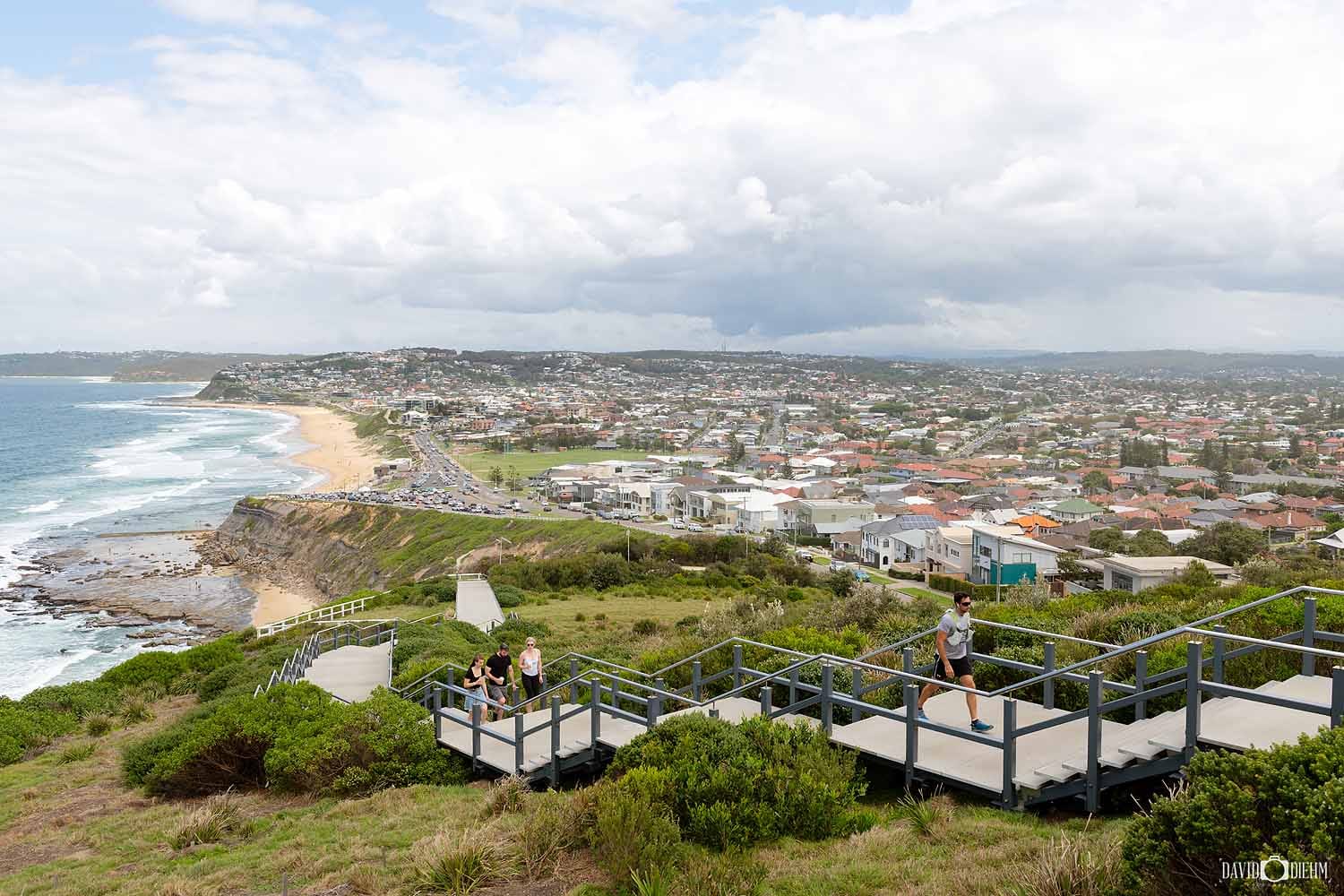
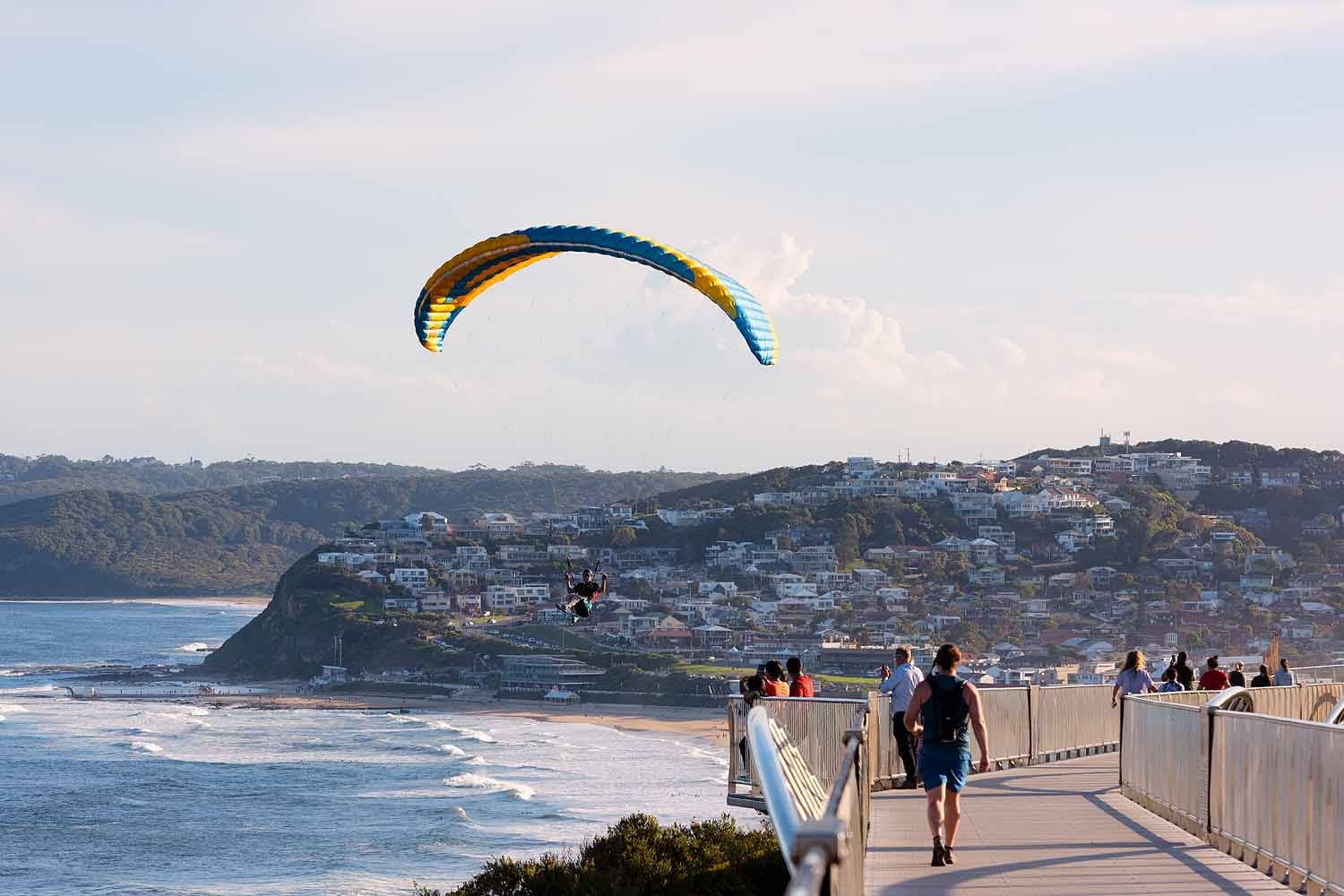
One of the reasons the Newcastle Memorial Walk is so popular is that it appeals to almost every visitor. Families appreciate the wide, fully accessible boardwalk and nearby parks, photographers are drawn by spectacular sunrises, sunsets and dramatic coastal storms, while history enthusiasts can pause to read the interpretive displays that honour the Hunter Region’s ANZAC legacy. The experience changes throughout the day, with peaceful mornings often bringing calm seas, colourful sunrises and fewer visitors. During the day, cooling sea breezes make it an enjoyable walk even in warmer months, while sunset transforms the coastline with golden light before the illuminated walkway and sparkling city lights create one of Newcastle’s most spectacular evening experiences.
Many visitors combine the Newcastle Memorial Walk with the Bathers Way Coastal Walk, continuing north to King Edward Park, Bogey Hole, Newcastle Ocean Baths, Fort Scratchley and Nobbys Beach, or south to Bar Beach, Merewether Beach and the Merewether Ocean Baths. Whether you’re interested in history, photography, wildlife or simply experiencing one of Australia’s finest urban coastal walks, the Memorial Walk is an essential stop when exploring Newcastle.
💡 Local Tip
Choose Your Starting Point: For the easiest, step-free walk, begin at the Strzelecki Lookout end. If you’re after more of a workout, start from the Memorial Drive end and climb the 138 steps to the main viewing platform. Time your visit for sunset and stay into the evening to see the Memorial Walk beautifully illuminated against the Newcastle skyline. Between May and November, this is also one of Newcastle’s premier land-based whale watching locations, where humpback whales are regularly seen breaching and migrating along the coastline.
3. Fernleigh Track
Distance: 15 km one-way | Difficulty: Easy | Allow: 3–5 hours walking or 1–2 hours cycling
Best For: Walking, cycling, families and rail history | Parking: Adamstown Station, Whitebridge, Redhead, Jewells and Belmont access points | Facilities: Toilets, picnic areas, cafés and rest stops available at various points along the route
The Fernleigh Track is one of the Hunter Region’s premier walking and cycling trails, following the route of the former Belmont railway line between Adamstown and Belmont. Stretching 15.5 kilometres, the fully sealed shared pathway winds through native bushland, wetlands and coastal suburbs, linking Newcastle and Lake Macquarie along one of Australia’s finest rail trails. Suitable for walkers, runners, cyclists, wheelchair users and families, the Fernleigh Track offers a safe and accessible outdoor experience for visitors of all ages.
Originally constructed as a railway corridor to transport coal from the Lake Macquarie coalfields to the Port of Newcastle, the Belmont railway line first opened to Redhead in 1882 before being extended to Belmont in 1917. After the railway closed in 1991, the corridor was transformed into the Fernleigh Track, with sections progressively opening between 2003 and 2011 through a joint project by Newcastle City Council and the City of Lake Macquarie. Today, much of its railway heritage remains, making the trail as historically significant as it is scenic.
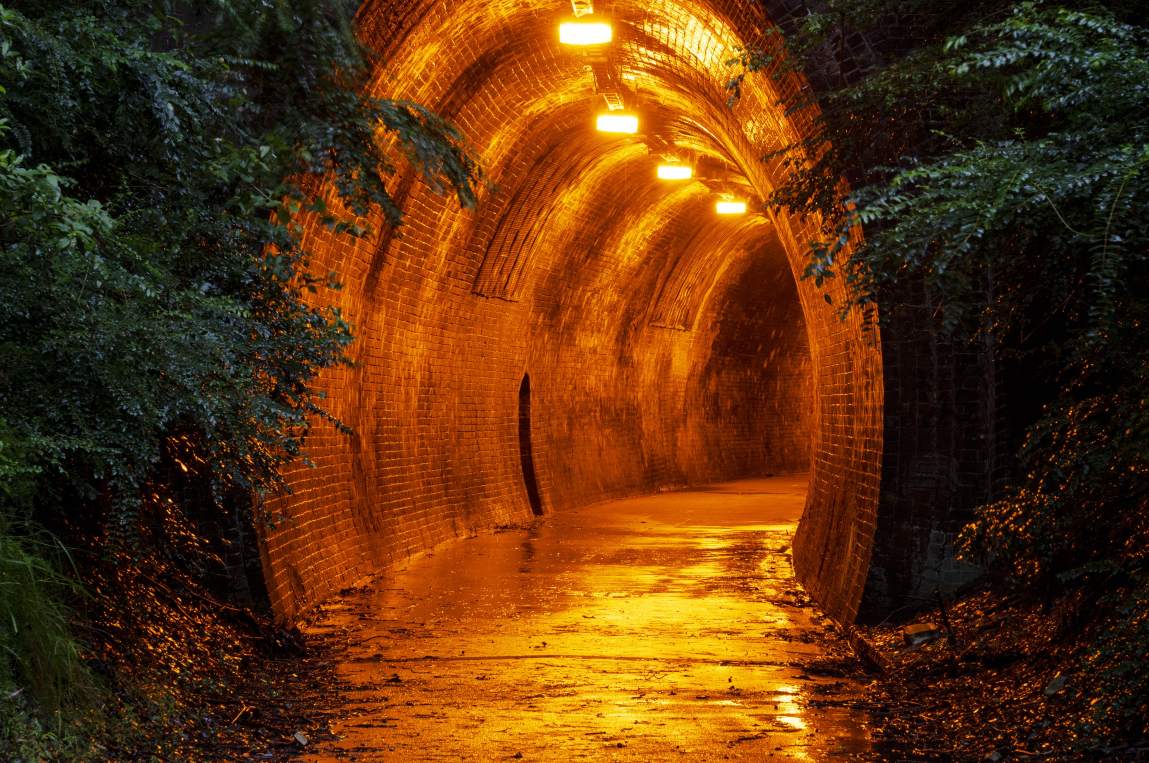
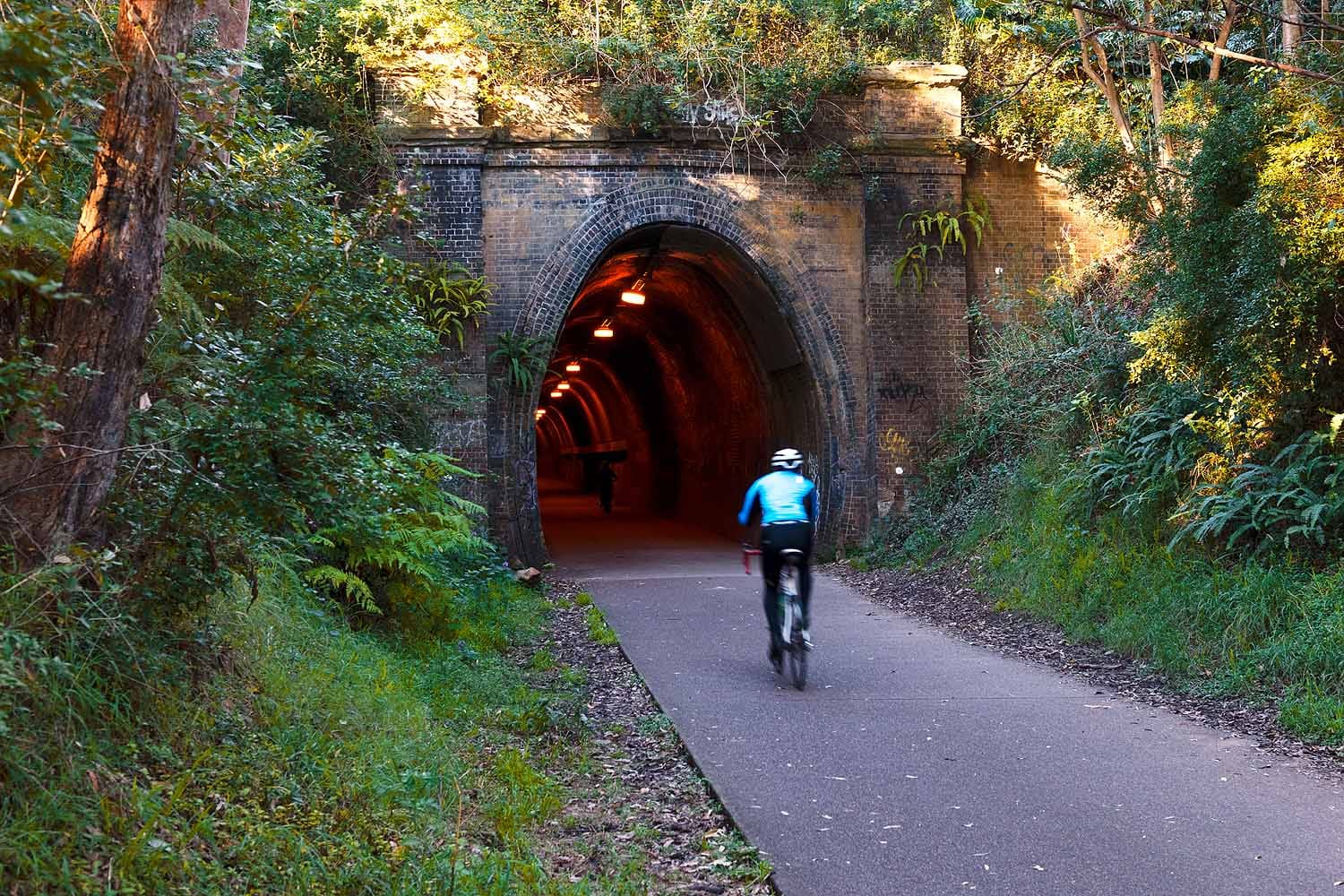
One of the track’s standout features is the Fernleigh Tunnel, a beautifully preserved 181-metre brick-lined railway tunnel built in the early 1890s and opened in 1892. Passing beneath the Pacific Highway, the gently curving tunnel was engineered to maintain suitable railway gradients and remains one of the Hunter Region’s most recognisable engineering landmarks. Now illuminated for pedestrians and cyclists, it provides a memorable experience and is widely regarded as the highlight of the entire Fernleigh Track.
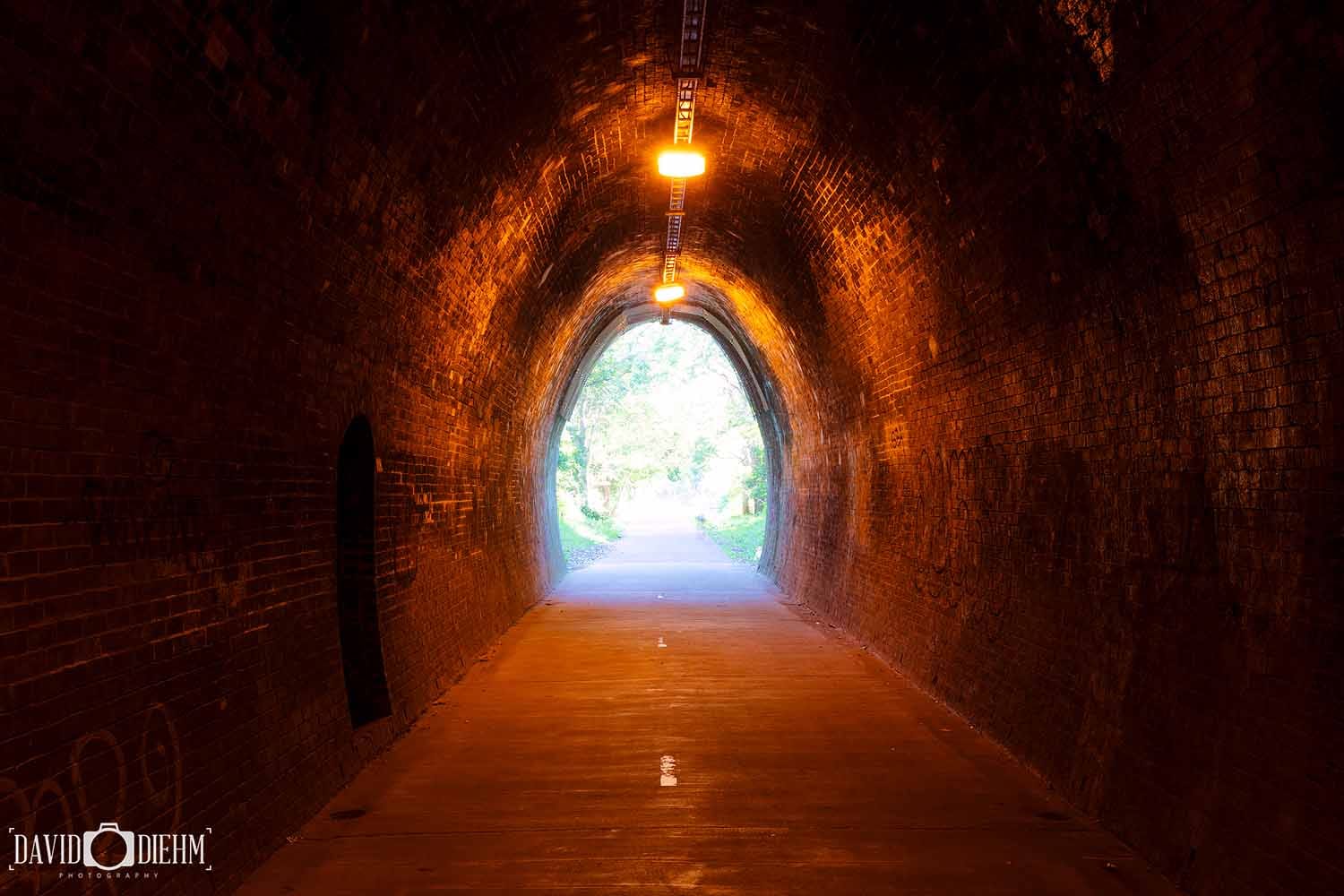
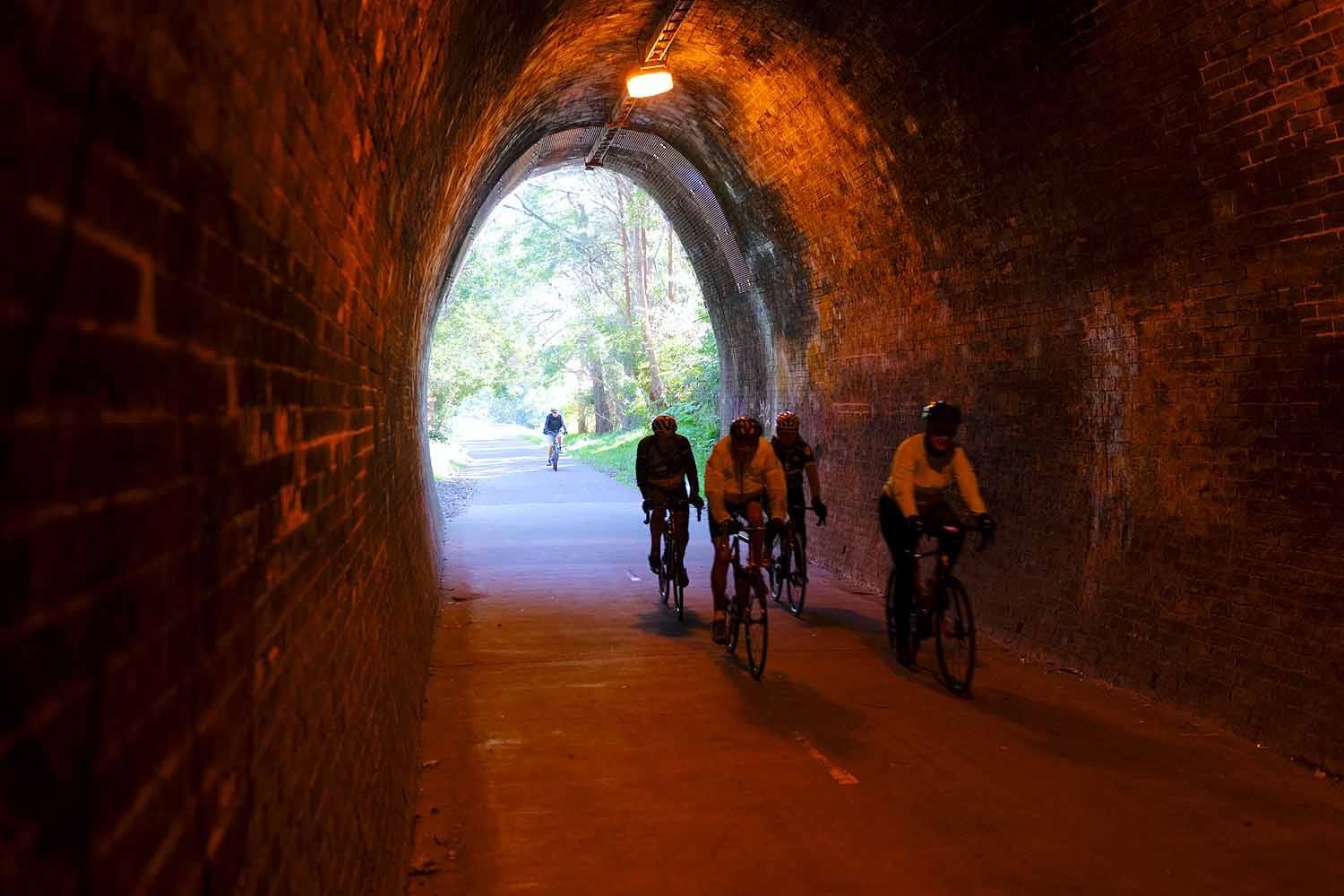
Beyond the tunnel, the scenery continually changes as the trail passes through Glenrock State Conservation Area, native eucalypt forest, paperbark swamps, wetlands and open bushland before descending towards Belmont. Along the way, the Fernleigh Track intersects with the Great North Walk near the former Kahibah Railway Station, while numerous access points allow visitors to complete anything from a short stroll to the full trail. Despite covering more than 15 kilometres, the gentle railway gradient makes the route surprisingly easy and enjoyable.
Whether you’re looking for a family-friendly walk, a scenic cycling adventure, a long-distance run or simply the chance to experience one of the Hunter Region’s most important pieces of industrial heritage, the Fernleigh Track delivers one of the most rewarding outdoor experiences in Newcastle and Lake Macquarie. Combining fascinating railway history with diverse natural landscapes, it remains one of the region’s true must-do walking and cycling trails.
💡 Local Tip
Short on Time? If you don’t have time to walk the entire 15 km Fernleigh Track, consider exploring the Fernleigh Tunnel instead. Built in the 1890s, the impressive 181-metre-long railway tunnel is located approximately 2 km from the Adamstown trailhead. For the shortest walk, start from the Kinross Avenue entrance at Adamstown Heights, enjoy the scenic bushland and walk through the historic tunnel beneath the Pacific Highway before returning the same way. It’s one of the highlights of the Fernleigh Track without committing to the full journey.
4. Yuelarbah Walking Track (Glenrock State Conservation Area)
Distance: 6.8 km return | Difficulty: Moderate | Allow: 2–3 hours
Best For: Bushwalking, nature lovers, waterfalls and coastal scenery | Parking: Yuelarbah Trail car park, Burwood Road, Kahibah | Facilities: Picnic tables, information boards, no public toilets
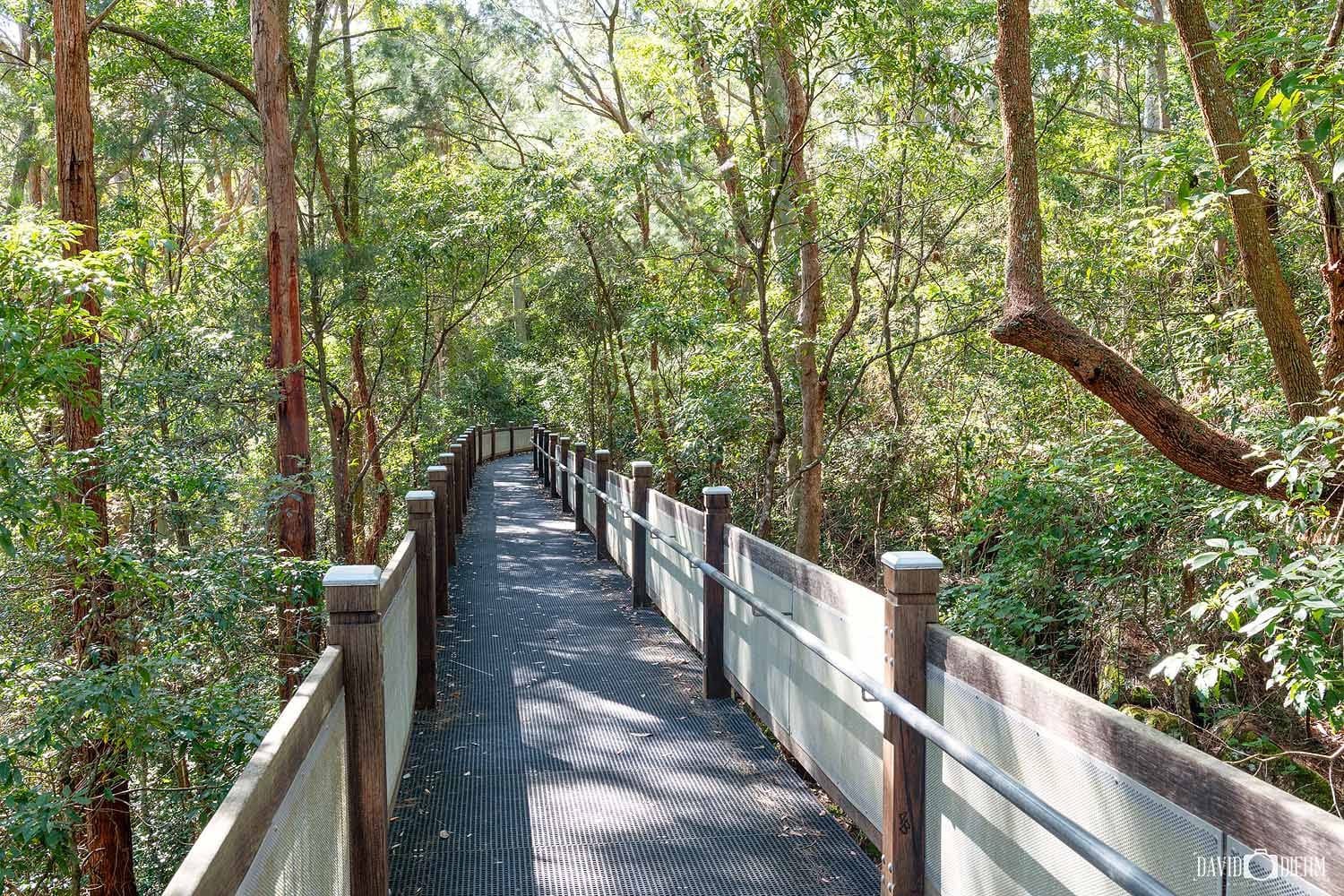
The Yuelarbah Walking Track, located within Glenrock State Conservation Area, is widely regarded as one of the best bushwalks in Newcastle. Forming part of the iconic Great North Walk, this spectacular trail combines towering eucalypt forest, lush coastal rainforest, tranquil creeks, elevated boardwalks, panoramic lookouts and beautiful beach scenery into one unforgettable walking experience. Despite being only minutes from Newcastle’s city centre, the walk feels wonderfully secluded and showcases one of the largest remaining areas of coastal rainforest in the region.
Beginning at the popular Yuelarbah Trail car park on Burwood Road in Kahibah, the walk immediately immerses visitors in Glenrock’s diverse natural landscape. Elevated boardwalks carry walkers above the fragile rainforest floor before the trail descends beneath towering eucalypts and through shaded gullies lined with native ferns, moss-covered sandstone outcrops and dense subtropical vegetation. Along the way, Flaggy Creek winds through the valley, where seasonal waterfalls and shallow rock pools create one of Glenrock’s most picturesque natural features after periods of rain.
Wildlife is another highlight of the walk. Listen for the calls of native birds echoing through the forest canopy while keeping an eye out for lace monitors, skinks, butterflies and the occasional wallaby that inhabits the reserve. The peaceful rainforest environment provides a remarkable contrast to the nearby suburbs, making it easy to forget you’re exploring just a short drive from Newcastle’s CBD.
💡 Local Tip
While Leichhardt Lookout is the walk’s signature viewpoint, don’t make the mistake of turning around too early. Continue to Glenrock Lagoon and Burwood Beach, and take time to explore the rainforest side trails and Flaggy Creek along the way. Visit after rainfall to experience flowing waterfalls, moss-covered sandstone and lush rainforest at their finest—it’s a completely different experience from walking the trail in dry conditions.
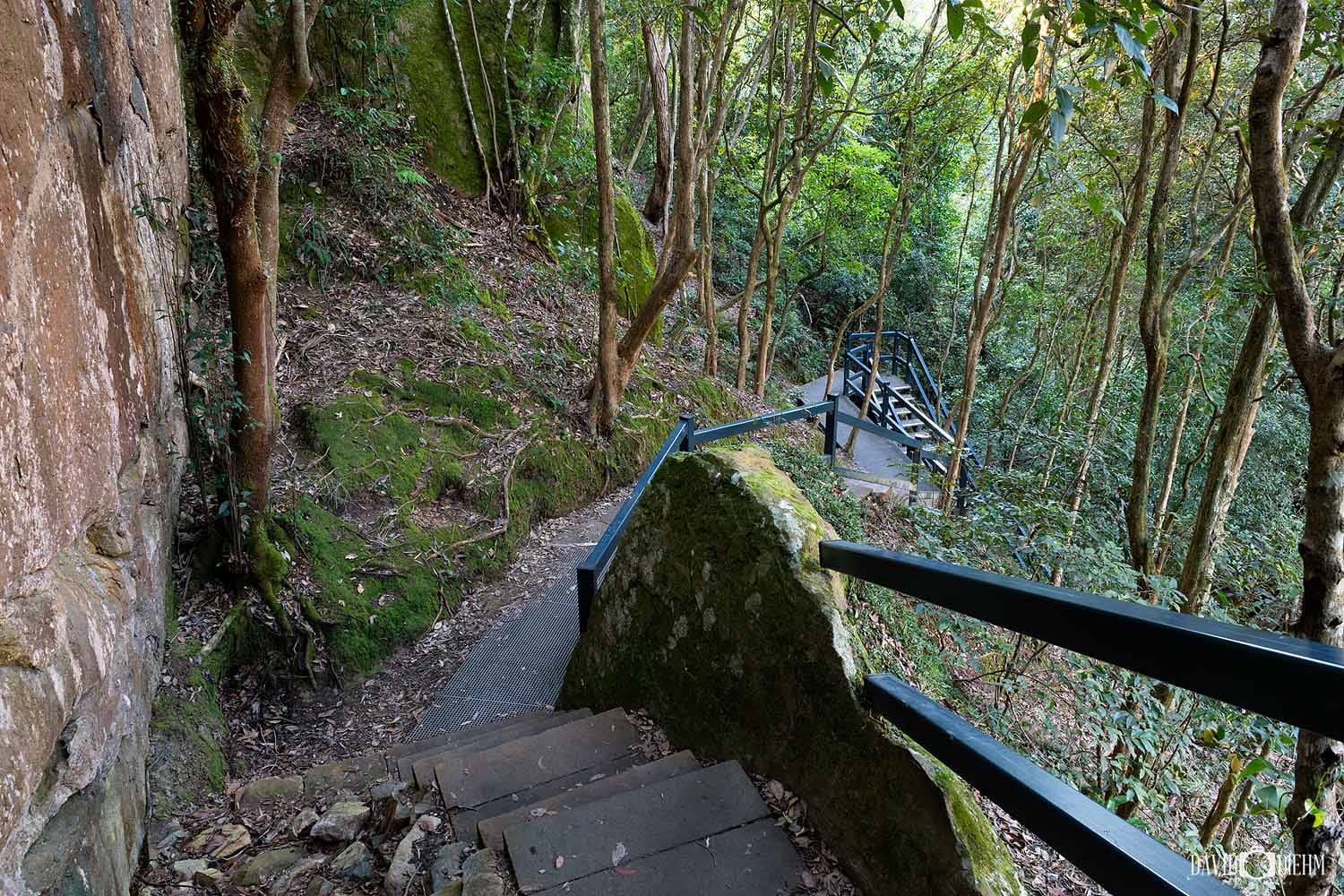
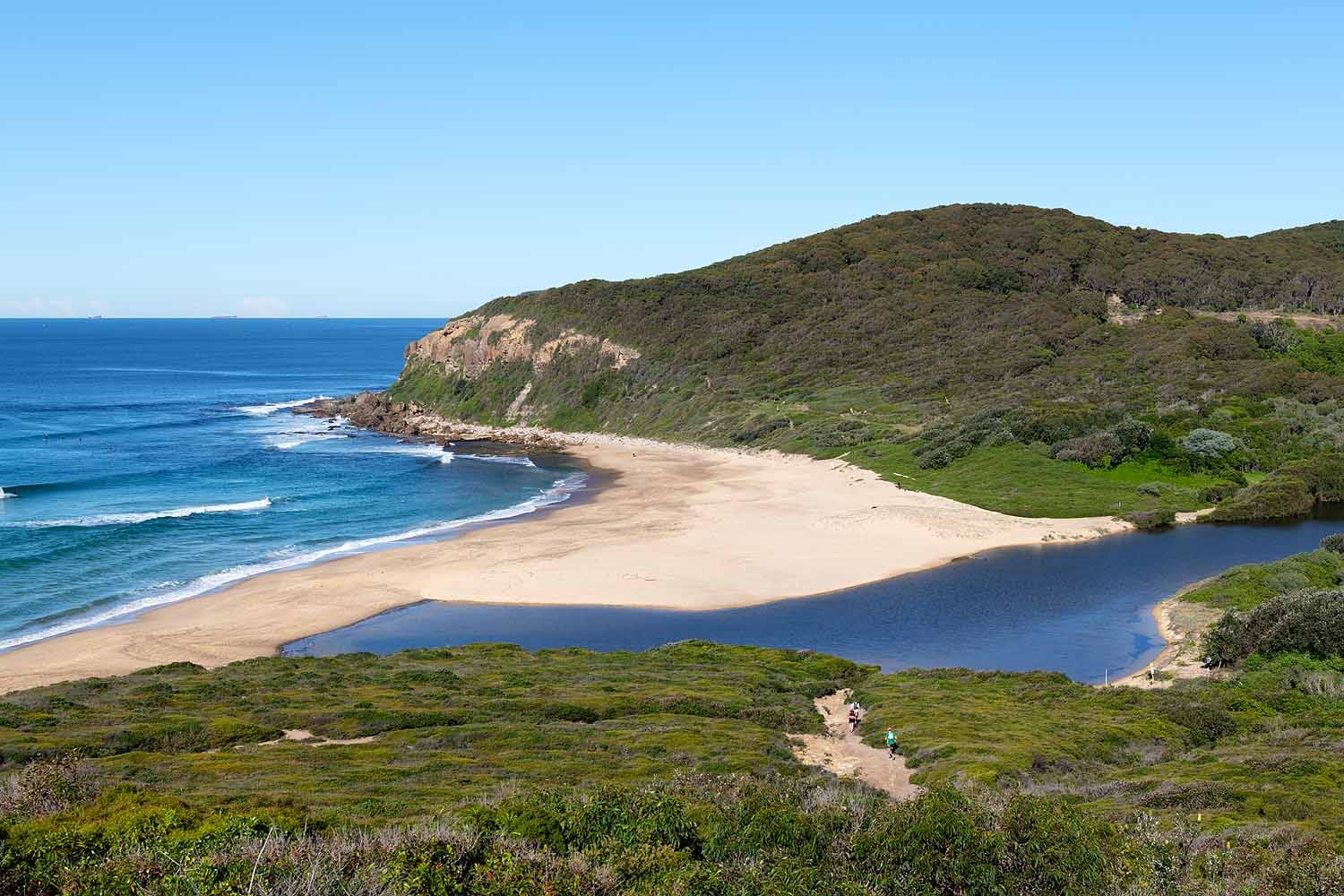
One of the standout features of the walk is Leichhardt Lookout, a spectacular clifftop platform offering sweeping views across Glenrock Lagoon, Burwood Beach and the Pacific Ocean. Surrounded by forested hillsides, the lookout is one of the finest viewpoints in Glenrock State Conservation Area and a favourite destination for photographers throughout the year.
Beyond the lookout, the trail continues downhill towards Glenrock Lagoon and Burwood Beach, where visitors can relax beside the lagoon, enjoy the beach, explore the rocky coastline or simply take in the unspoilt coastal scenery before retracing their steps back through the rainforest.
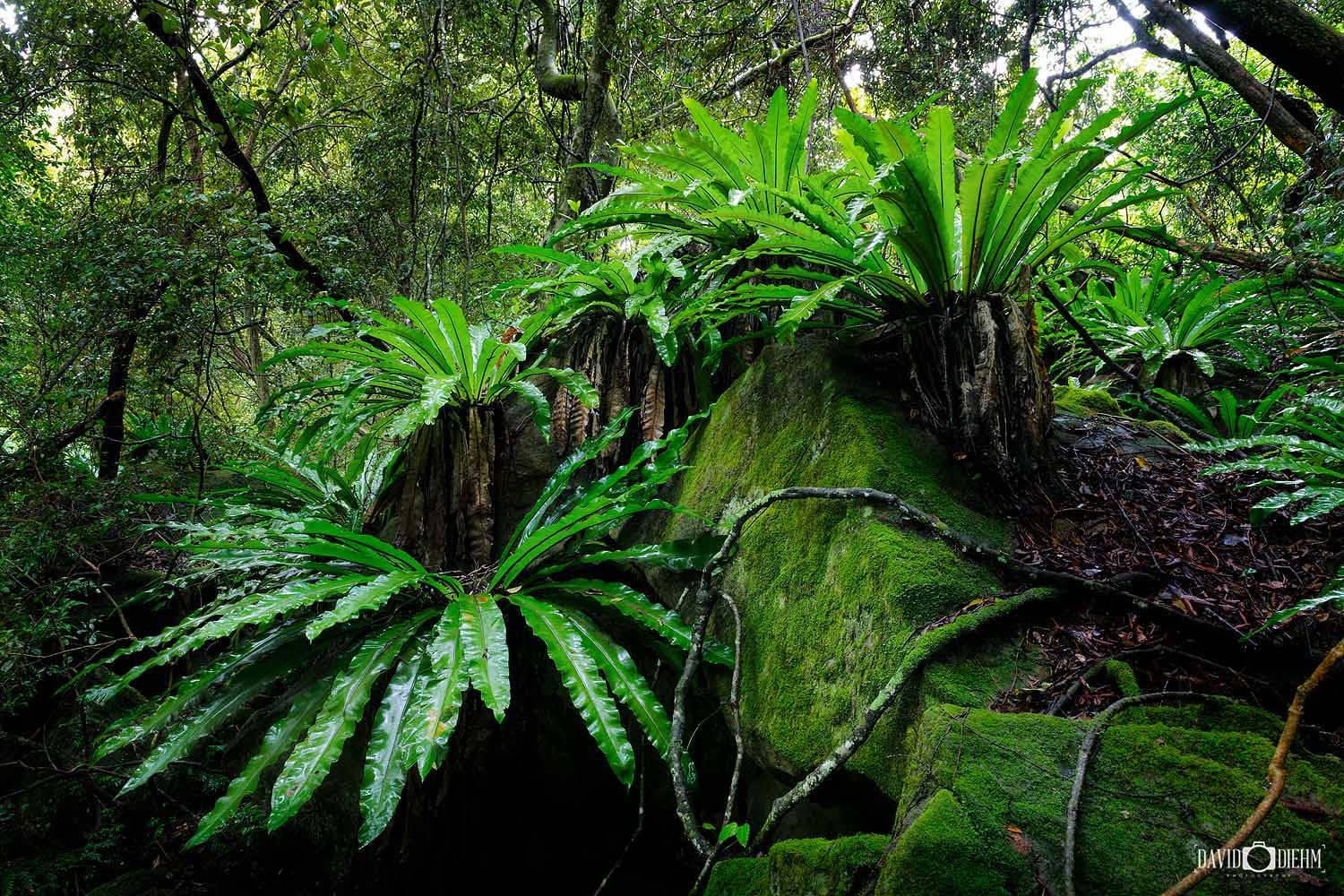
Combining elevated boardwalks, rainforest, creek crossings, seasonal waterfalls, native wildlife, Leichhardt Lookout and beach access within a single walk, the Yuelarbah Walking Track offers one of the most diverse and rewarding bushwalking experiences in Newcastle. Whether you’re seeking a peaceful nature walk, spectacular coastal views or one of the city’s most iconic hiking trails, this walk is an essential addition to any Newcastle itinerary.

5. Nobbys Breakwall Walk
Distance: 3 km return | Difficulty: Easy | Allow: 45–60 minutes
Best For: Harbour views, ship spotting, sunrise photography and families | Parking: Nobbys Beach car park | Facilities: Toilets, cafés, picnic areas, playgrounds and beach access nearby

The Nobbys Breakwall Walk is one of Newcastle’s most iconic walks, offering spectacular views of Newcastle Harbour, Nobbys Lighthouse, the Pacific Ocean and the city’s magnificent coastline. Extending 1.5 kilometre along Macquarie Pier from Nobbys Beach to the harbour entrance, this flat and easily accessible walk provides a unique opportunity to experience one of Australia’s busiest working ports while enjoying some of Newcastle’s best coastal scenery.
Originally constructed during the nineteenth century to improve access to Newcastle Harbour, the breakwall continues to play a vital role in protecting the harbour entrance while remaining one of the city’s most popular attractions. Today, walkers, runners, anglers and photographers share the pathway as enormous coal ships, tugboats, pilot vessels, cruise ships and recreational boats pass within metres of the breakwall, providing an ever-changing spectacle rarely experienced elsewhere in Australia.
At the end of the breakwall, visitors are rewarded with panoramic views in every direction. Look north towards Stockton Beach and Port Stephens, east across the vast Pacific Ocean, and south to Nobbys Lighthouse, Fort Scratchley, Nobbys Beach and Newcastle’s dramatic coastline. The wide, paved pathway is suitable for visitors of all ages and abilities, making it one of the city’s most accessible waterfront walks.
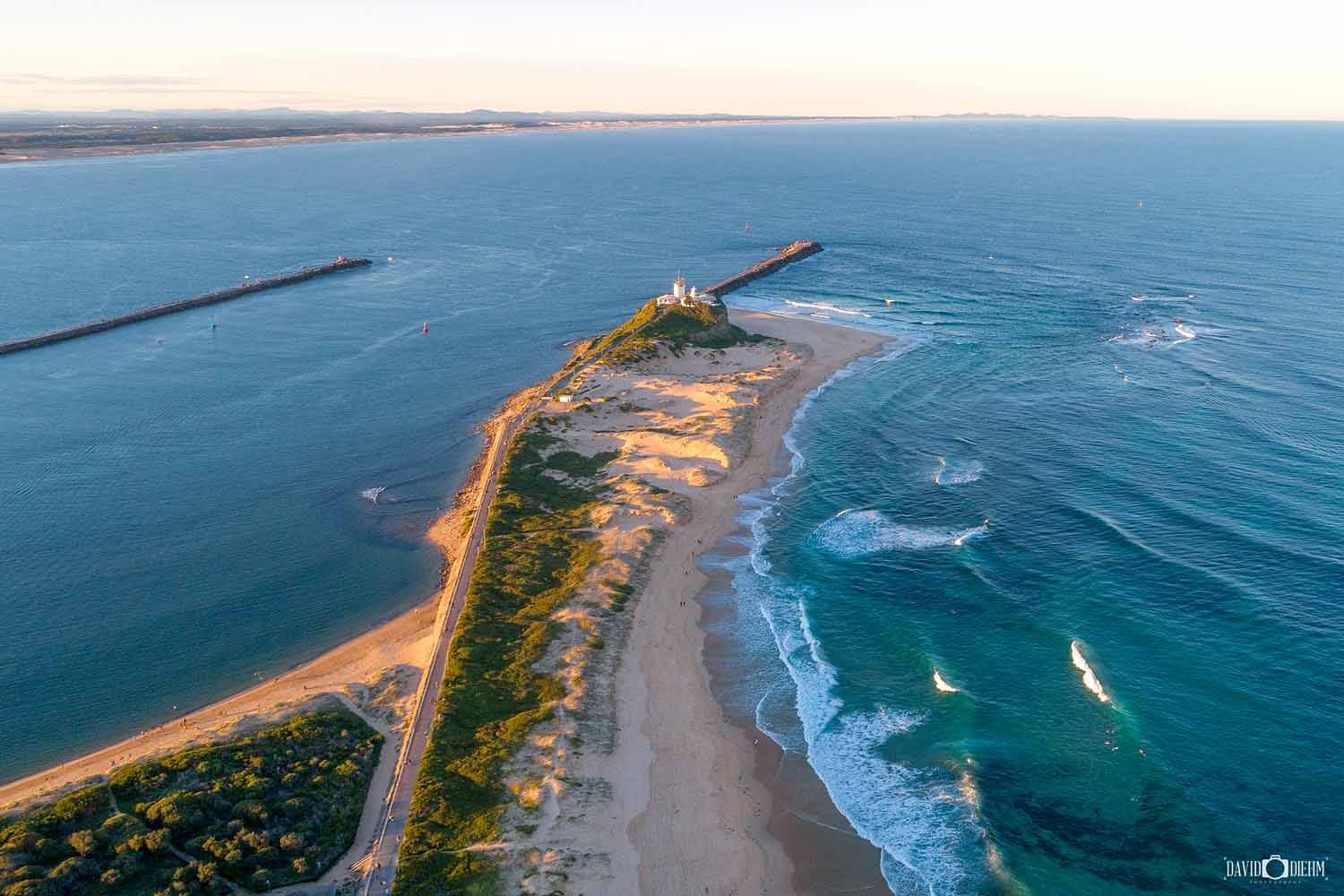
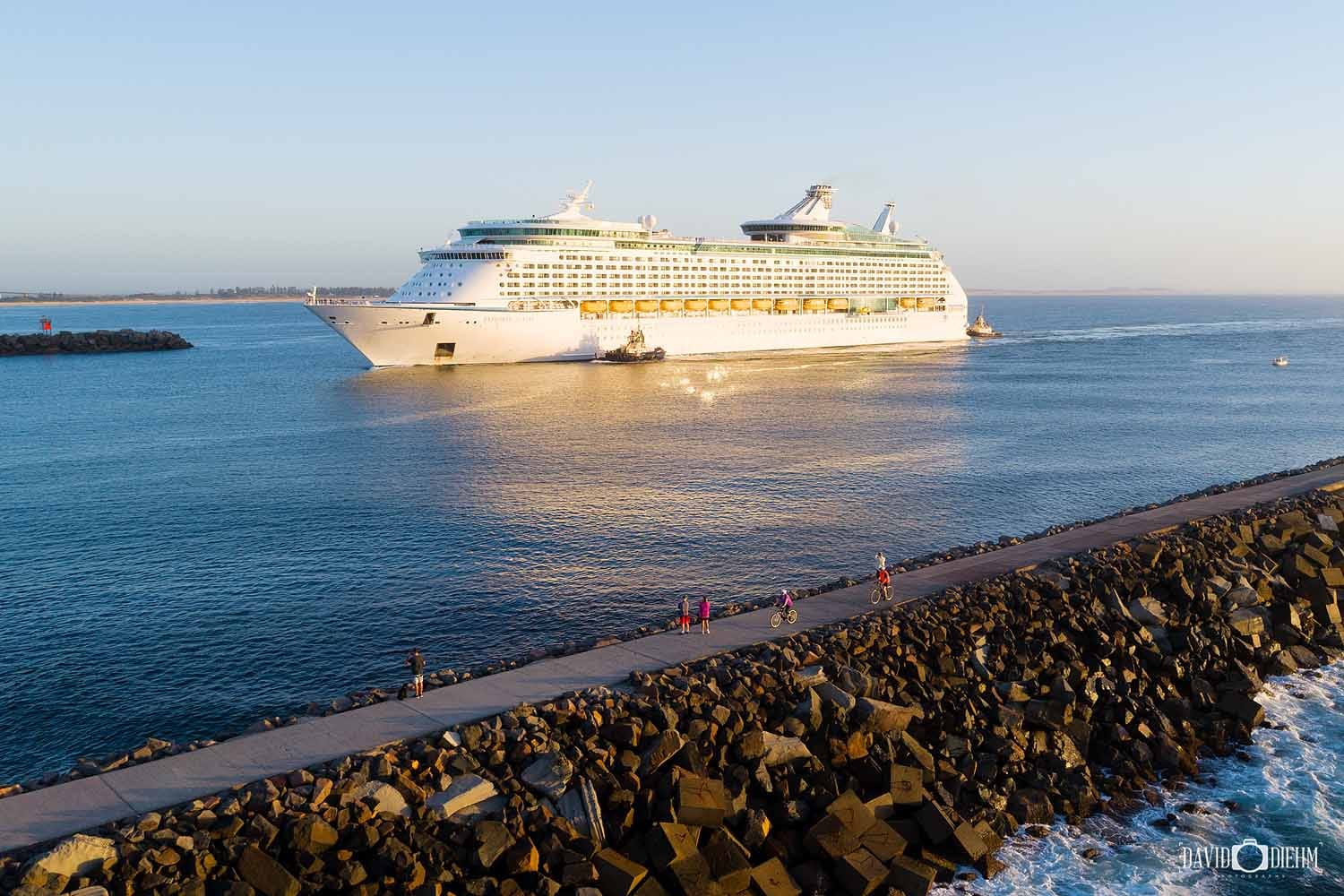
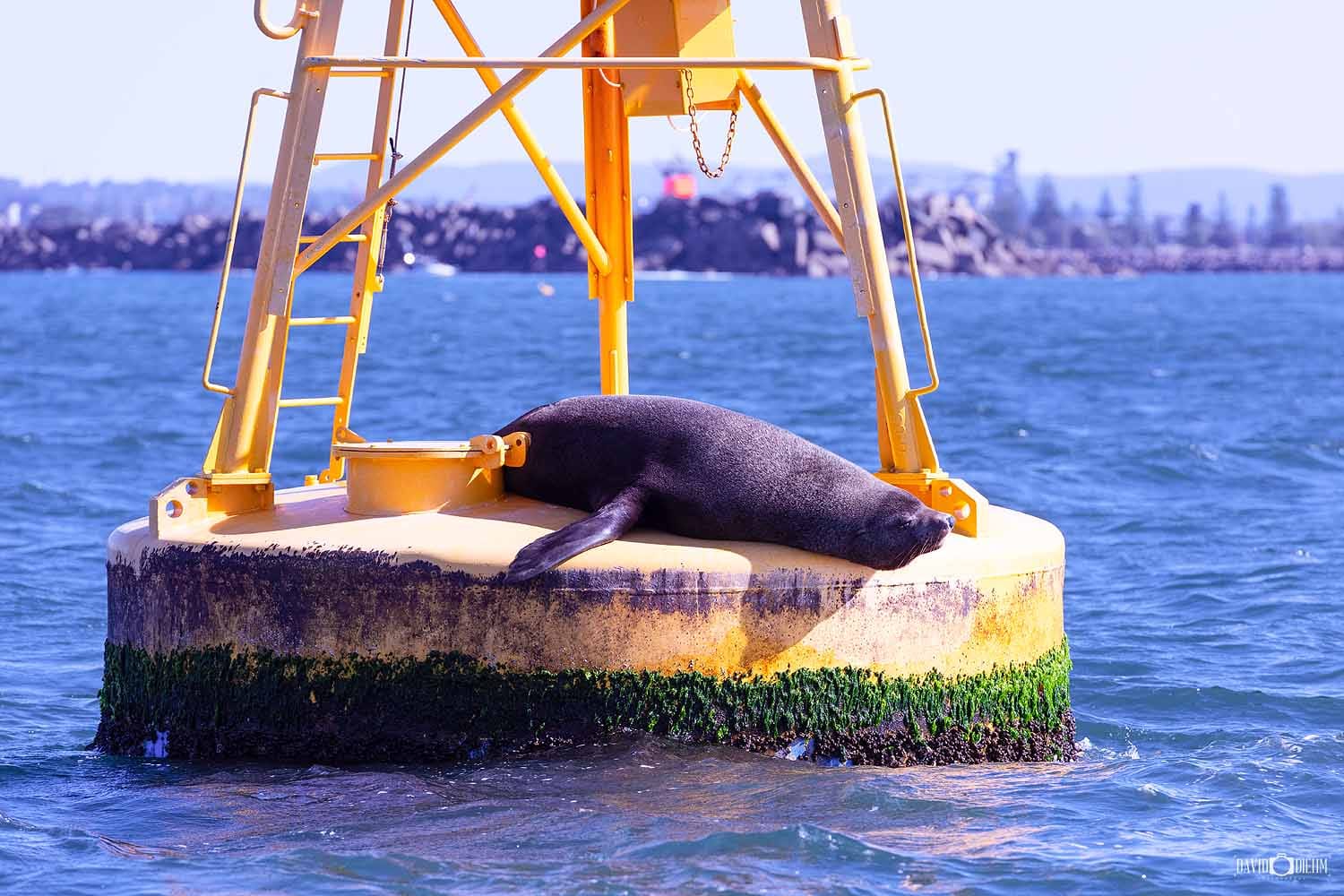
The Nobbys Breakwall Walk is particularly popular at sunrise, when the first light illuminates the harbour, lighthouse and coastline. During the annual humpback whale migration between May and November, whales can often be seen passing offshore, while dolphins are regularly spotted surfing the waves at the harbour entrance. One of the walk’s hidden highlights is the chance to spot Australian fur seals, which are regularly seen resting on the rocks at the base of the breakwall or sunbathing on the harbour marker buoys near the entrance channel, making every visit a little different.
Whether you’re watching one of the world’s largest coal ships enter port, photographing Nobbys Lighthouse at sunrise, spotting marine wildlife or simply enjoying the fresh sea air, the Nobbys Breakwall Walk delivers one of the most memorable coastal experiences in Newcastle and is an essential stop for anyone exploring the city’s spectacular coastline.
💡 Local Tip
Watch the Ships Up Close: Position yourself near the end of the breakwall to experience the incredible sight of enormous coal ships passing through the narrow harbour entrance, often accompanied by powerful tugboats guiding them safely into Newcastle Harbour. On days with a large ocean swell, waves can break over the breakwall, so always assess conditions and stay well clear of the edge. If you’re lucky, you may even see surfers riding the unique harbour entrance wave during big swell events.
6. Hickson Street to Burwood Beach Walk (Hickson Track)
Distance: 1 km return | Difficulty: Difficult | Allow: 30–60 minutes
Best For: Secluded beaches, coastal views, photography and nature lovers | Parking: Hickson Street Lookout car park | Facilities: Lookout, picnic tables and no public amenities
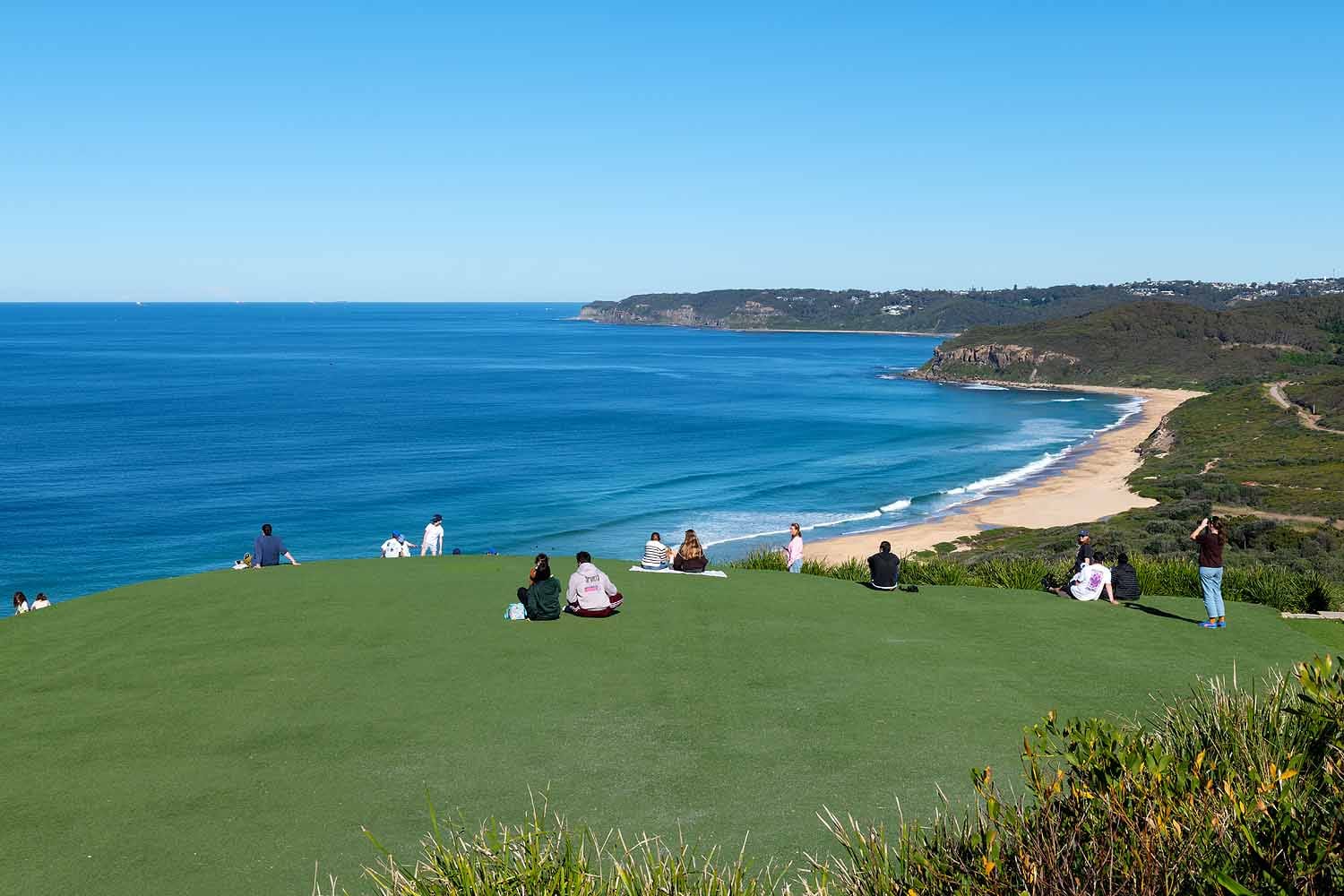
The Hickson Street Lookout Walk is one of Newcastle’s most rewarding short coastal walks, combining breathtaking ocean views, dramatic cliffs and a scenic descent through Glenrock State Conservation Area to the secluded sands of Burwood Beach. Beginning at Hickson Street Lookout in Merewether, the track follows a series of stairs and well-defined pathways through coastal heath and native bushland before emerging onto one of Newcastle’s most beautiful and unspoilt beaches.
Before beginning the descent, take time to enjoy the panoramic views from Hickson Street Lookout. Perched high above the coastline, the lookout offers sweeping vistas over Burwood Beach, Glenrock State Conservation Area and Newcastle’s spectacular southern coastline, making it one of the city’s premier photography locations and one of Newcastle’s best sunset lookouts. On afternoons with favourable coastal winds, the lookout also becomes the primary take-off and landing site for hang gliders and paragliders, creating an impressive aerial display as colourful wings soar above the cliffs and ocean.

From sweeping clifftop views at Hickson Street Lookout to the secluded sands of Burwood Beach, the Hickson Street to Burwood Beach Walk is one of Newcastle’s most spectacular short coastal walks.
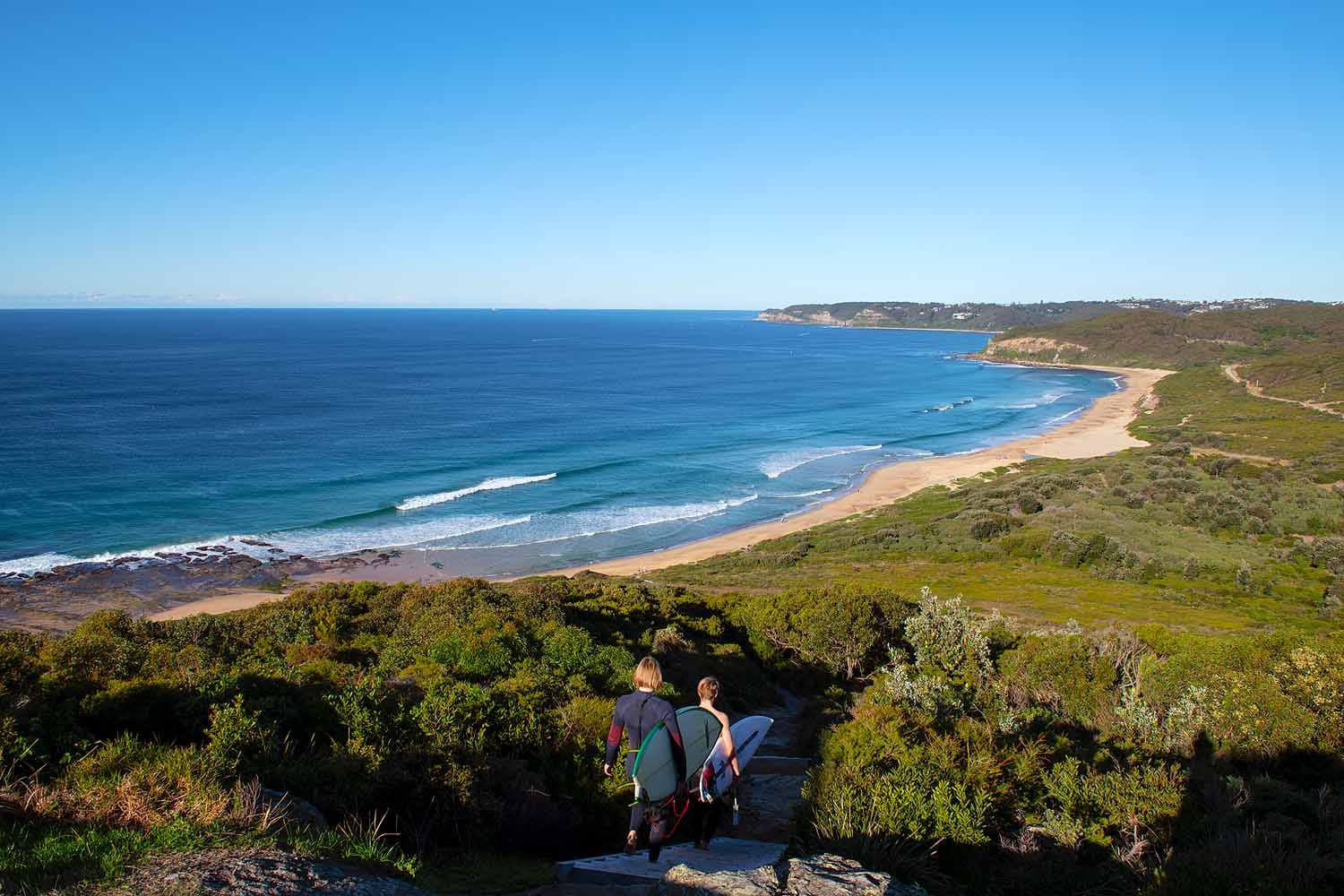
At the bottom of the track, Burwood Beach feels a world away from the busier beaches closer to the city centre. Surrounded by rugged sandstone cliffs, coastal heath and native bushland, the beach offers a peaceful setting for swimming, surfing, beach walks and photography. Visitors can explore the beach’s 1.4-kilometre stretch of golden sand, with the southern end marking the point where Glenrock Lagoon flows into the Pacific Ocean. Nearby, Legge Point, at the southern end of Burwood Beach, is one of Newcastle’s best-known surfing breaks, attracting experienced surfers whenever conditions are favourable. The surrounding landscape also reflects Newcastle’s industrial heritage, with remnants of the region’s historic coal mining industry hidden amongst the bushland within Glenrock State Conservation Area.
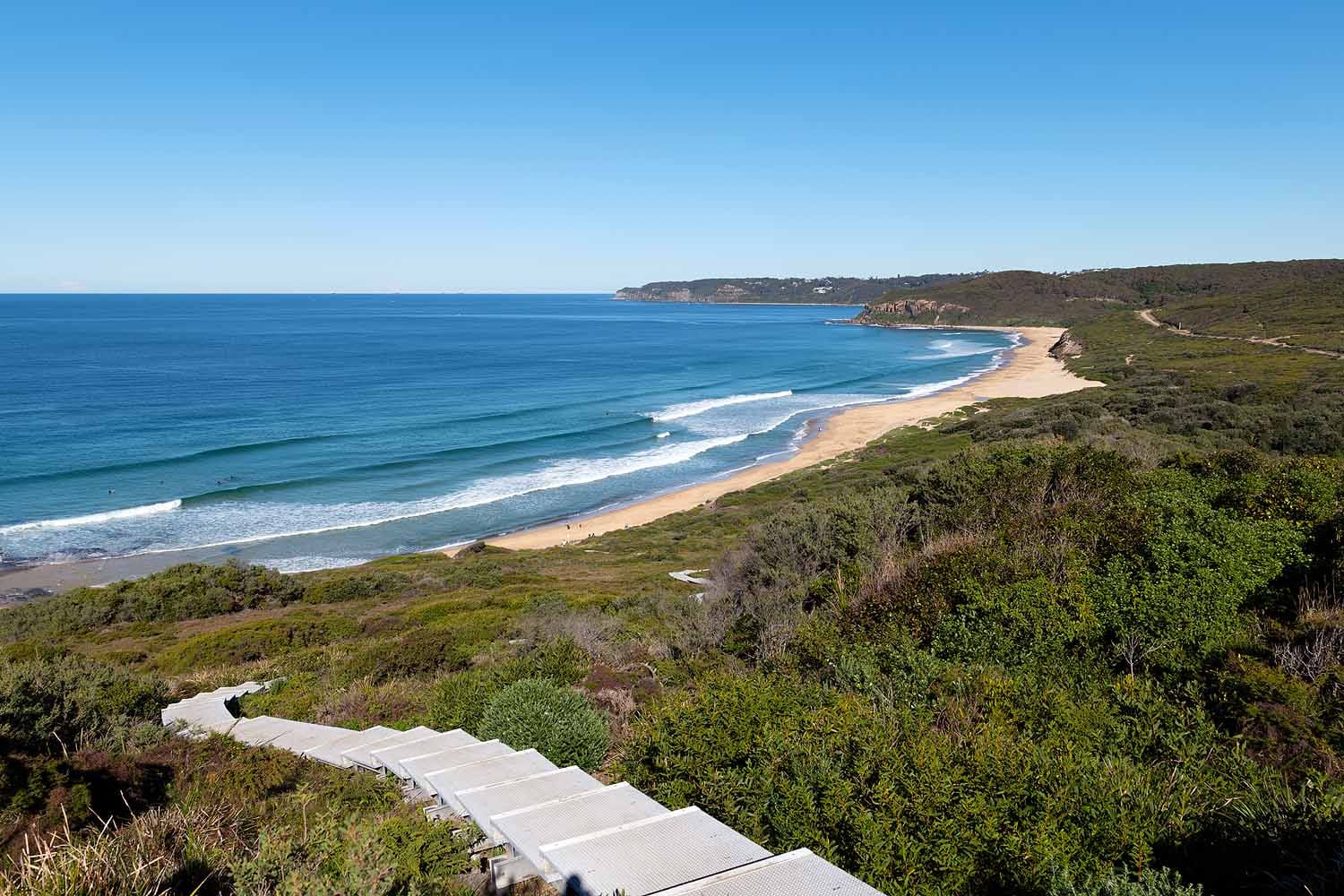
While the walk down to the beach is relatively straightforward, the return climb back to Hickson Street Lookout is considerably more demanding. The long staircase and steady ascent make this one of the more challenging short walks in Newcastle, but the spectacular coastal scenery, panoramic lookouts and tranquil setting of Burwood Beach make the effort more than worthwhile. Whether you’re visiting for sunrise, sunset, photography or simply to experience one of Newcastle’s most scenic coastal walks, this is a destination that should not be missed.
💡 Local Tip
Time Your Visit for Sunset: Hickson Street Lookout is one of Newcastle’s best sunset viewpoints, with spectacular colours often lighting up the coastline and Pacific Ocean. On favourable afternoons, it’s also the primary take-off and landing site for Newcastle’s hang gliders and paragliders, providing an unforgettable display as they soar above the coastal cliffs.
7. Blackbutt Reserve Tall Trees Walk
Distance: 2.6 km circuit | Difficulty: Easy | Allow: 45–60 minutes
Best For: Families, wildlife, nature walks and young children | Parking: Richley Reserve, Freyberg Street and Carnley Avenue entrances | Facilities: Toilets, picnic shelters, playgrounds, barbecues, wildlife exhibits and café nearby. Cost: Parking fees apply (hourly or flat daily rate).
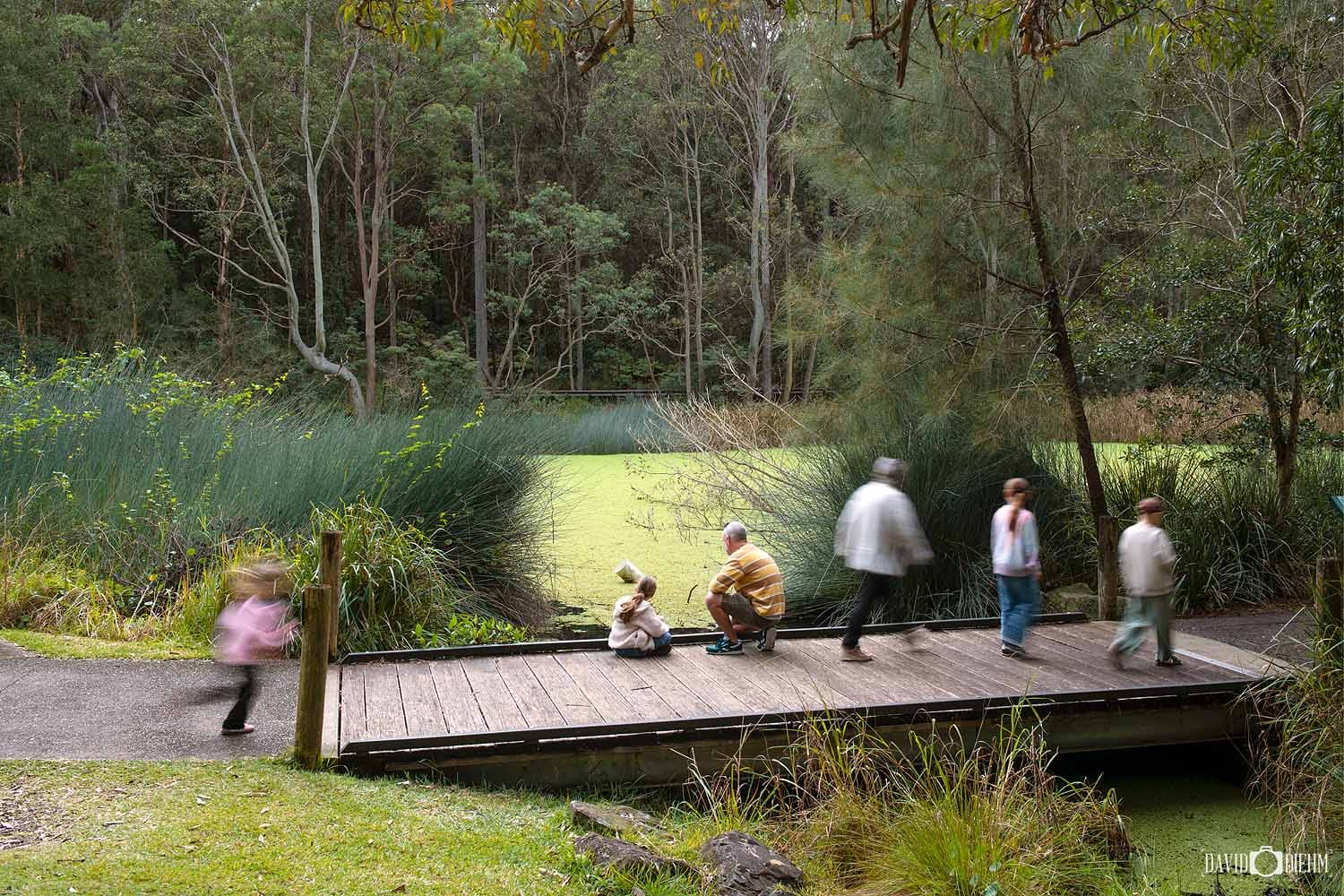
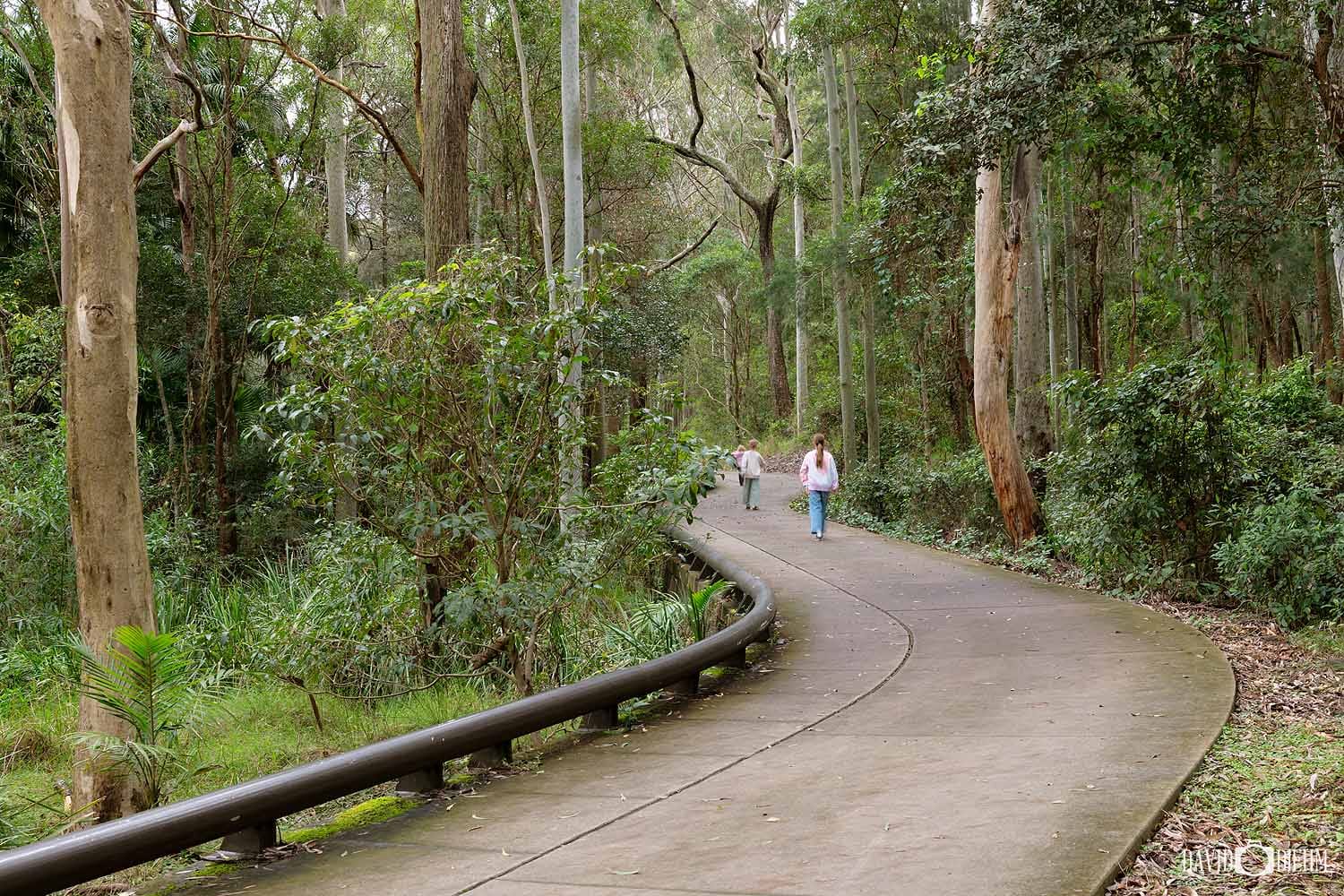
The Blackbutt Reserve Tall Trees Walk is one of Newcastle’s most popular family-friendly bushwalks, offering an easy circuit beneath towering eucalypt trees in the heart of Richley Reserve. Starting from Freyberg Street in New Lambton, the 2.6-kilometre loop follows a combination of sealed pathways, boardwalks and wide bush tracks, making it suitable for families, casual walkers and visitors of all ages. With its peaceful bushland setting and abundant native wildlife, the walk provides an excellent opportunity to experience one of Newcastle’s largest natural reserves just minutes from the city centre.
Covering more than 180 hectares of protected bushland, Blackbutt Reserve is divided into two main visitor precincts. Carnley Reserve serves as the main visitor hub, home to the free wildlife exhibits, Information Cottage, souvenir shop and amenities. Richley Reserve, where the Tall Trees Walk begins, is the recreation precinct, featuring extensive picnic areas, duck ponds, barbecue facilities and Newcastle’s impressive Mega Adventure Playground. Together, the two precincts offer one of the Hunter Region’s best free family destinations.
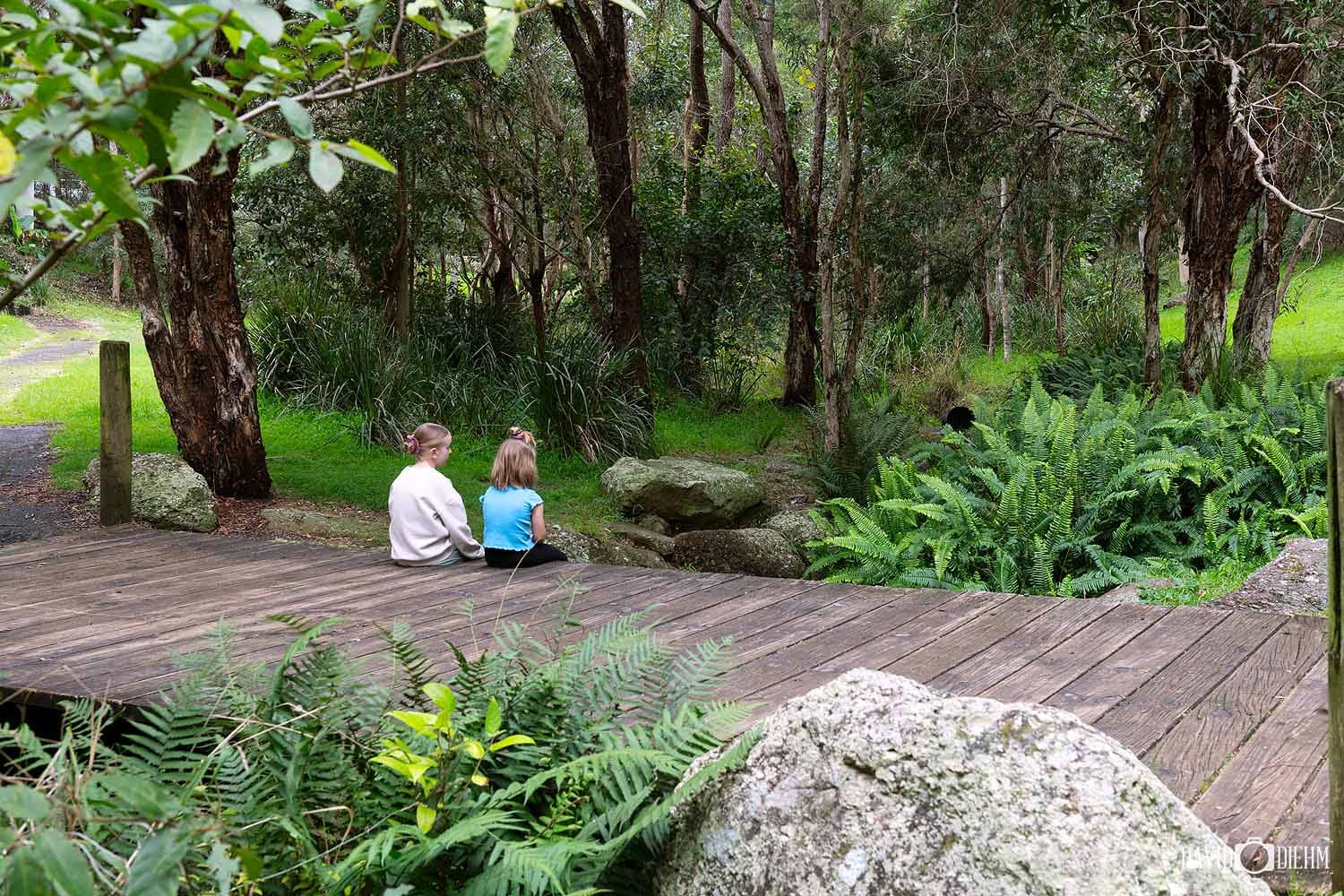
The Tall Trees Walk is regarded as one of the reserve’s easiest and most accessible walking trails. Winding beneath a magnificent canopy of towering eucalypts, the path passes peaceful ponds, timber boardwalks and shaded bushland while following sections of Ironbark Creek. The gentle terrain makes it ideal for families with young children, while the surrounding forest provides excellent opportunities to spot colourful parrots, honeyeaters, reptiles and other native wildlife throughout the year.
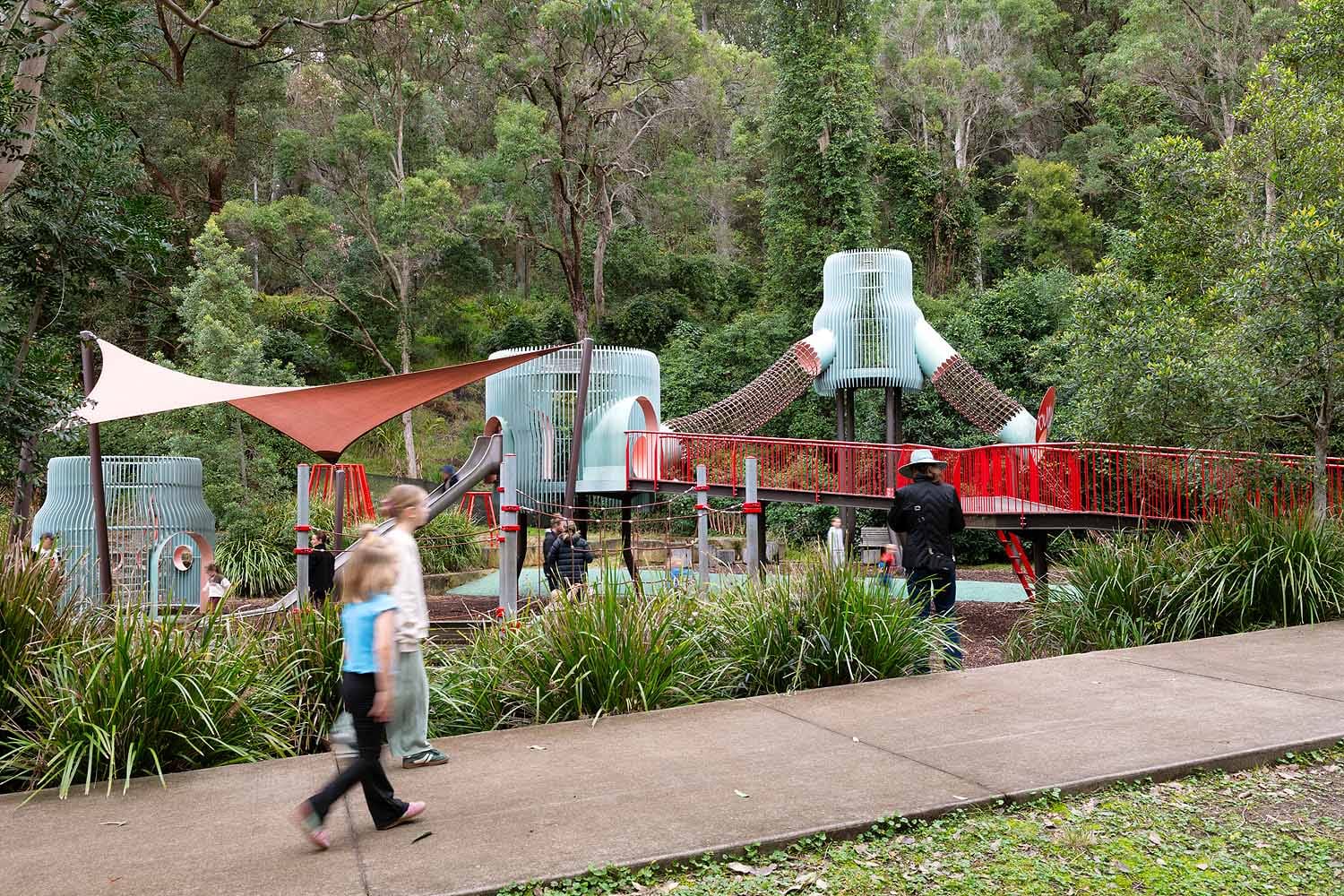
One of the highlights of visiting Richley Reserve is the spectacular Mega Adventure Playground, one of the largest nature-based playgrounds in Newcastle. Designed to encourage climbing, balancing and imaginative play, it features towering climbing structures, rope bridges, enclosed slides and interactive play equipment suitable for children of all ages. Combined with the Tall Trees Walk, picnic shelters, electric and wood-fired barbecues, duck ponds and wide open lawns, Richley Reserve makes it easy to spend an entire morning or afternoon outdoors.
No visit to Blackbutt Reserve is complete without exploring the free Blackbutt Reserve Wildlife Exhibits at nearby Carnley Reserve. Home to iconic Australian animals including koalas, wombats, kangaroos, emus, wallabies and reptiles, the exhibits provide an enjoyable educational experience for children and adults alike. Visiting both Richley Reserve and Carnley Reserve in the one trip allows families to experience the very best of Blackbutt Reserve, combining bushwalking, adventure play, wildlife encounters and picnic facilities into one of Newcastle’s best free attractions.
💡 Local Tip
Start your visit at Richley Reserve and allow extra time to enjoy the Mega Adventure Playground, peaceful duck ponds and picnic areas before or after completing the Tall Trees Walk. It’s the perfect place for children to burn off some energy, making this one of Newcastle’s best half-day family outings.
8. Nobbys Headland Walk
Distance: 1.6 km return | Difficulty: Moderate | Allow: 30–60 minutes
Best For: Harbour views, whale watching, history and families | Parking: Nobbys Beach car park | Facilities: Toilets, picnic areas, beach access and nearby cafés
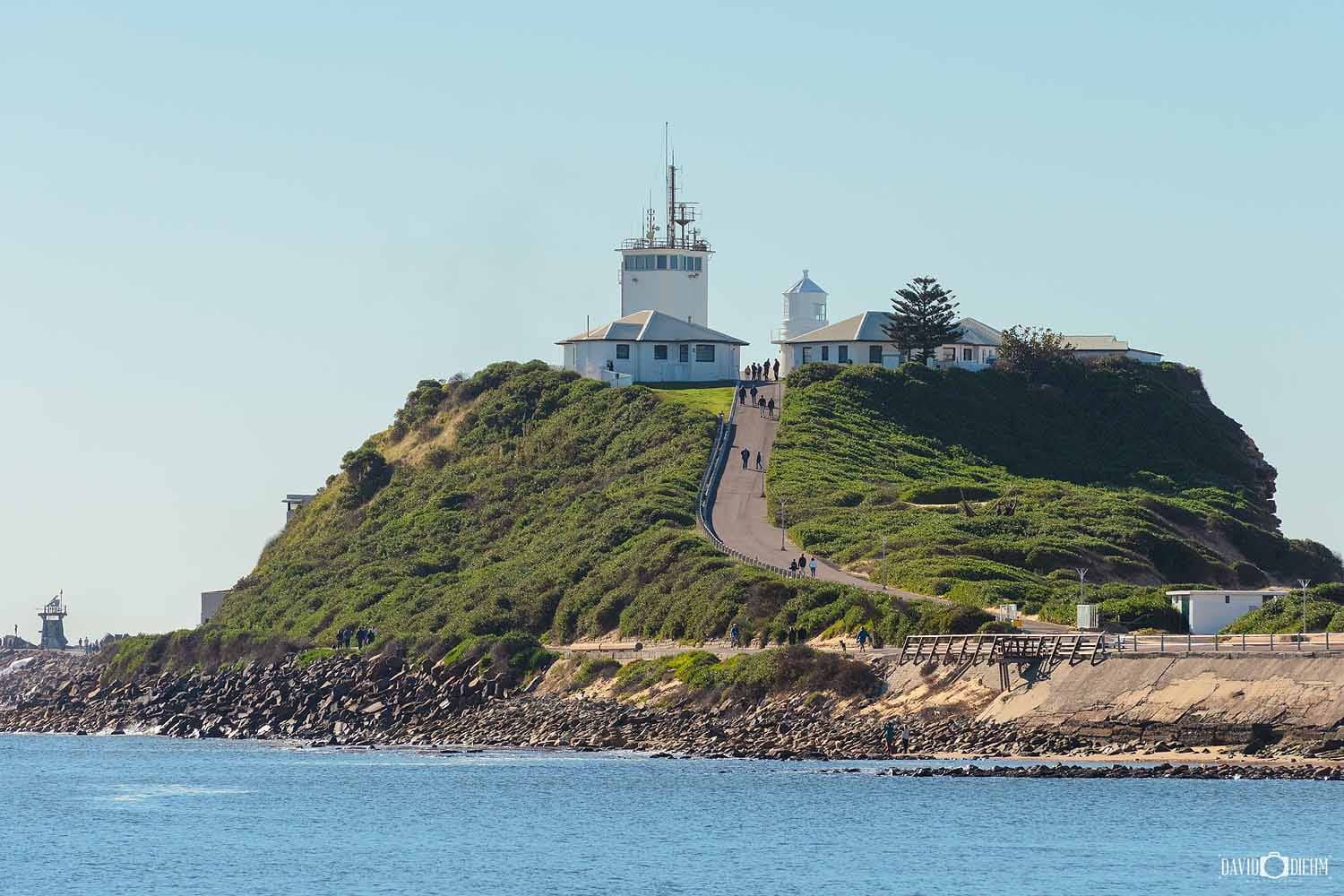
The Nobbys Headland Walk is one of Newcastle’s most rewarding short coastal walks, combining spectacular ocean views, rich maritime history and one of the city’s most iconic landmarks. Beginning at Nobbys Beach, the walk follows the historic Macquarie Pier before climbing to the summit of Nobbys Headland, where visitors are rewarded with panoramic views across Newcastle Harbour, Stockton Beach and the vast Pacific Ocean.
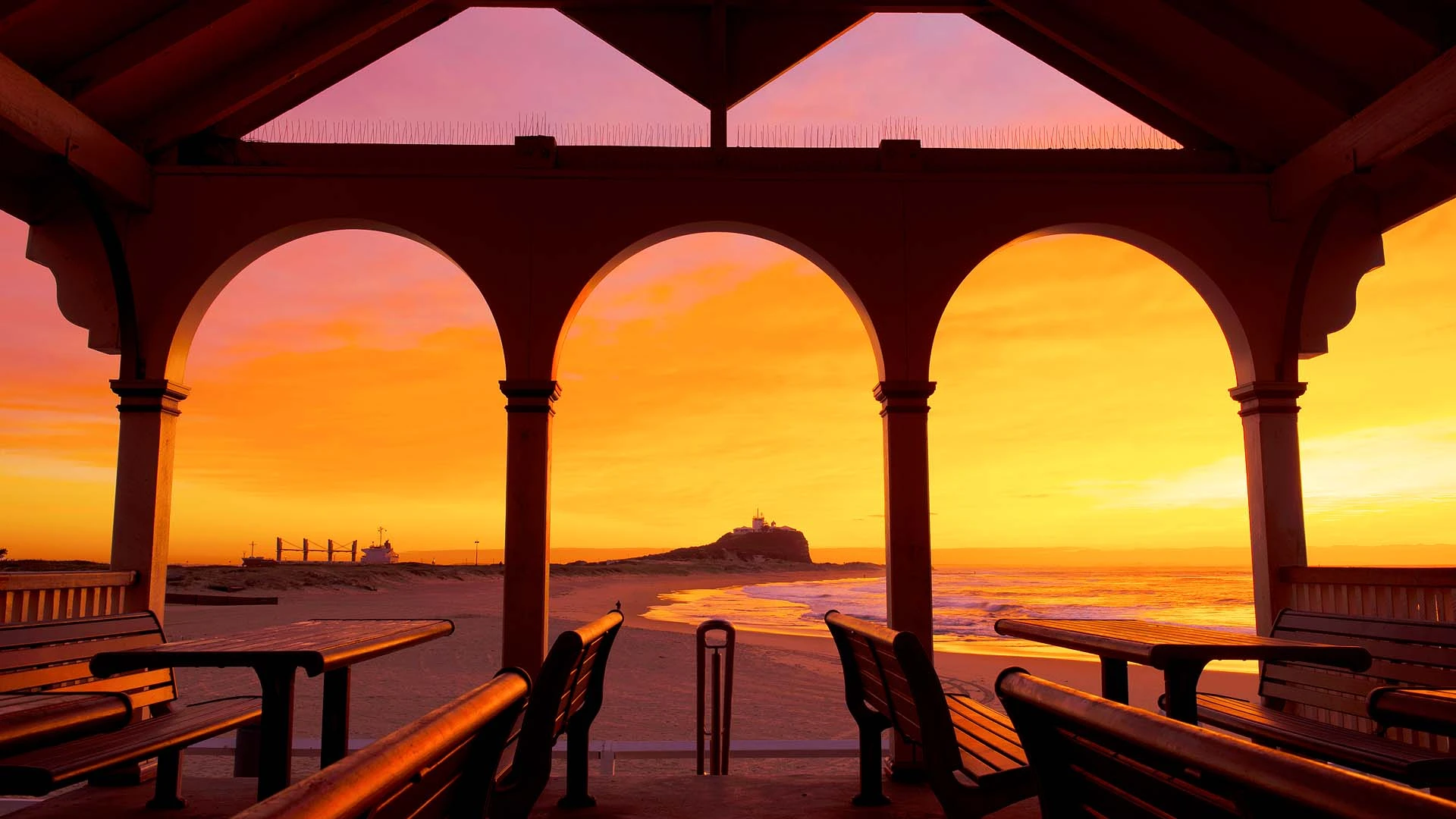
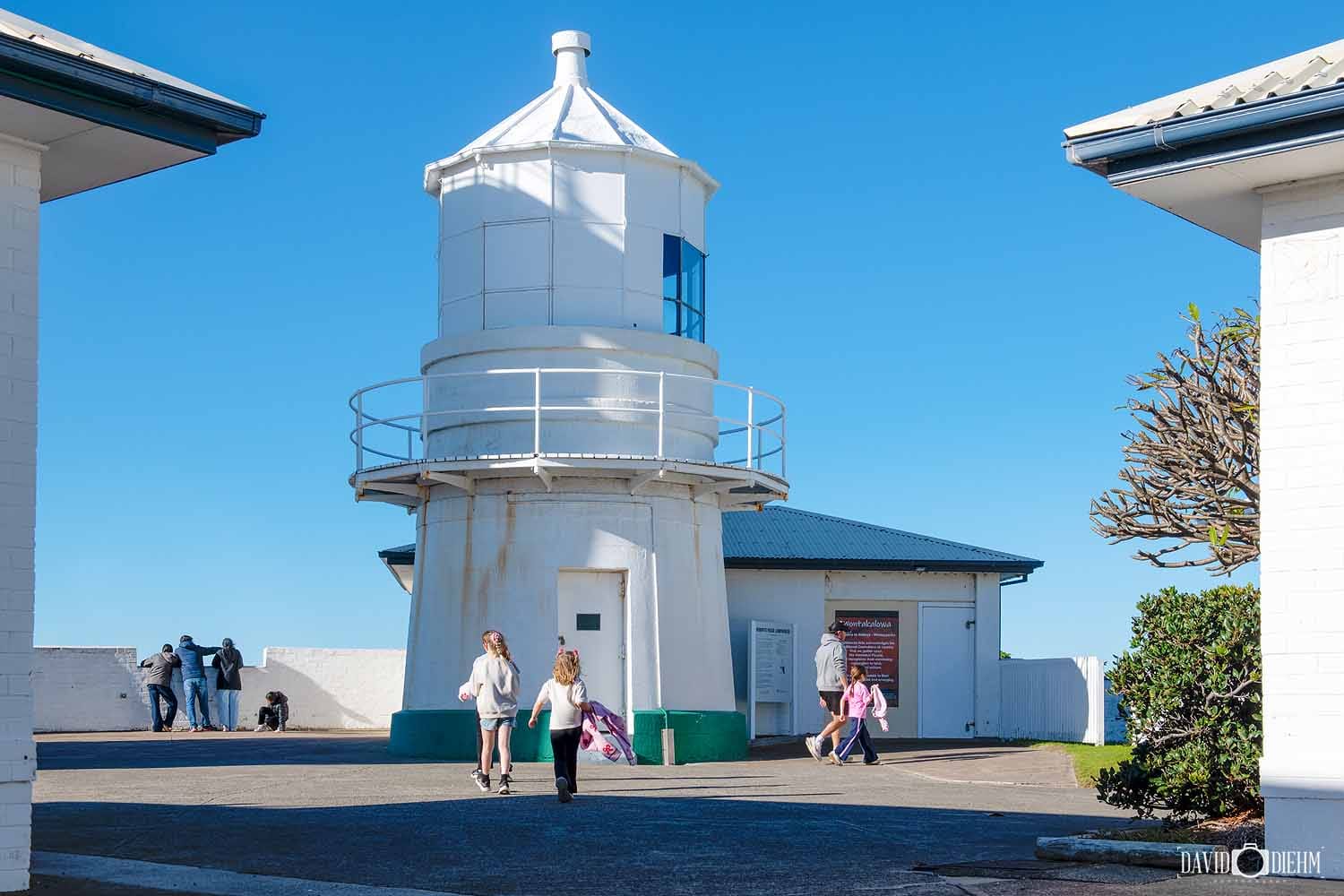
Constructed in the early 1800s to protect Newcastle Harbour and improve access for ships, Macquarie Pier transformed Nobbys Island into the headland seen today. Originally, Nobbys Head was significantly higher than it is today, but during the nineteenth century much of the headland was quarried away to reduce wind turbulence and improve sailing conditions for vessels entering the Hunter River. At its summit stands the heritage-listed Nobbys Lighthouse, first illuminated in 1858 and still guiding vessels safely through the harbour entrance more than 165 years later. The distinctive white stone lighthouse stands 9.8 metres tall, with its light positioned 35 metres above mean sea level, allowing it to be seen by ships approaching Newcastle Harbour. The Nobbys Lighthouse precinct is generally open to visitors on Saturdays, Sundays and public holidays between 8:00 am and 4:00 pm, and is also opened whenever cruise ships visit the Port of Newcastle, providing access to one of the city’s finest coastal viewpoints.
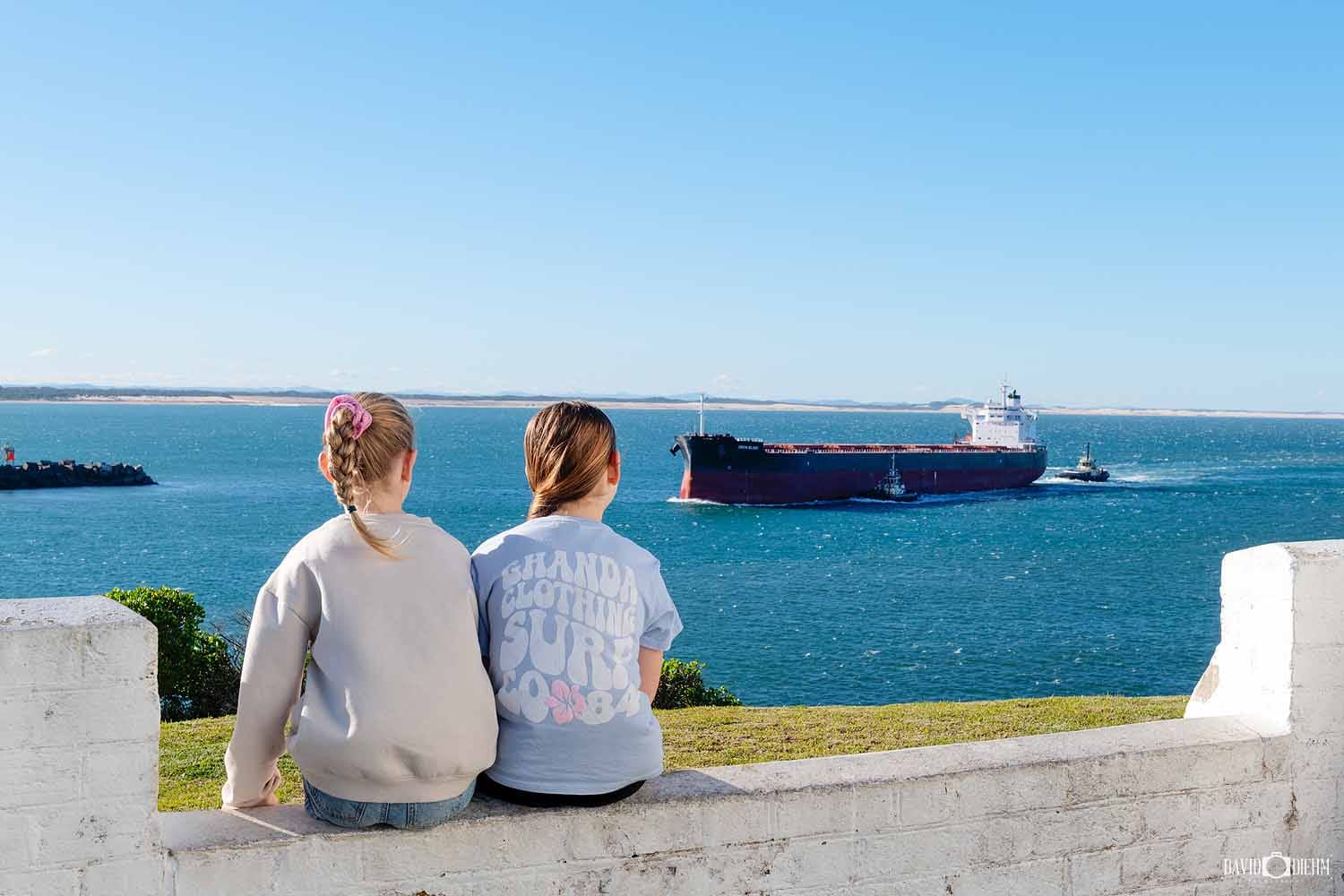
As you climb the Nobbys Headland Walk, the views become increasingly spectacular. Looking south, you’ll enjoy sweeping coastal panoramas stretching towards Merewether, while to the north Stockton Beach and, on clear days, Port Stephens can be seen in the distance. The elevated headland also overlooks the busy entrance to Newcastle Harbour, where enormous coal ships, tugboats, pilot vessels and cruise ships regularly pass beneath the lighthouse. Between May and November, the headland becomes one of Newcastle’s premier land-based whale-watching locations, with migrating humpback whales frequently seen just offshore.
Although the Nobbys Headland Walk is relatively short, the steady uphill climb makes it slightly more challenging than many of Newcastle’s waterfront walks. Fortunately, several viewing areas along the path provide ideal places to pause, take photographs and enjoy the ever-changing coastal scenery before reaching the summit. Whether you’re interested in Newcastle’s maritime history, photographing the coastline, watching ships navigate the harbour entrance or spotting migrating whales, the Nobbys Headland Walk offers one of the city’s most memorable coastal experiences.
💡 Local Tip
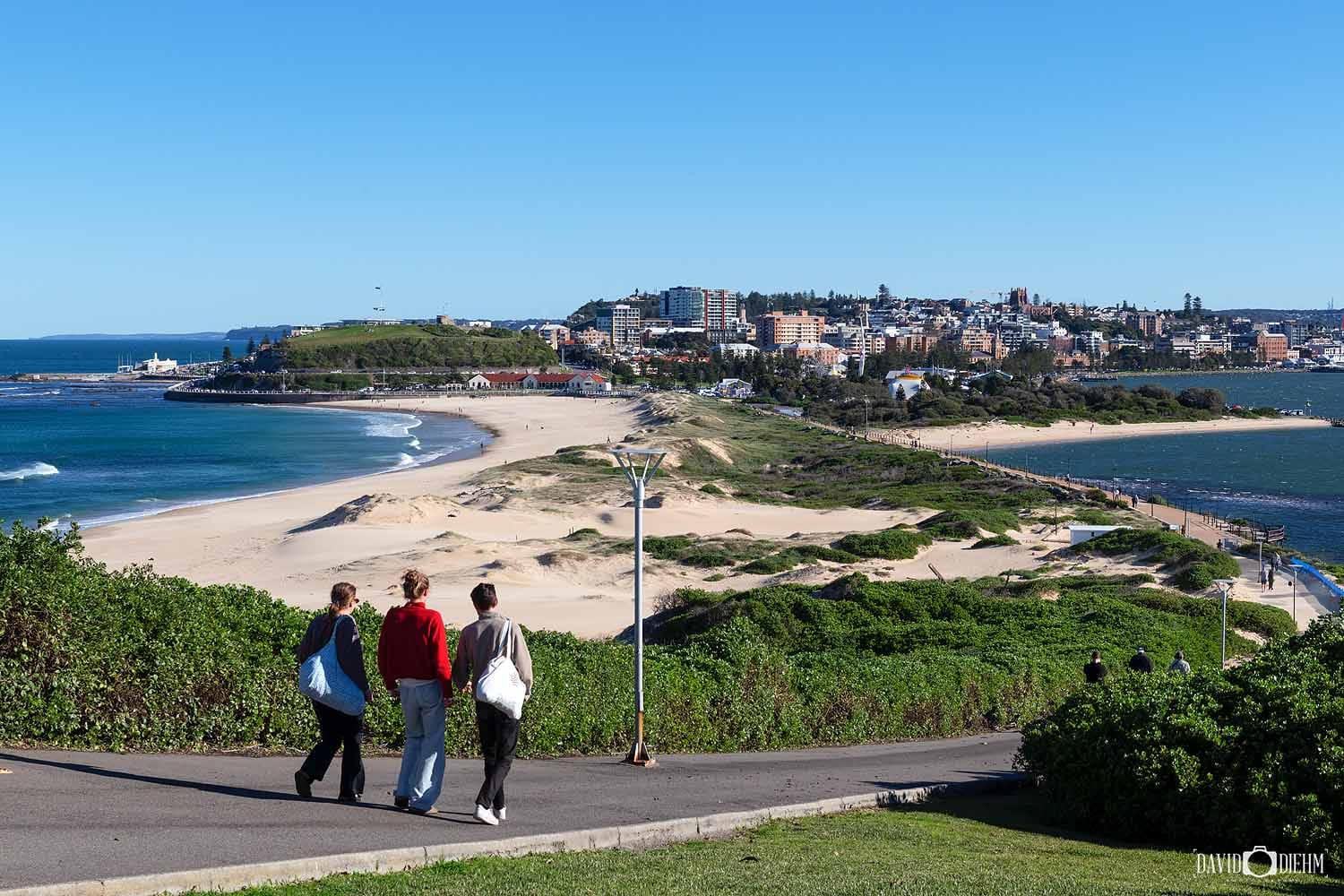
Take in the Views: For the best panoramic views, walk to the top of Nobbys Headland and be sure to look back over your shoulder to enjoy one of Newcastle’s most iconic city vistas. While you’re there, take time to browse Lighthouse Arts, where the historic lighthouse cottages have been transformed into a creative hub featuring rotating exhibitions, artist residencies and local cultural displays.
9. Shipwreck Walk Stockton Breakwall
Distance: 2 km return | Difficulty: Easy | Allow: 30–45 minutes
Best For: History, harbour views, ship spotting and families | Parking: King Street, Stockton | Facilities: Toilets, picnic areas, cafés and nearby beach access

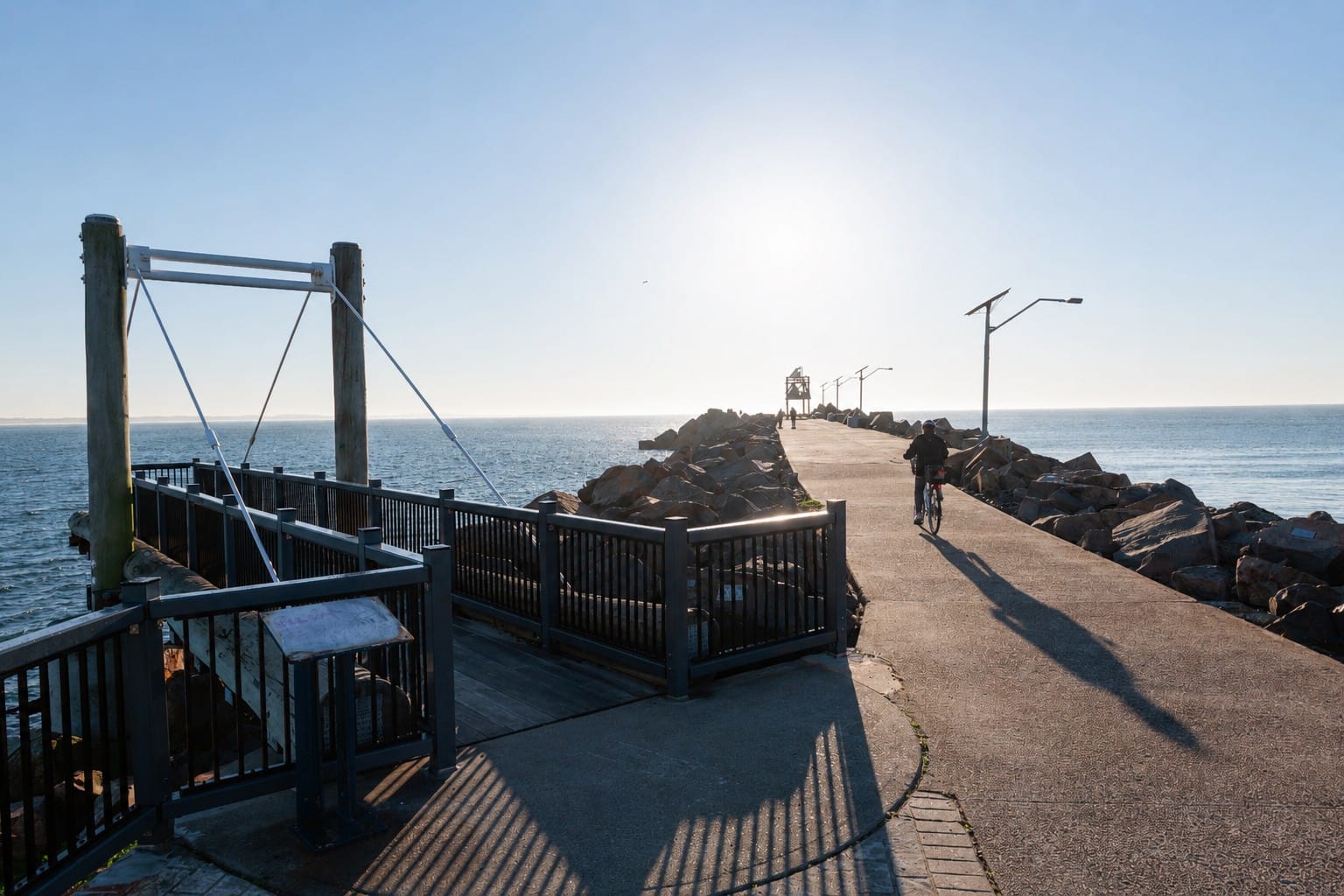
The Shipwreck Walk is one of Newcastle’s most fascinating short walks, combining maritime history with spectacular harbour views along the Stockton Breakwall. Following a flat, family-friendly pathway beside the Hunter River, the walk takes visitors past a series of interpretive displays that reveal the dramatic stories of ships lost at the entrance to Newcastle Harbour, while offering uninterrupted views towards Nobbys Lighthouse, Nobbys Headland and the Newcastle skyline.
Long before the harbour breakwalls were constructed, the entrance to the Hunter River was considered one of Australia’s most dangerous stretches of coastline. Shifting sandbanks, particularly the notorious Oyster Bank, claimed dozens of ships during the nineteenth century. Along the Shipwreck Walk, interpretive markers tell the stories of these wrecks, providing a fascinating insight into Newcastle’s maritime history and the challenges faced by early sailors navigating the harbour entrance.
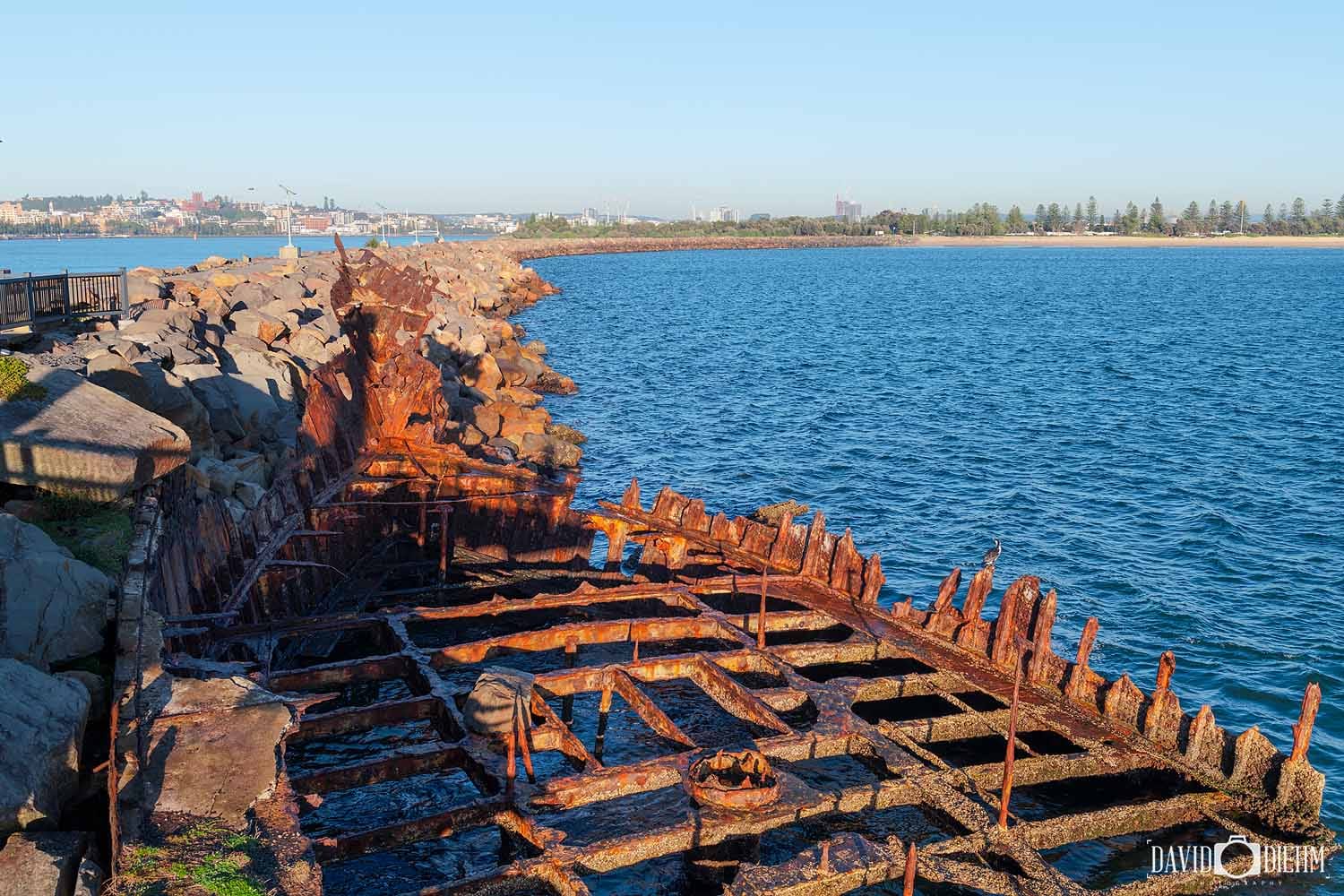
One of the highlights of the Shipwreck Walk is the opportunity to see the remains of the French four-masted barque Adolphe. Wrecked during a violent storm in 1904 after being driven onto the notorious Oyster Bank, the vessel remains partially visible beside the Stockton Breakwall more than a century later. A viewing platform allows visitors to look directly down onto the rusting wreck while interpretive signs recount the dramatic rescue of all 32 crew members, making it one of Newcastle’s most significant maritime heritage sites.
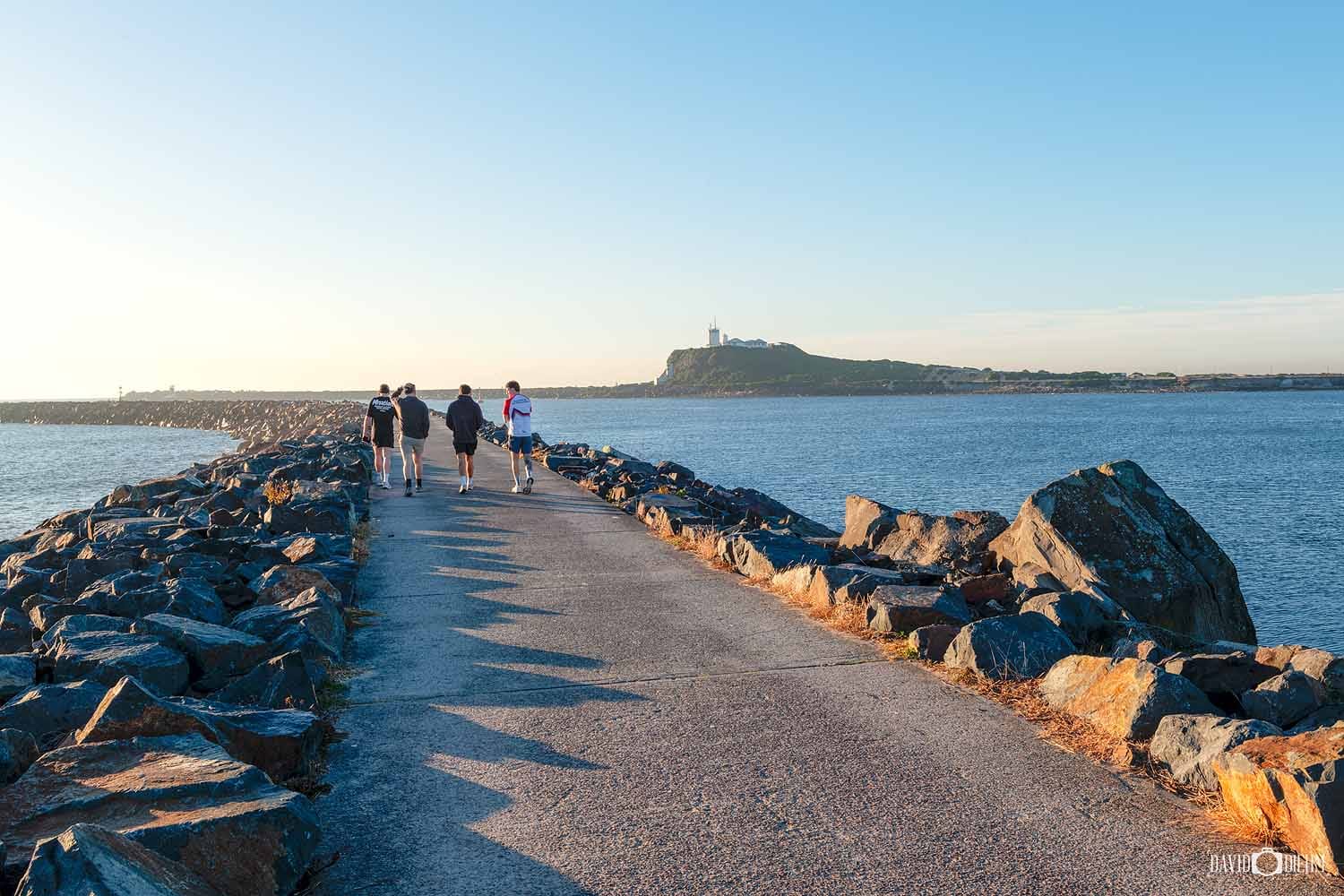
As you continue along the Stockton Breakwall, you’ll enjoy panoramic views across Newcastle Harbour, one of Australia’s busiest working ports. Massive coal ships, tugboats, pilot vessels and recreational boats regularly pass through the narrow harbour entrance, making this one of Newcastle’s best locations for watching maritime activity. The elevated views across to Nobbys Lighthouse, Macquarie Pier and the Newcastle coastline also make the walk a favourite among photographers, particularly at sunrise and sunset.
The Shipwreck Walk is suitable for visitors of all ages thanks to its short distance and flat, sealed pathway. It can easily be combined with a walk along Stockton Beach, a visit to one of Stockton’s local cafés, or a ride aboard the historic Stockton Ferry, creating an enjoyable half-day itinerary that showcases both Newcastle’s rich maritime heritage and beautiful harbour scenery.
💡 Local Tip
Visit at Sunrise: Arrive around sunrise when the first ships of the day enter Newcastle Harbour beneath soft morning light. After viewing the Adolphe shipwreck, continue along the Stockton Breakwall for uninterrupted views of Nobbys Lighthouse, the Newcastle skyline and the constant procession of ships entering one of Australia’s busiest working harbours.
10. Throsby Creek Loop
Distance: 3.2 km circuit | Difficulty: Easy | Allow: 45–60 minutes
Best For: Families, runners, cycling and waterfront scenery | Parking: Tully Street, Carrington, Islington Park and nearby street parking | Facilities: Toilets, playgrounds, picnic areas, cafés and shared pathways
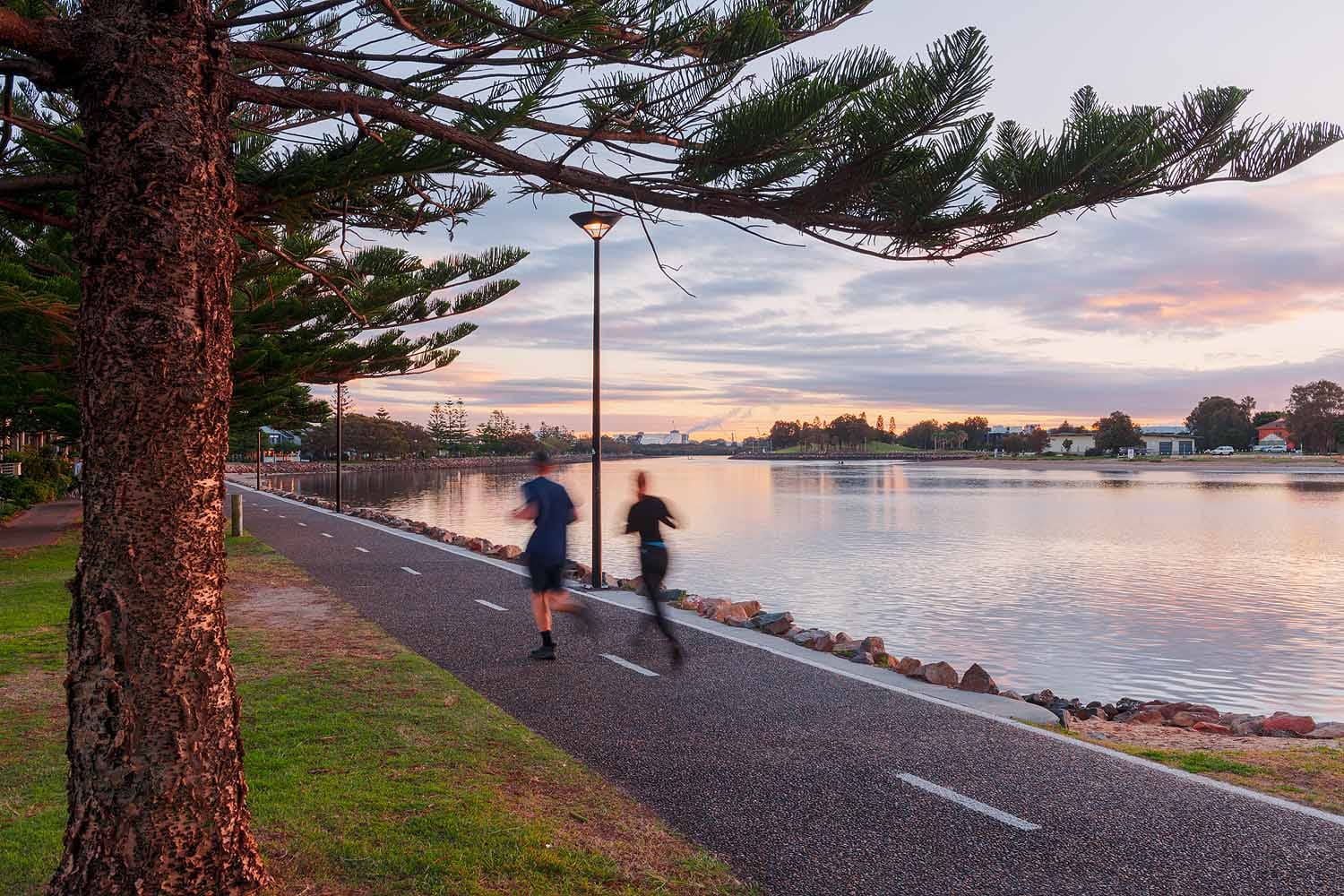
The Throsby Creek Loop is one of Newcastle’s most popular urban walks, offering a scenic circuit around the picturesque waterways that connect Carrington, Maryville and Islington. Following shared pathways, waterfront boardwalks and foreshore parklands, the walk combines peaceful natural scenery with impressive views of Newcastle Harbour, making it a favourite for walkers, runners, cyclists and photographers.
Beginning from either Carrington or Maryville, the mostly flat loop follows the shoreline of Throsby Creek, making it ideal for families with prams, casual walkers and cyclists of all abilities. Along the way you’ll pass marinas, picnic areas, playgrounds and waterfront parks while enjoying constantly changing views across the creek. The route also forms part of Newcastle’s extensive Harbour Foreshore Shared Pathway, providing an enjoyable off-road walk close to the city centre.
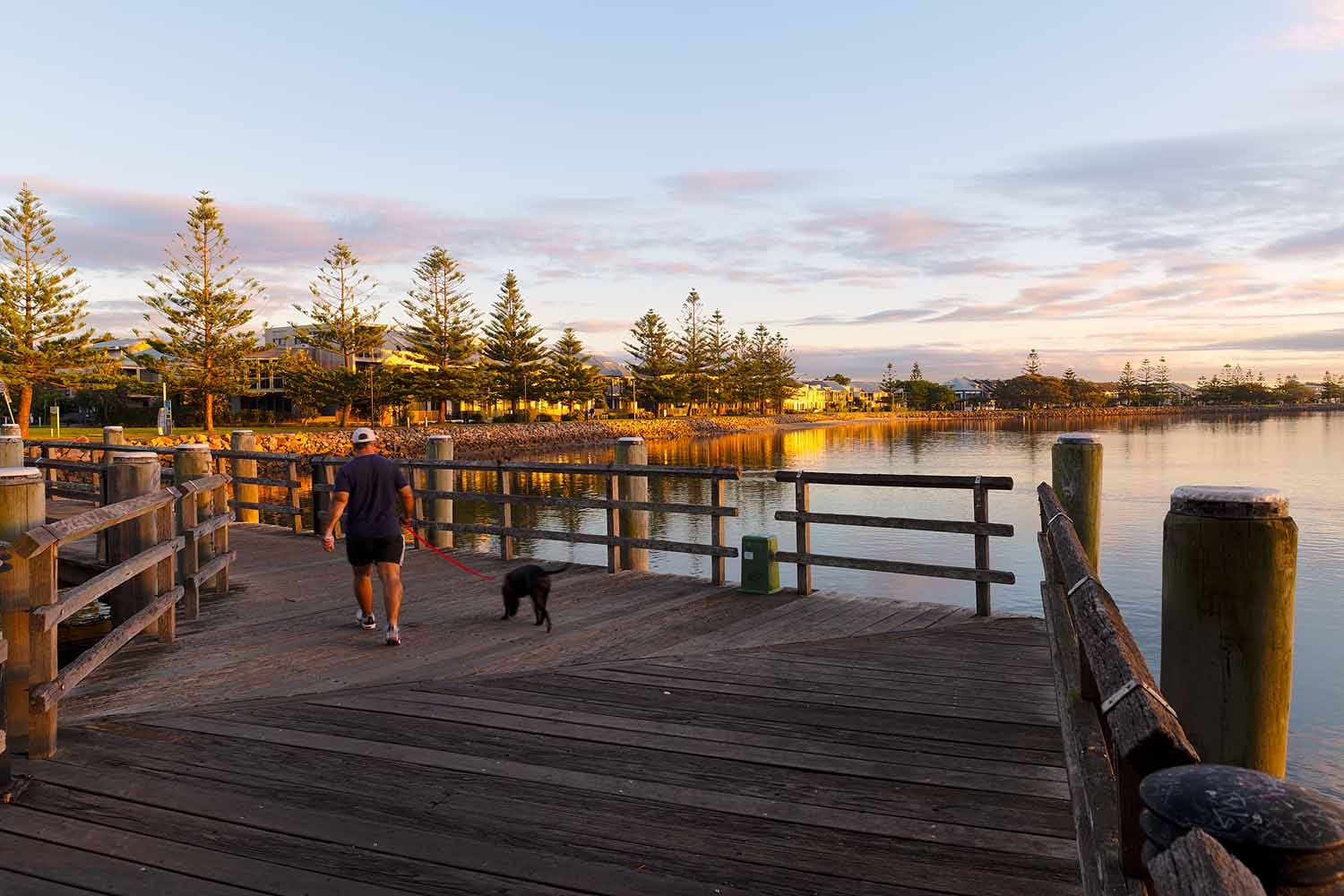
One of the highlights of the Throsby Creek Loop is the elevated timber boardwalk through the mangroves near Islington. This peaceful section showcases an important estuarine ecosystem where visitors can spot native birds, fish and other wildlife while learning about the area’s natural environment through interpretive signage. The mangrove-lined boardwalk provides a surprising escape into nature despite being only minutes from Newcastle’s CBD.
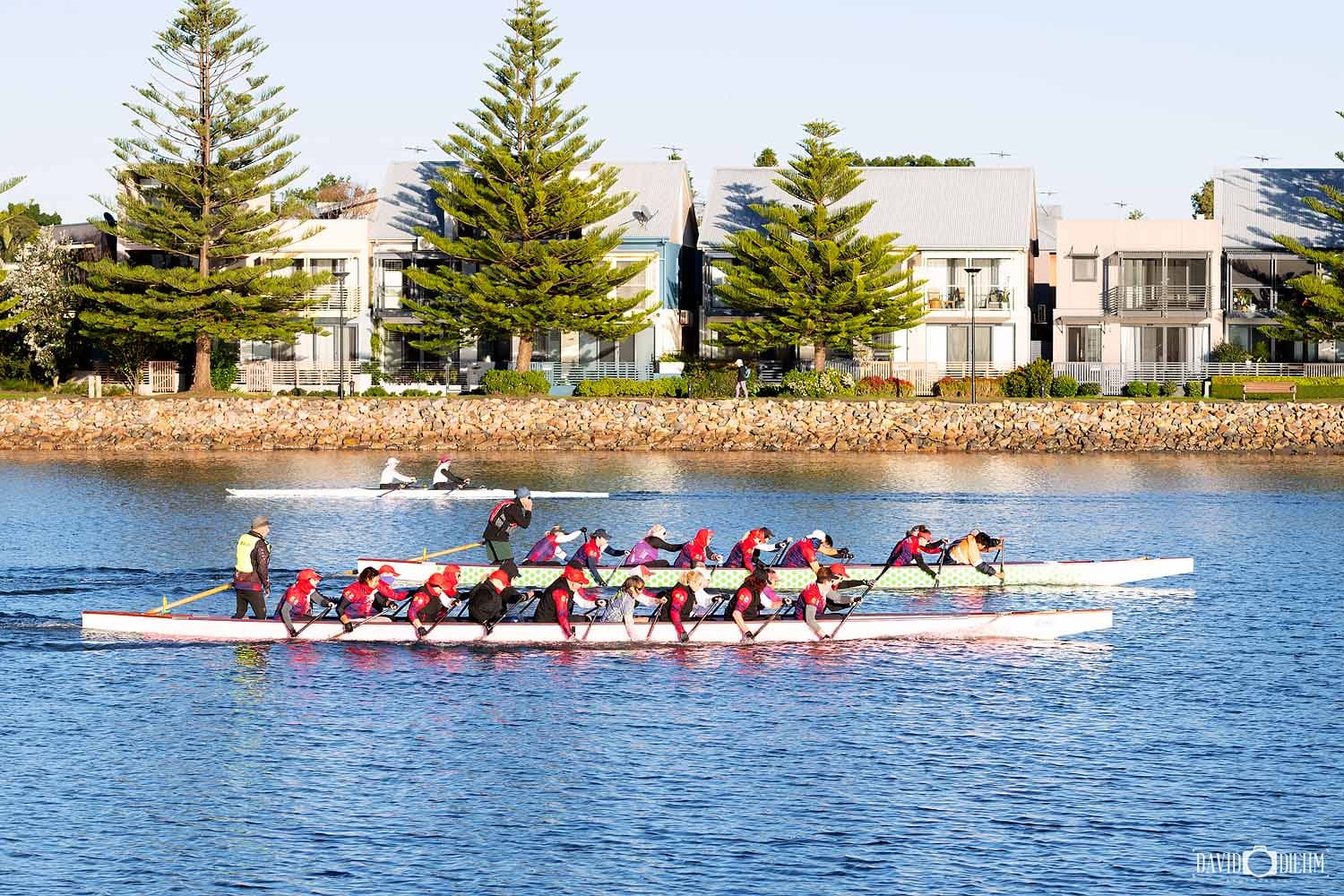
The Throsby Creek Loop is also one of Newcastle’s busiest recreation corridors. Throughout the day you’ll often see rowing crews, dragon boat teams, kayakers and stand-up paddleboarders training on the calm water, while the wide shared pathways are popular with walkers, joggers and cyclists. Combined with its easy terrain and beautiful waterfront scenery, it’s one of Newcastle’s best walks for visitors looking to experience a different side of the city away from the coastline.
💡 Local Tip
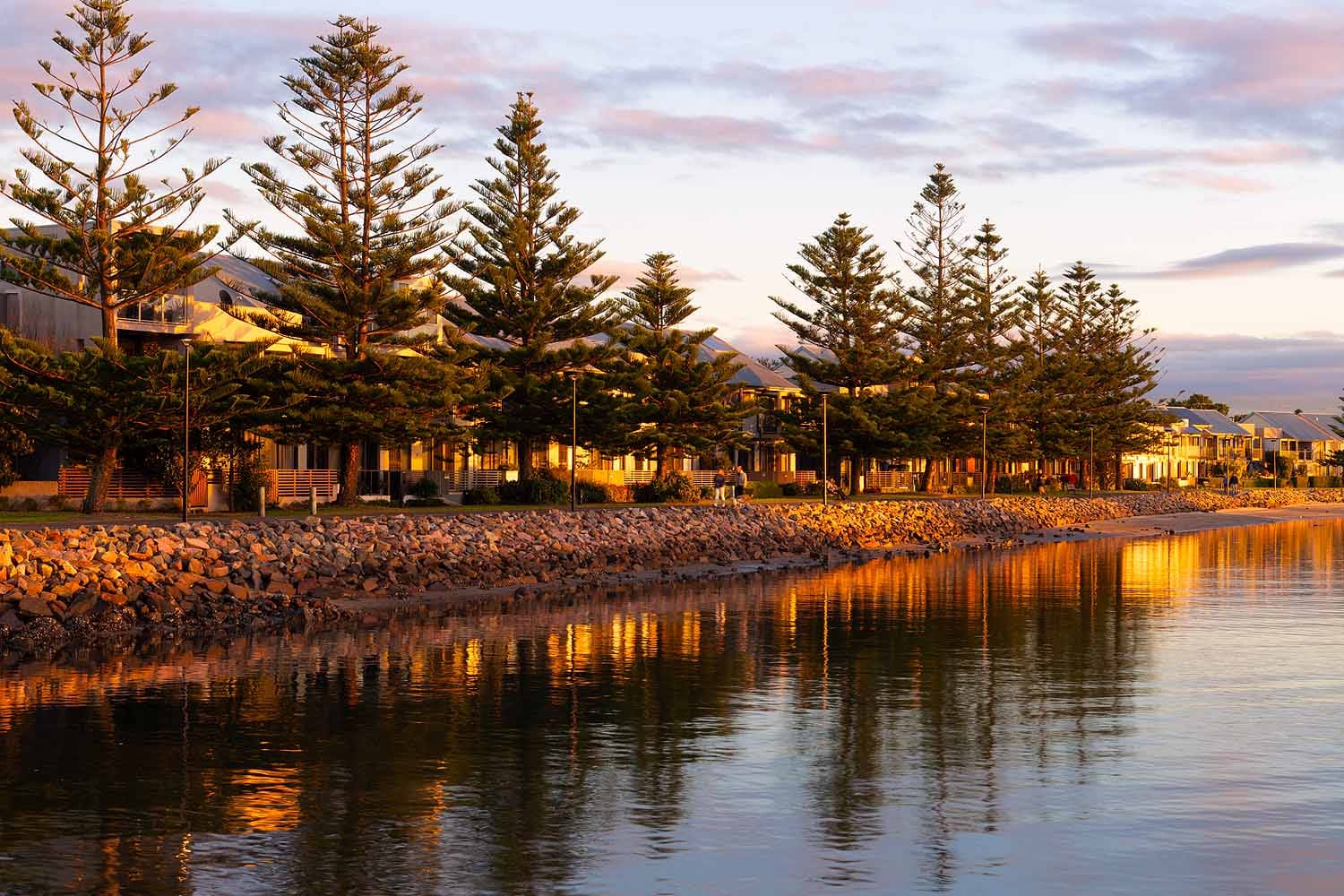
Visit Early for the Best Atmosphere: Sunrise is one of the most beautiful times to explore the Throsby Creek Loop, when calm waters reflect the surrounding Norfolk Island Pines and city skyline. It’s also the best time to watch rowing crews, dragon boat teams and paddlers training before the pathway becomes busier later in the day.
11. Honeysuckle Foreshore Walk
Distance: 2 km+ return | Difficulty: Easy | Allow: 30–60 minutes
Best For: Harbour views, cafés, families and waterfront dining | Parking: Honeysuckle Drive, Newcastle Interchange and nearby paid parking areas | Facilities: Toilets, cafés, restaurants, playgrounds and public seating
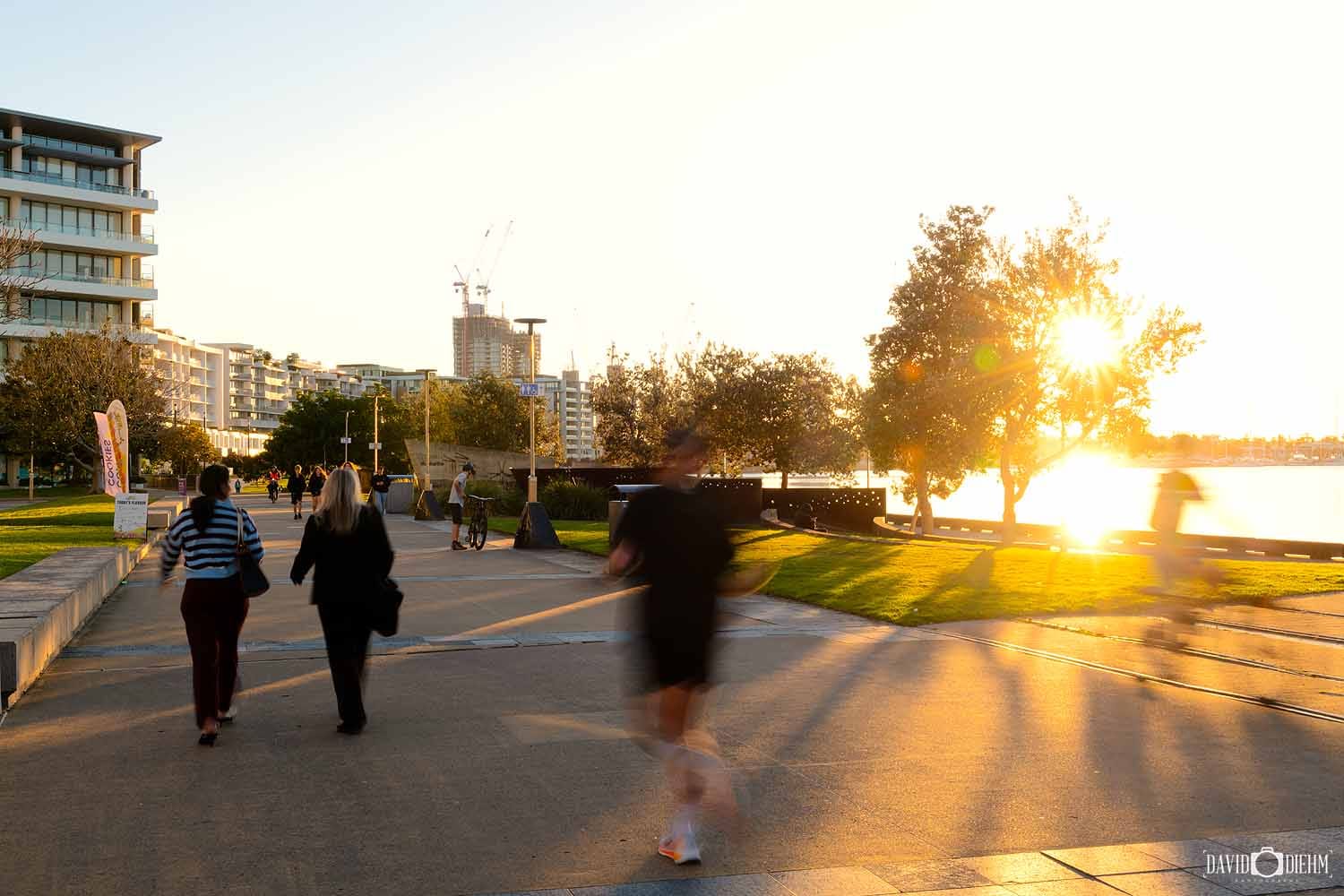
The Honeysuckle Foreshore Walk is one of Newcastle’s premier waterfront walks, combining spectacular harbour views with vibrant dining, public art and one of Australia’s busiest working ports. Stretching along the southern foreshore of Newcastle Harbour, the mostly flat shared pathway winds through the revitalised Honeysuckle precinct, connecting Newcastle Interchange, Newcastle Museum, NUSpace, Queens Wharf and Foreshore Park. Whether you’re walking, cycling or simply enjoying the harbour atmosphere, it’s one of the best ways to experience the heart of Newcastle.
Once a busy industrial rail and shipping precinct, Honeysuckle has been transformed into one of Newcastle’s most popular lifestyle destinations. Today, the waterfront is lined with cafés, restaurants, bars, hotels, landscaped parklands and public artworks, creating a lively atmosphere throughout the day and well into the evening. The precinct is home to some of Newcastle’s most popular waterfront dining venues, making it an ideal place to stop for breakfast, lunch, dinner or simply enjoy a coffee overlooking the harbour. Wide boardwalks and generous open spaces also make it equally popular with families, joggers, cyclists and visitors exploring the city.
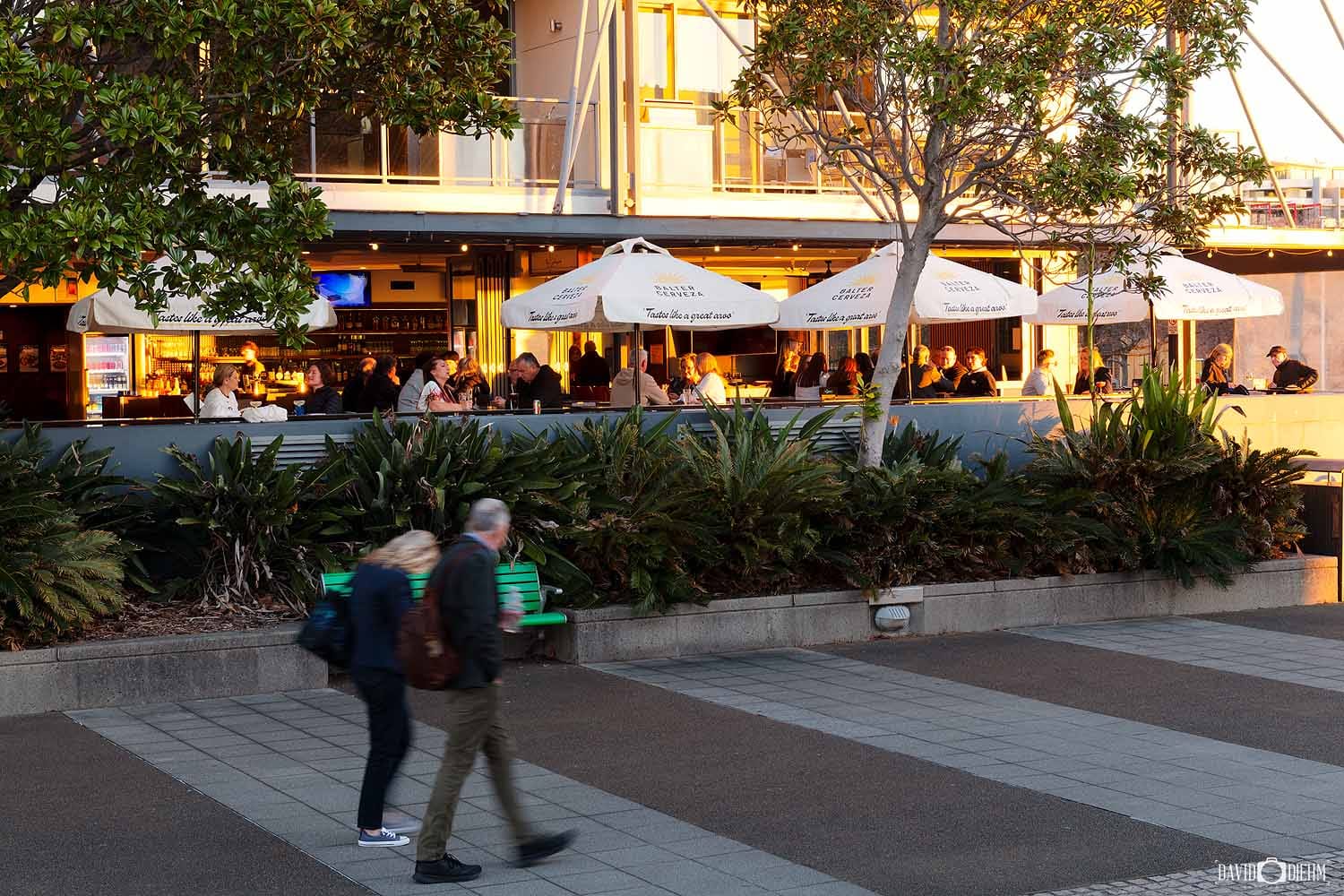
One of the highlights of the Honeysuckle Foreshore Walk is the constantly changing activity on Newcastle Harbour, home to the world’s largest coal export port. Hundreds of ships from around the world arrive here each year, creating a fascinating display of maritime activity. Visitors can watch tugboats escort enormous coal ships through the harbour entrance, while ferries, fishing boats, yachts, pilot vessels and occasional cruise ships add to the ever-changing waterfront scene. Before entering the harbour, every large vessel is met by a harbour pilot, who boards the ship from a dedicated pilot boat before safely guiding it through the narrow entrance. Unlike many waterfront promenades, Honeysuckle remains part of a busy working harbour, giving visitors a front-row seat to one of Australia’s most impressive maritime operations.
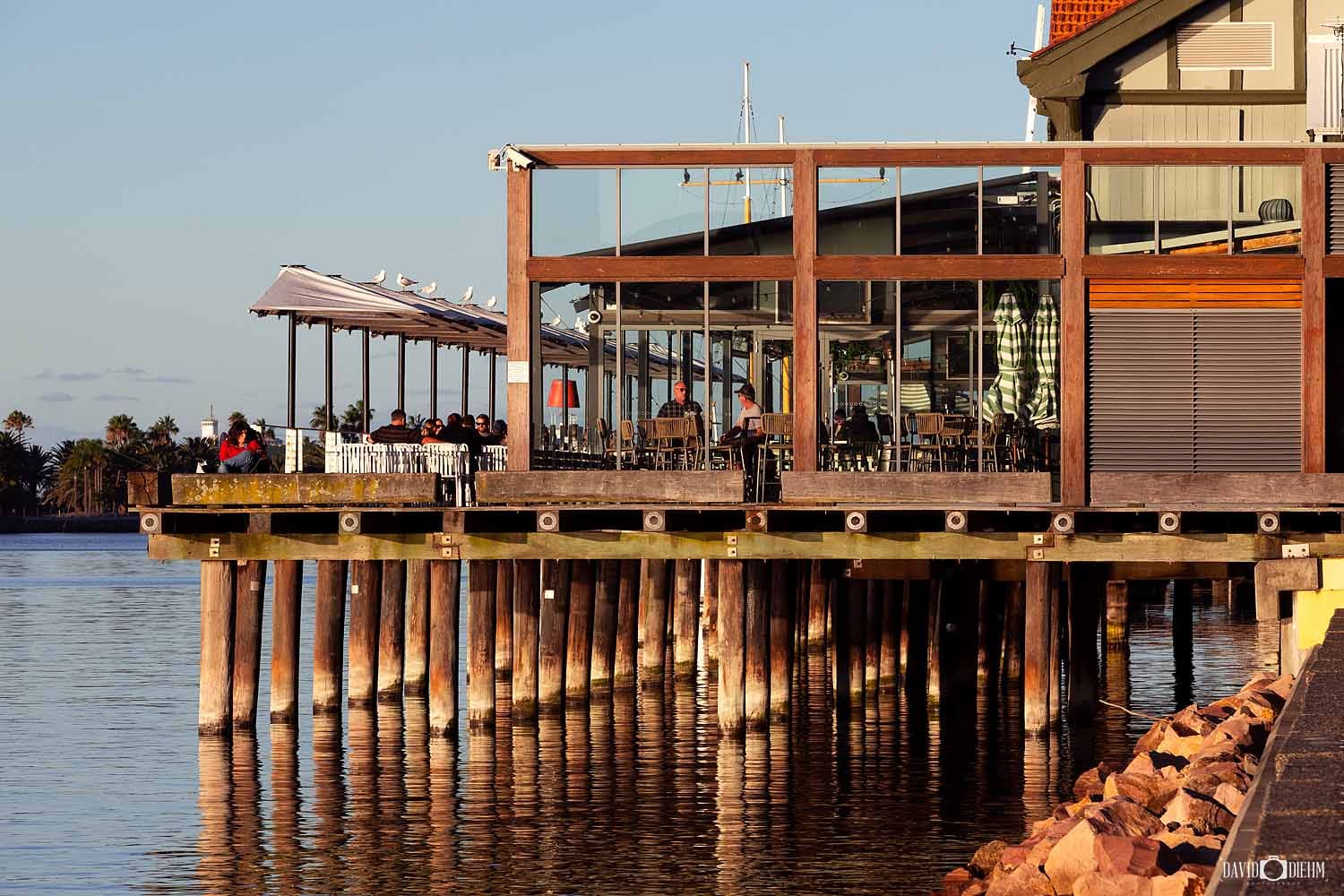
The walk also passes many of Newcastle’s leading attractions. Spend time exploring the Newcastle Museum, browse the cafés and restaurants around Honeysuckle, continue to Queens Wharf, or extend your walk through Foreshore Park towards Nobbys Beach and Nobbys Lighthouse. The nearby Newcastle Light Rail makes it easy to join or leave the walk at several locations, making it one of the city’s most accessible waterfront experiences. Throughout the year, the foreshore also hosts major community events, sporting festivals, markets and spectacular New Year’s Eve fireworks, creating a vibrant atmosphere for both locals and visitors.
Whether you’re enjoying breakfast by the harbour, watching ships navigate the channel beneath a blue sky or soaking up the atmosphere after sunset, the Honeysuckle Foreshore Walk offers something at every time of day. As the sun dips behind the city skyline, the harbour waters reflect the lights of passing vessels, waterfront restaurants and modern apartments, creating one of Newcastle’s most picturesque evening scenes and a favourite location for photographers. Combining outstanding dining, maritime history, harbour views and easy accessibility, the Honeysuckle Foreshore Walk is an essential experience for anyone visiting Newcastle.

💡 Local Tip
Stay for Sunset: Visit in the late afternoon and stay into the evening to experience Honeysuckle at its best. Enjoy dinner or a drink at one of the waterfront restaurants while watching tugboats, ferries and enormous coal ships navigate Newcastle Harbour as the city lights begin reflecting across the water.
12. King Edward Park to Newcastle Beach Walk
Distance: 2 km return | Difficulty: Easy | Allow: 30–45 minutes
Best For: Coastal scenery, history, photography and families | Parking: King Edward Park, Newcastle Beach and nearby CBD parking | Facilities: Toilets, cafés, picnic areas, playgrounds, skate park.
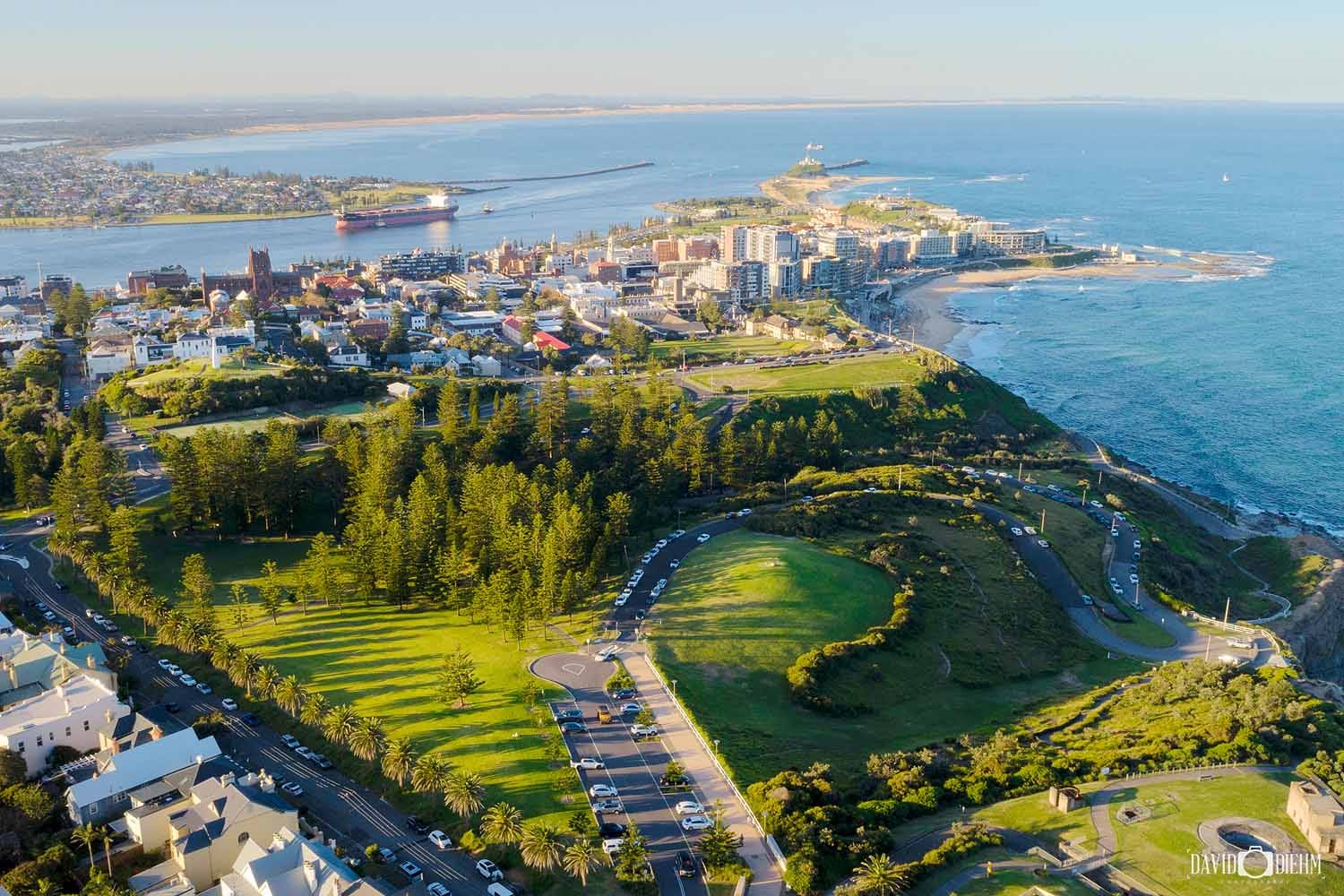
The King Edward Park to Newcastle Beach Walk is one of Newcastle’s most picturesque coastal walks, combining spectacular ocean views, beautifully landscaped gardens and some of the city’s most significant historic landmarks. Following pathways through King Edward Park, the walk passes dramatic sandstone cliffs before continuing towards Newcastle Beach, Newcastle Ocean Baths and the iconic Bathers Way coastal walk.
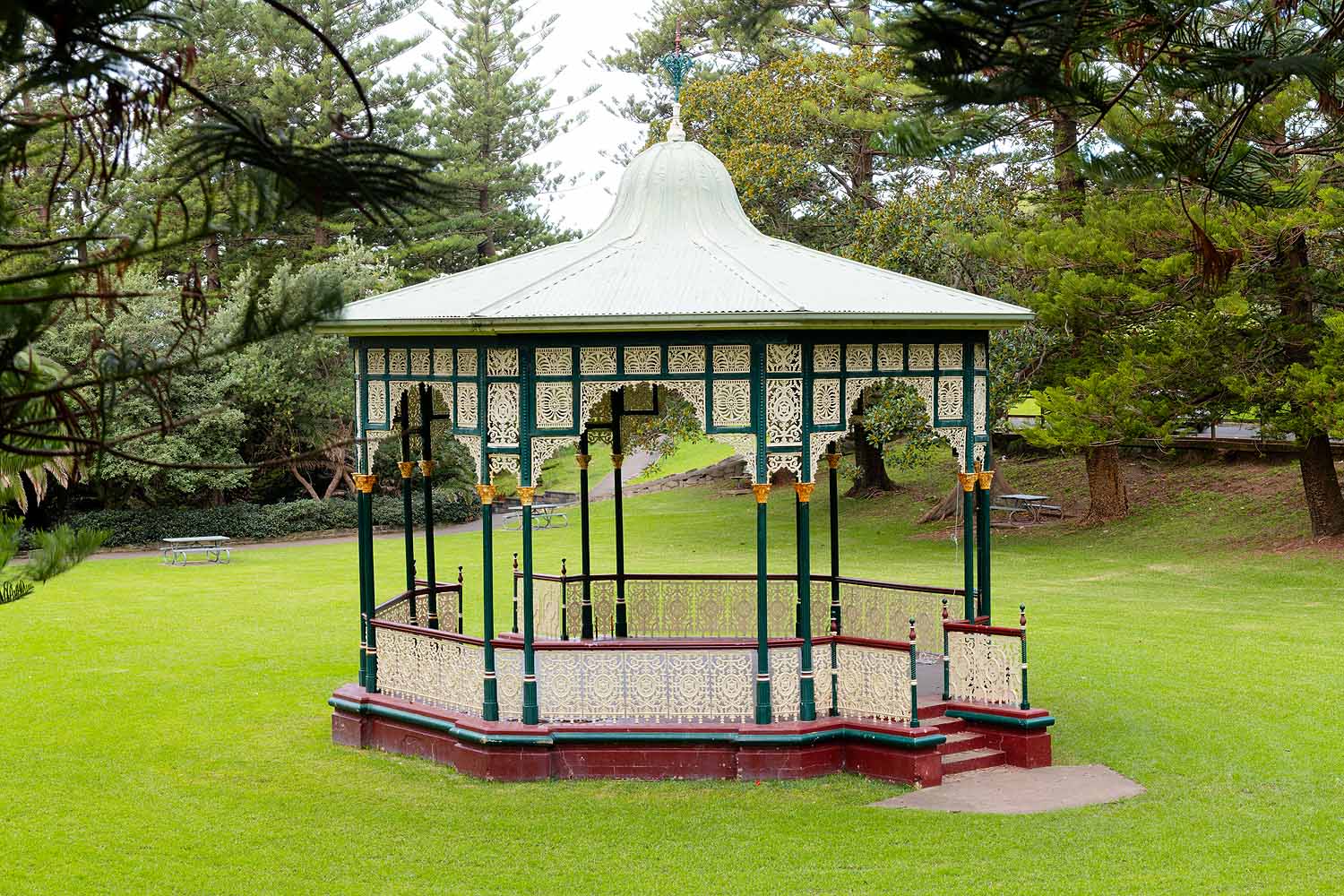
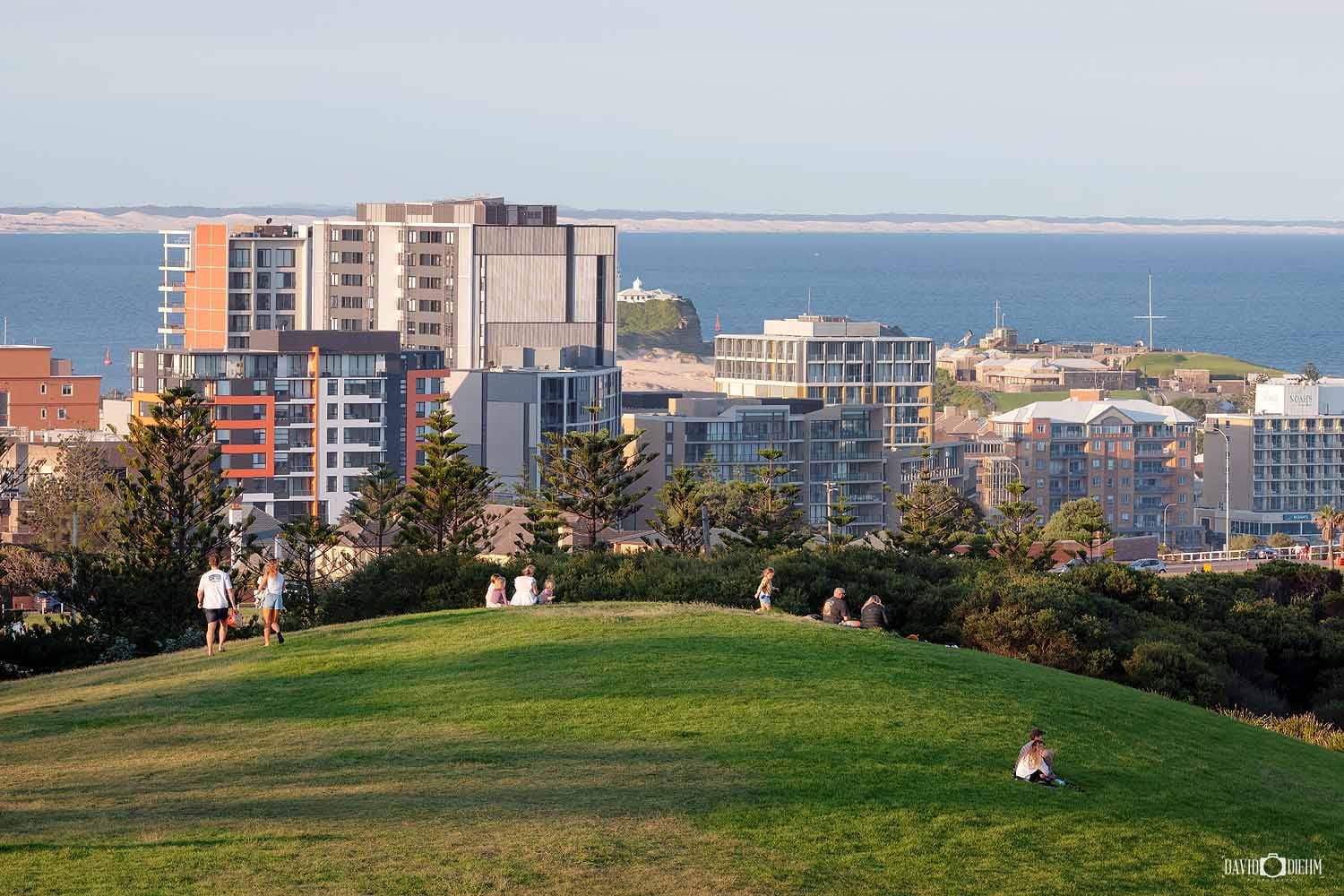
Established in 1863, King Edward Park is Newcastle’s oldest public park and remains one of the city’s most treasured green spaces. Renowned for its towering Norfolk Island Pines, historic rotunda, beautifully maintained gardens and mature trees, the park provides a peaceful escape overlooking the Pacific Ocean. As you wander through the landscaped pathways, you’ll discover several lookouts offering panoramic views along the coastline towards Newcastle Beach, Nobbys Headland and, on clear days, as far south as Merewether. Between May and November, the elevated clifftops also become one of Newcastle’s best land-based whale-watching locations.
One of the highlights of the walk is the Bogey Hole, Australia’s oldest surviving ocean bath. Hand-carved into the rock by convicts in 1819 for Commandant James Morisset, this heritage-listed ocean pool remains one of Newcastle’s most unique historic attractions. The surrounding rock platforms and rugged coastline provide spectacular views and are a favourite location for photography, particularly at sunrise when waves crash against the cliffs.
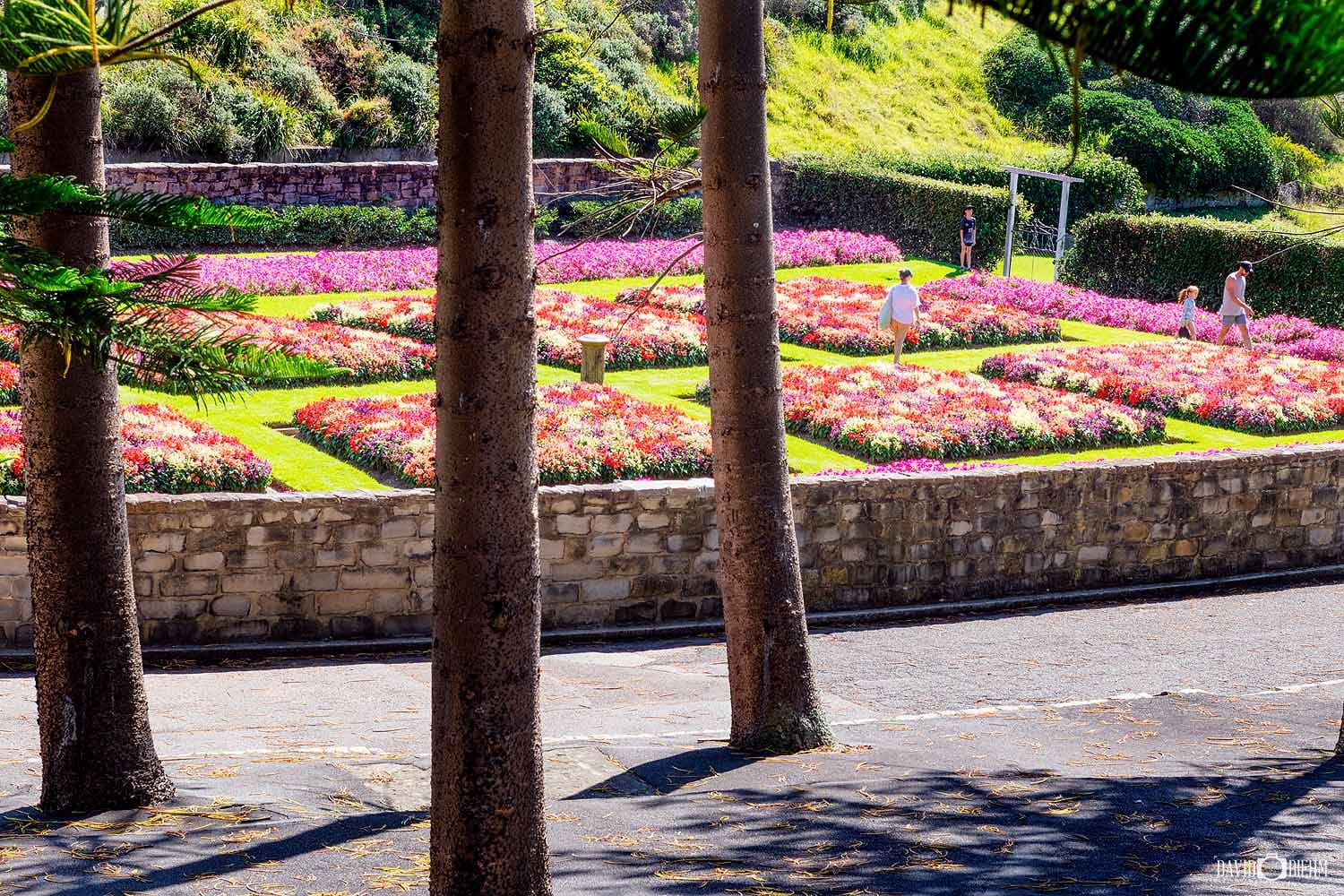
Continuing towards Newcastle Beach, the walk passes the historic Newcastle Ocean Baths, which first opened in 1922 and remain one of Australia’s finest examples of Art Deco ocean baths. At the southern end of Newcastle Beach, visitors will also discover the popular South Newcastle Skate Park, a modern, accessible facility featuring bowls, street obstacles and smooth transitions for skateboarders, BMX riders, scooter riders and wheelchair users of all abilities.
The skate park also connects directly to Bathers Way, allowing walkers and riders to continue south towards King Edward Park or north past Newcastle Beach, Nobbys Beach and Nobbys Lighthouse. From here, visitors can relax on the golden sands of Newcastle Beach, watch surfers at Surfers Beach, or simply enjoy one of Newcastle’s most vibrant stretches of coastline. The combination of heritage, ocean views, family-friendly attractions and iconic coastal landmarks makes this one of Newcastle’s most rewarding short walks.
💡 Local Tip
Allow extra time to explore the Bogey Hole, Newcastle Ocean Baths and the South Newcastle Skate Park, all located within a short walk of each other. For the best views, pause at the clifftop lookouts in King Edward Park overlooking the Pacific Ocean, and if you’re visiting between May and November, keep an
13. Hunter Wetlands Rainforest Walk
Distance: 4 km return | Difficulty: Easy | Allow: 1–1.5 hours
Best For: Birdwatching, nature lovers, families and wildlife photography | Parking: Hunter Wetlands Centre Australia, Shortland | Facilities: Toilets, café, visitor centre, picnic areas and boardwalks | Cost: Small admission fee applies
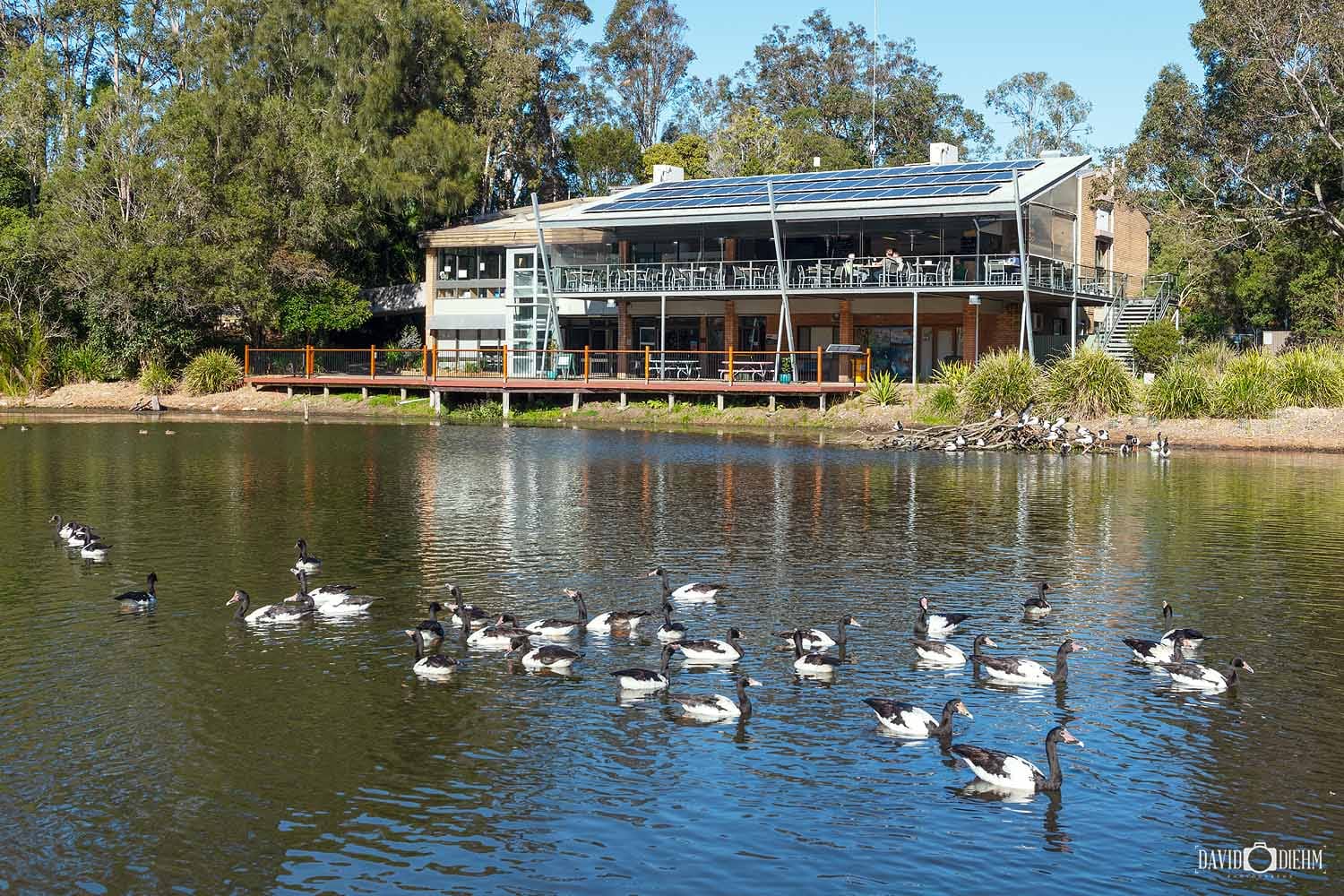
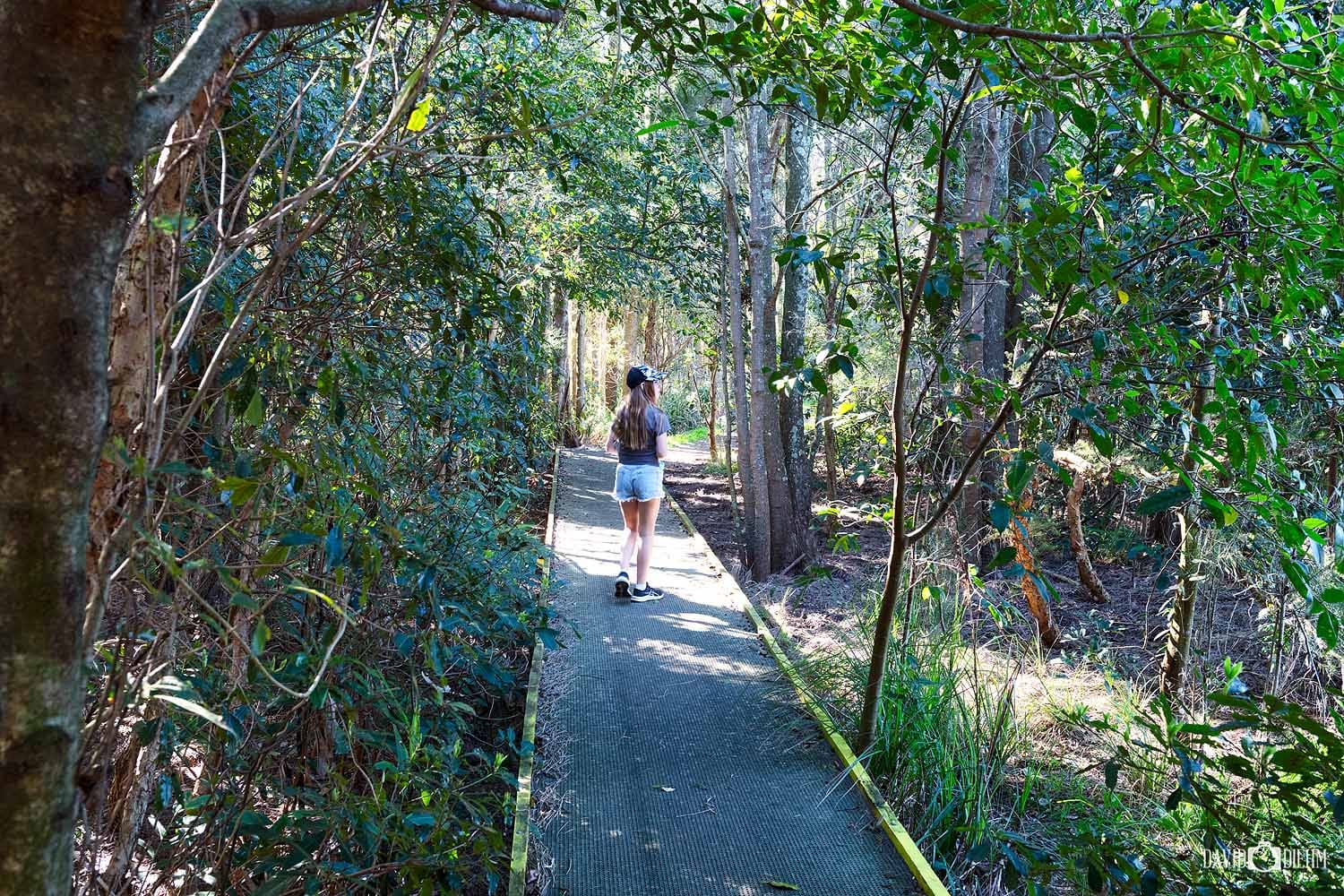
The Hunter Wetlands Rainforest Walk offers a peaceful escape into one of Newcastle’s most important natural environments. Located within the Hunter Wetlands Centre Australia at Shortland, this easy walk follows a network of boardwalks and bush tracks through wetlands, pockets of subtropical rainforest and tranquil lakes that support an incredible diversity of native wildlife. A small admission fee helps support the conservation, restoration and ongoing management of this unique environmental reserve.
The Hunter Wetlands Centre forms part of the internationally significant Hunter Estuary Wetlands, a Ramsar-listed wetland system covering approximately 30 square kilometres. Recognised as one of Australia’s most important wetland habitats, the reserve provides essential breeding, feeding and migratory habitat for hundreds of species of birds, reptiles, amphibians and aquatic wildlife. Often referred to by locals as the Shortland Wetlands, it is widely regarded as one of the best birdwatching destinations in New South Wales.
The walk leads visitors through lush rainforest, shaded boardwalks and open wetland habitats, with interpretive signs explaining the area’s ecological significance and the conservation work that has transformed the site into an internationally recognised wildlife sanctuary.

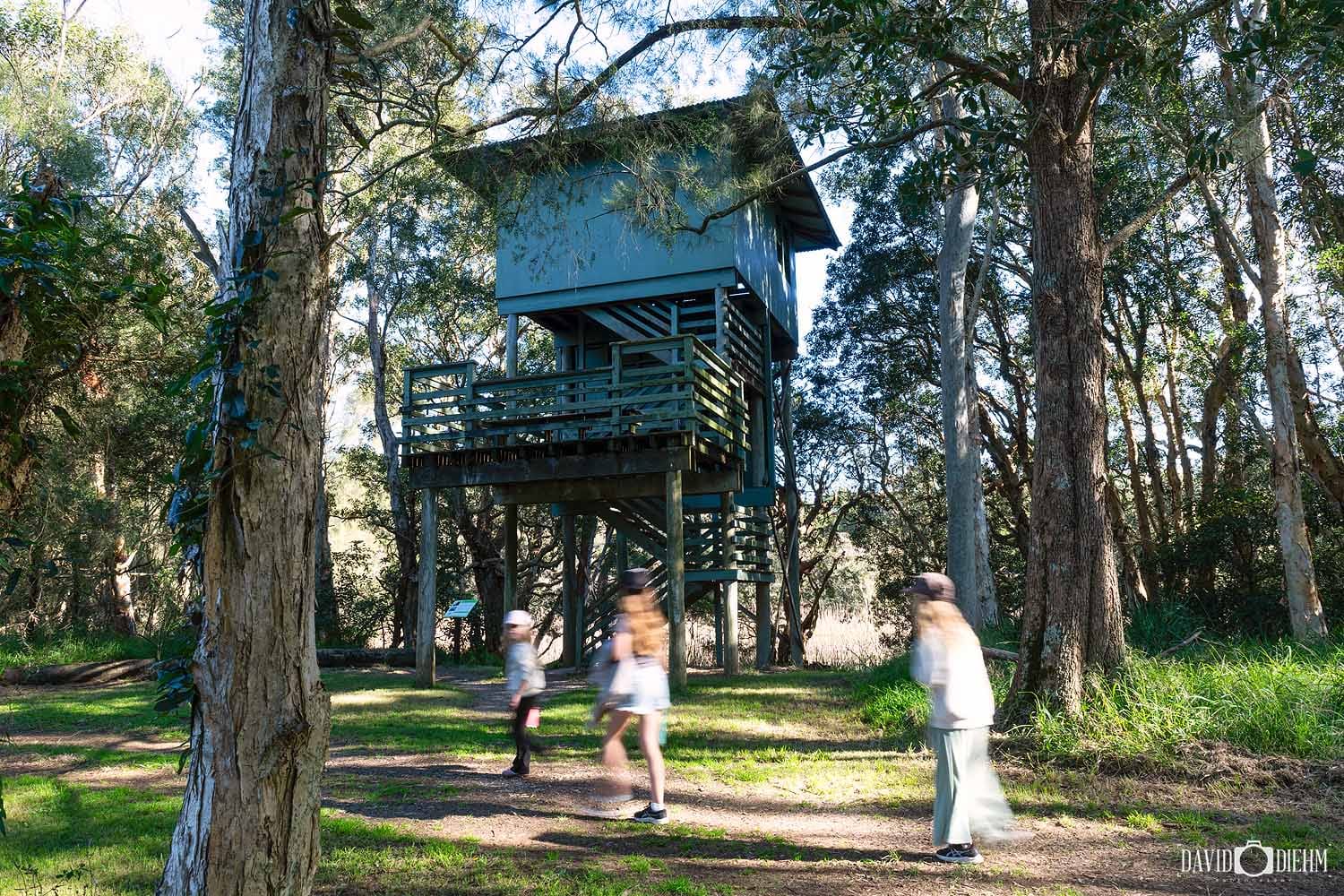
The Hunter Wetlands Centre is a renowned destination for birdwatchers and wildlife photographers, featuring four purpose-built bird hides, including an overwater hide at Water Ribbon Swamp and the Egret Tower overlooking Melaleuca Swamp. More than 217 bird species, representing 56 bird families, have been recorded at the reserve, making it one of New South Wales’ premier birdwatching locations.
Visitors may spot Black Swans, Egrets, Herons, Spoonbills and the distinctive Magpie Goose, one of Australia’s most remarkable waterbirds and the sole surviving member of an ancient bird family that predates modern ducks and geese. Depending on the season, turtles, frogs and numerous native waterbirds can also be seen throughout the wetlands.
One of the highlights of the walk is Riverside Park, a peaceful picnic area overlooking the Hunter River. Along the way, elevated boardwalks provide excellent vantage points for observing wildlife while immersing visitors in the sounds of birdsong and the surrounding wetlands. The constantly changing landscape of waterways, rainforest and reed beds creates a tranquil setting that feels worlds away from Newcastle’s busy coastline, despite being only a short drive from the CBD.
With its mostly flat terrain and well-maintained pathways, the walk is suitable for families, casual walkers and visitors of all fitness levels. Whether you’re interested in birdwatching, photography, conservation or simply enjoying a peaceful nature walk, the Hunter Wetlands Rainforest Walk offers one of the best opportunities to experience Newcastle’s rich biodiversity and one of the region’s most important natural ecosystems.
💡 Local Tip
Visit early in the morning when the wetlands are at their most peaceful and bird activity is at its highest. Bring a pair of binoculars to spot Magpie Geese, Black Swans, Spoonbills, Egrets, Herons and many other wetland bird species that make this one of the best birdwatching locations in the Newcastle region.
14. Blue Gum Hills Regional Park Walk
Location: Summer Hill Track, Minmi NSW 2287 | Distance: Approximately 3 km circuit | Difficulty: Easy to Moderate | Allow: 1.5–2 hours
Best For: Bushwalking, families, wildflowers, birdwatching and mining heritage | Parking: Blue Gum Hills Regional Park car park, Summer Hill Track, Minmi | Facilities: Picnic shelters, BBQs, toilets, playground, timber maze, drinking water and parking | Cost: Free
Opening Hours: Open daily 7:30 am–5:00 pm, with extended hours until 8:00 pm during daylight saving.
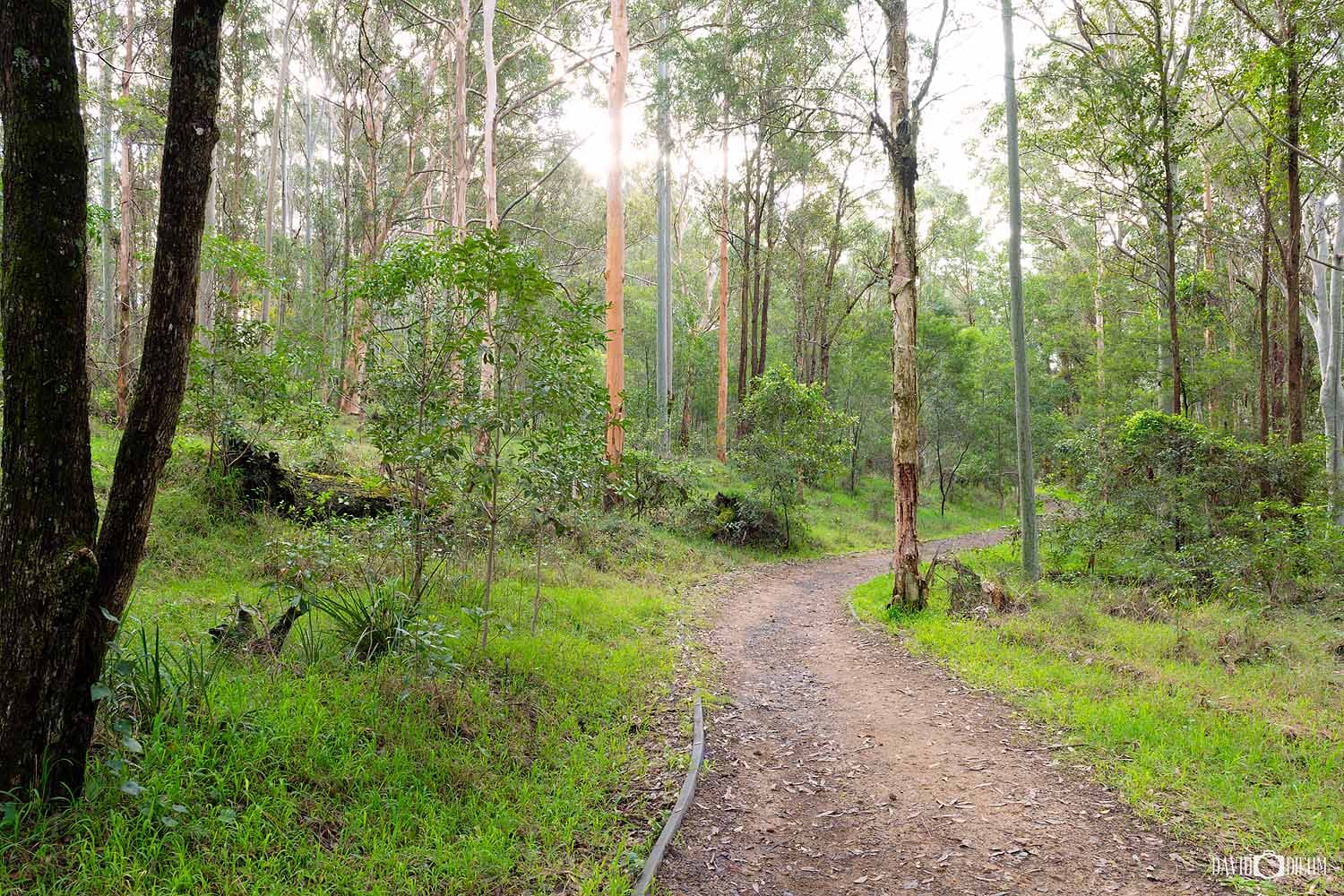
The Blue Gum Hills Regional Park Walk offers one of Newcastle’s most enjoyable family-friendly bushwalking experiences, combining peaceful eucalypt forest, fascinating mining heritage and abundant native wildlife. Located at Minmi, just 20 minutes from Newcastle’s city centre, the park features the scenic 3-kilometre Heritage Walking Track, a nature playground, timber maze and picnic facilities, making it an ideal destination for a half-day family outing.
Unlike Newcastle’s coastal walks, Blue Gum Hills Regional Park provides a tranquil bushland escape where towering blue gums, open forest and native birdlife have gradually reclaimed a landscape once dominated by black coal mining. From the mid-1800s until the 1980s, much of the park formed part of Newcastle’s coalfields. Today, subtle undulations, embankments and scars across the landscape remain as reminders of its industrial past while the surrounding bushland continues to regenerate.
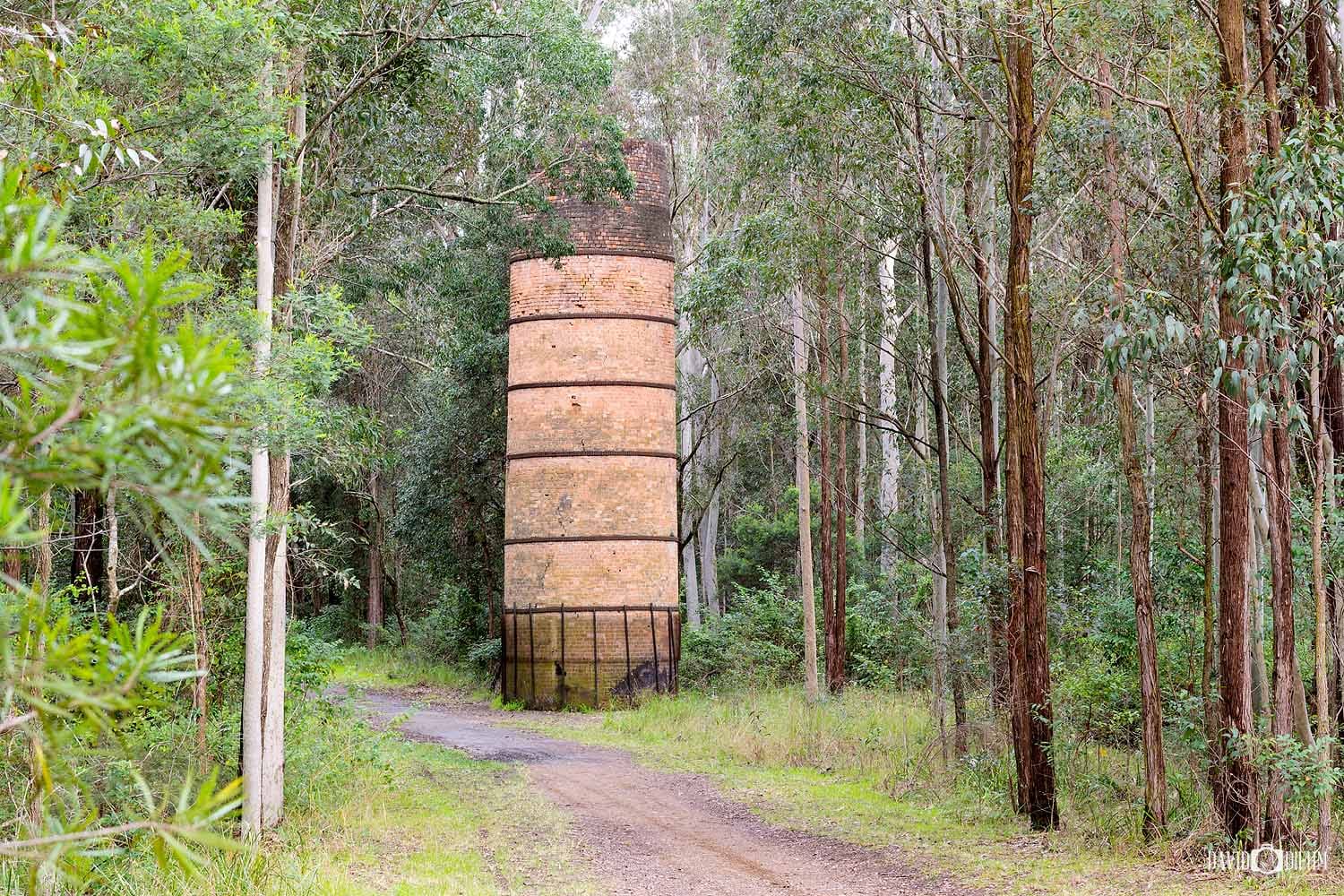
The highlight of the walk is the Heritage Walking Track, which follows sections of the former Minmi Back Creek railway embankment through the heart of the park. Along the trail, visitors pass the remains of an 1870s stone bridge abutment, historic mine workings and the impressive brick ventilation shaft of Brown’s Colliery No. 2. Dating from the 1870s, this heritage-listed structure is one of the few surviving colonial-era mining ventilation shafts in New South Wales and provides a fascinating insight into the region’s rich coal mining history. The walk also passes the historic coal-washing dam before returning through peaceful eucalypt forest.
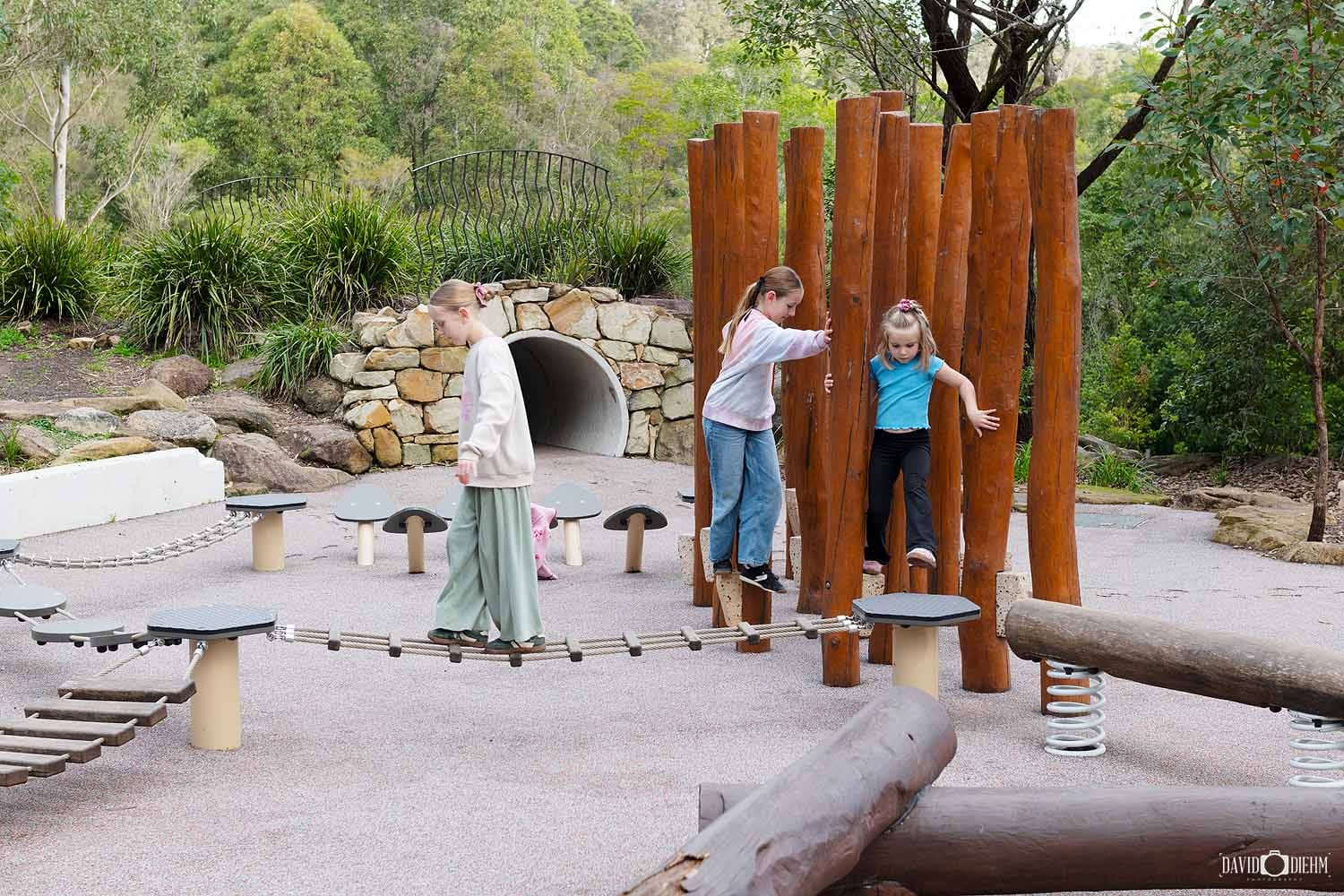
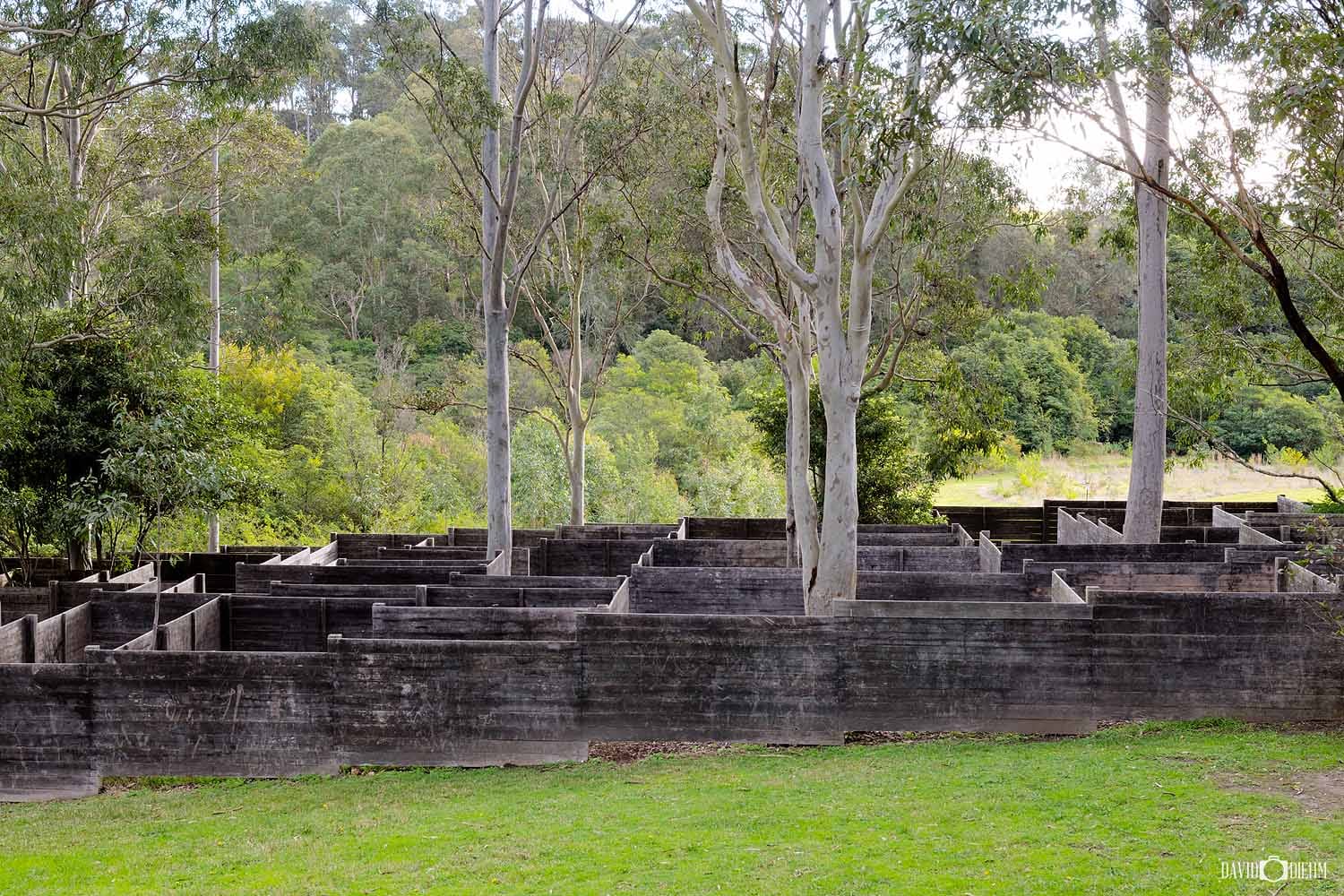
For families, the park offers far more than bushwalking. Adjacent to the picnic area is a mining-themed nature playground featuring timber climbing structures, balancing obstacles and tunnels that encourage imaginative outdoor play. Beside the playground is the popular timber maze, where children can weave their way through high wooden walls before climbing the elevated observation deck for a bird’s-eye view of the maze below. These family-friendly attractions make Blue Gum Hills Regional Park one of Newcastle’s best bushland destinations for young children.
Blue Gum Hills Regional Park is also an excellent location for spotting native wildlife. Goannas are regularly seen basking beside the walking trails, while colourful parrots, honeyeaters and the occasional Grey Goshawk inhabit the forest canopy. During spring, native wildflowers bloom throughout the reserve, adding another reason to explore this often-overlooked pocket of bushland.
Combining bushwalking, local history, family-friendly activities and beautiful natural surroundings, Blue Gum Hills Regional Park offers a very different experience to Newcastle’s beaches and coastal trails. Whether you’re exploring the Heritage Walking Track, discovering the region’s mining history, enjoying the timber maze and playground with young children or simply looking for a peaceful walk through native bushland, this hidden gem is one of the most rewarding outdoor destinations in the Newcastle region.
💡 Local Tip
Allow extra time after completing the Heritage Walking Track to explore the rest of Blue Gum Hills Regional Park. The park features additional walking trails, mountain bike tracks, picnic areas, a nature playground, barbecue facilities and a maze, making it one of Newcastle’s best destinations for a family day out. Spring is an especially rewarding time to visit when native wildflowers bloom throughout the bushland and birdlife is at its most active.
15. Newcastle Coastal Geotrail
Distance: 10 km one-way | Difficulty: Moderate | Allow: 3–4 hours
Best For: Geology, history, coastal scenery and curious explorers | Parking: Nobbys Beach, Newcastle Beach, King Edward Park, Bar Beach and Merewether Ocean Baths | Facilities: Toilets, cafés, picnic areas available along the route.
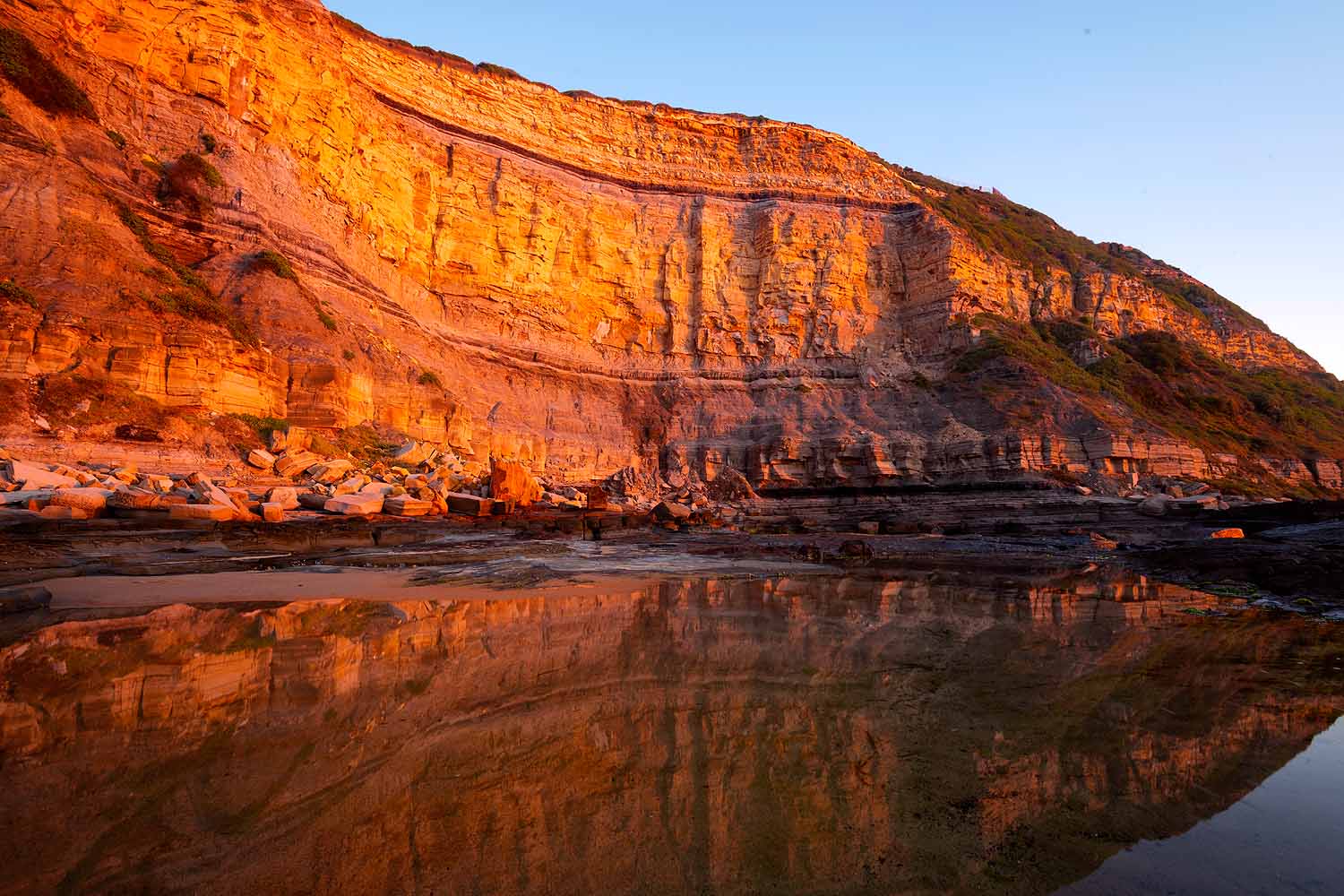
The Newcastle Coastal Geotrail is one of the city’s most unique walks, combining spectacular coastal scenery with more than 300 million years of geological history. Stretching from Nobbys Beach to Merewether, the trail follows Newcastle’s spectacular coastline while revealing how ancient volcanic activity, shifting continents, sedimentary rock formations and ongoing coastal erosion have shaped the landscape seen today.
Unlike a traditional walking track, the Newcastle Coastal Geotrail encourages visitors to slow down and explore the cliffs, rock platforms and headlands that define the Newcastle coastline. Along the route, 14 interpretive sites explain the geological significance of each location, helping walkers understand how the region evolved over hundreds of millions of years. Visitors wanting a more in-depth experience can download the official Newcastle Coastal Geotrail brochure, which includes a detailed trail map, geological explanations and information for every stop along the self-guided walk.

The trail also explores the close relationship between Newcastle’s geology, Aboriginal heritage, maritime history, coal mining and the city’s coastal development. Interpretive displays reveal how ancient forests, rivers and swamps eventually formed the coal seams that helped shape Newcastle’s identity, while also explaining fascinating features such as the historic ballast rocks. Carried from ports around the world by sailing ships before loading Newcastle coal, these discarded stones provide a unique link between the city’s geology and its rich maritime trading history. Some of the most fascinating stops can be found around Nobbys Headland, King Edward Park, Newcastle Beach, the Bogey Hole, Susan Gilmore Beach and Merewether Headland, where exposed sandstone, shale and coal seams reveal a remarkable record of ancient landscapes.
Even visitors with little interest in geology often find themselves captivated by the trail’s dramatic scenery and fascinating stories. Combining spectacular ocean views, historic landmarks and internationally significant geological features, the Newcastle Coastal Geotrail offers a completely different perspective on the city and is one of the most rewarding ways to discover the natural history hidden beneath Newcastle’s famous coastline.
💡 Local Tip
Visit around low tide to safely explore many of the exposed rock platforms and geological features along the route. Before setting out, download the official Newcastle Coastal Geotrail brochure for a self-guided tour with maps, geological explanations and information about all 14 geotrail sites.
Exploring the Best Walks in Newcastle
From dramatic coastal cliffs and historic harbour breakwalls to peaceful wetlands, rainforest trails and ocean lookouts, Newcastle offers one of the most diverse collections of walking tracks in New South Wales. Whether you’re looking for a leisurely waterfront stroll, a family-friendly nature walk or a more challenging bushwalking adventure, there’s a walk to suit every interest and fitness level.
For first-time visitors, the Bathers Way Coastal Walk remains Newcastle’s signature experience, linking many of the city’s most iconic attractions, including Nobbys Beach, Newcastle Ocean Baths, Bogey Hole and Merewether Beach. Nature lovers will enjoy the rainforest scenery of the Yuelarbah Walking Track and the rich biodiversity of the Hunter Wetlands Rainforest Walk, while families are well catered for with accessible walks through Blackbutt Reserve and the Throsby Creek Loop. For something completely different, the Newcastle Coastal Geotrail uncovers more than 300 million years of geological history hidden beneath the city’s spectacular coastline.
One of the best things about Newcastle’s walking tracks is their accessibility. Many of the region’s most rewarding walks are located just minutes from the CBD and can easily be enjoyed as short outings or combined into a full day of exploration. Along the way you’ll discover golden beaches, rugged headlands, ancient rainforest, abundant wildlife, working harbour views and some of Australia’s most spectacular coastal scenery.
Whether you’re visiting Newcastle for the first time or have called the city home for years, these walks offer a wonderful way to experience its natural beauty, rich history and unique character. Pack your walking shoes, bring your camera and take the time to explore beyond the beaches – you’ll soon discover why Newcastle is regarded as one of Australia’s premier coastal walking destinations.
Explore More of Newcastle and the Hunter Region
If you’re planning to spend more time exploring Newcastle and the surrounding Hunter Region, these local guides will help you discover some of the area’s best beaches, attractions, lookouts and photography locations.
Newcastle
- Best Things to Do in Newcastle NSW – Discover Newcastle’s top attractions, historic landmarks, beaches and coastal viewpoints.
- Best Beaches in Newcastle NSW – Explore Newcastle’s most beautiful beaches, from family-friendly swimming spots to world-class surf breaks.
Lake Macquarie
- Best Things to Do in Lake Macquarie – Explore Australia’s largest coastal saltwater lake, including waterfront parks, lookouts, walking trails and hidden gems.
- Best Beaches in Lake Macquarie – Discover secluded beaches, sea caves, surfing locations and family-friendly swimming spots around the lake.
Port Stephens
- Best Things to Do in Port Stephens – From the Stockton Sand Dunes and Tomaree Head Summit Walk to pristine beaches and marine wildlife encounters, discover why Port Stephens is one of New South Wales’ most popular coastal destinations.
Frequently Asked Questions About the Best Walks in Newcastle
What are the best walks in Newcastle NSW?
Some of the best walks in Newcastle include the Bathers Way Coastal Walk, Fernleigh Track, Yuelarbah Walking Track, Nobbys Breakwall Walk, Newcastle Memorial Walk, Stockton Beach Walk and Blackbutt Reserve. Together, these trails showcase Newcastle’s beaches, bushland, harbour, wetlands and coastal scenery.
What is the best walk in Newcastle?
The Bathers Way Coastal Walk is widely regarded as the best walk in Newcastle. Stretching 6 kilometres from Merewether Ocean Baths to Nobbys Beach, it passes some of the city’s most iconic attractions including the Newcastle Memorial Walk, King Edward Park, Newcastle Ocean Baths and several beautiful beaches.
What is the best coastal walk in Newcastle?
The Bathers Way Coastal Walk is Newcastle’s premier coastal walk. The trail follows the coastline from Merewether to Nobbys Beach and offers spectacular ocean views, beaches, ocean baths, whale watching opportunities and historic landmarks along the way.
What is the best bushwalk in Newcastle?
The Yuelarbah Walking Track in Glenrock State Conservation Area is considered one of Newcastle’s best bushwalks. The trail winds through rainforest, waterfalls, native bushland and scenic lookouts before reaching Glenrock Lagoon and Beach.
What is the best family-friendly walk in Newcastle?
Blackbutt Reserve’s Tall Trees Walk is one of the best family-friendly walks in Newcastle. The easy 2.6-kilometre circuit is suitable for children and can be combined with wildlife exhibits, playgrounds, picnic areas and barbecue facilities.
Can you walk from Merewether to Nobbys Beach?
Yes. The Bathers Way Coastal Walk provides a continuous 6-kilometre walking route between Merewether Ocean Baths and Nobbys Beach. Along the way you’ll pass Merewether Beach, Bar Beach, the Newcastle Memorial Walk, King Edward Park and Newcastle Ocean Baths.
Where can I go whale watching in Newcastle?
Some of the best whale-watching locations in Newcastle include the Newcastle Memorial Walk, Nobbys Headland, Bathers Way Coastal Walk, Hickson Street Lookout and Nobbys Breakwall. Humpback whales migrate along the Newcastle coastline between May and November each year.
What is the longest walking track in Newcastle?
The Fernleigh Track is one of the longest and most popular walking trails in Newcastle. Extending approximately 15 kilometres from Adamstown to Belmont, the former railway corridor passes through bushland, wetlands, coastal forest and the historic Fernleigh Tunnel.
What are the best sunrise walks in Newcastle?
The Nobbys Breakwall Walk, Stockton Beach Walk, Bathers Way Coastal Walk and Nobbys Headland Walk are among the best sunrise walks in Newcastle. These locations offer spectacular views as the sun rises over the Pacific Ocean and are particularly popular with photographers.
Are dogs allowed on Newcastle walking tracks?
Many Newcastle walking tracks allow dogs, including sections of Stockton Beach, Throsby Creek Loop and the Honeysuckle Foreshore. However, dogs are generally prohibited in Blackbutt Reserve and some conservation areas. Always check local signage and current regulations before visiting.