40 Things to Do in Lake Macquarie
Planning a visit and looking for things to do in Lake Macquarie, NSW? From spectacular beaches and sea caves to lakeside swimming spots, bushwalks, waterfalls, family attractions and waterfront villages, Lake Macquarie is packed with incredible places to explore.
As a local landscape photographer, I’ve spent more than a decade exploring and photographing Lake Macquarie’s beaches, waterways, bushland and hidden corners. This guide brings together that first-hand experience to help you discover the best places to visit in Lake Macquarie, from well-known attractions to local favourites you might otherwise miss.
Inside, you’ll find 40 of the best things to do in Lake Macquarie, including Caves Beach, Catherine Hill Bay, Redhead Beach, the Fernleigh Track, Warners Bay Foreshore and the Watagans, alongside hidden gems such as Naru Beach, Pulbah Island, Grannies Pool and the Ghosties Beach Walk.
Whether you’re planning a weekend in Lake Macquarie, a family day out or a coastal escape, you’ll find ideas for free things to do, family-friendly attractions, beaches, swimming, walks, lookouts, boating, fishing, cycling and outdoor adventures — all recommended from genuine local experience.
40 Best Things to Do in Lake Macquarie at a Glance
Iconic Things to Do in Lake Macquarie
1. Caves Beach & Sea Caves
2. Glenrock State Conservation Area & Yuelarbah Walking Track
3. Speers Point Park
4. Fernleigh Track
5. Redhead Beach
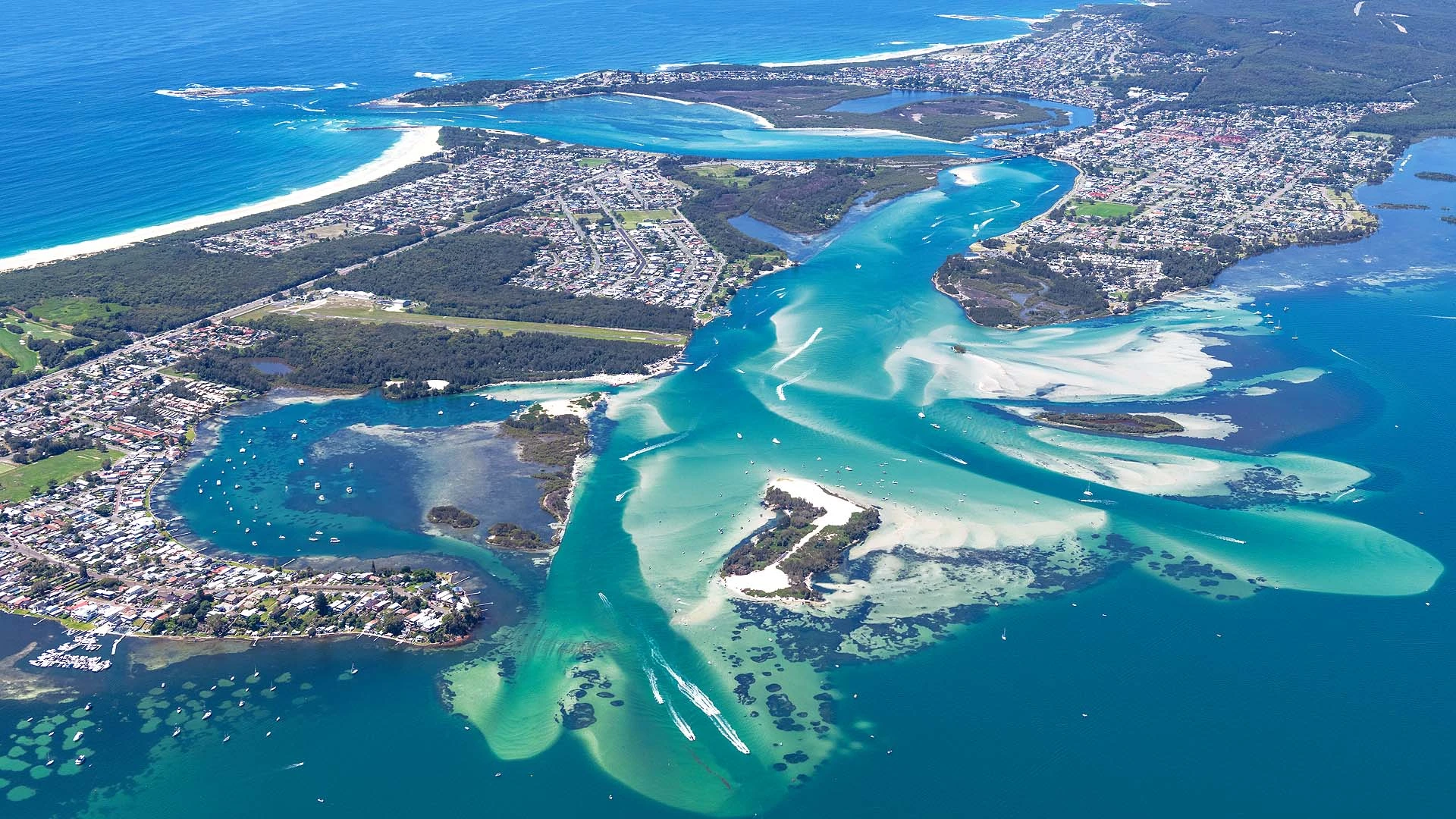
6. Naru Beach, Elizabeth Island & Swansea Sand Islands
7. Watagans National Park
8. Catherine Hill Bay & Rock Pools
9. Warners Bay Foreshore & Sculpture Walk
10. Green Point Reserve & Sea Eagle Lookout
11. Mount Sugarloaf Lookout
12. Whale Watching – Lookouts & Cruises
13. Red Bluff Boardwalk
14. Pirrita Island Boardwalk
Beaches, Swimming Spots & Hidden Gems in Lake Macquarie
15. Belmont Baths
16. Grannies Pool
17. Ghosties Beach & Sea Cave Walk
18. Valentine Foreshore
19. Toronto Foreshore & Baths
20. Wangi Wangi
21. Dudley Beach & Blowhole
22. Swansea Channel & Swansea Bridge
23. Pulbah Island
24. Belmont Wetlands State Park
Things to Do in Lake Macquarie with Kids
25. Croudace Bay Park
26. Redhead Pump Track
27. Rathmines Youth Hub & Pump Track
28. Cooranbong Swing Bridge
29. Edgeworth Miniature Railway
Outdoor Adventures & Water Activities
30. Boating, Kayaking & Paddleboarding on Lake Macquarie
31. Fishing in Lake Macquarie
32. Experience Lake Macquarie’s Sailing Culture
33. Skydiving over Lake Macquarie
34. Aerobatic Flight with Matt Hall Racing
35. Awaba Mountain Bike Park
Food, Arts, Markets & Local History
36. Waterfront Dining at Belmont & Warners Bay
37. Visit a Local Market
38. Museum of Art and Culture, yapang (MAC yapang)
39. Dobell House
40. Explore Rathmines Park & Its WWII Heritage
1. Caves Beach & Sea Caves
Famous for its spectacular sea caves, golden sand and coastal scenery, Caves Beach is one of Lake Macquarie’s must-visit beaches.
Location: Caves Beach | Cost: Free | Allow: 2–3 hours | Best For: Families, photographers & nature lovers | Highlights: Sea caves • Swimming • Rock pools • Sunrise | Best Time: Low tide | Parking: Free


Located on the Swansea Peninsula around 30 minutes south of Newcastle, Caves Beach is one of Lake Macquarie’s most iconic coastal destinations, famous for its spectacular network of sea caves carved into the sandstone headland. Accessible only at low tide, the caves attract visitors from across Australia and were recognised as part of Australia’s Top 10 Beaches in 2025. The interconnected caves, tunnels and rock pools are fascinating to explore and particularly spectacular at sunrise, when golden light streams through the cave entrances.
Beyond the caves, the wide stretch of golden sand is popular for swimming, surfing, fishing and beach walks, with beautiful views across the Pacific Ocean. Combining unique geology, family-friendly facilities and spectacular coastal scenery, Caves Beach is easily one of the best things to do in Lake Macquarie and a must-see when visiting the region.
💡 Local Tip. Plan your visit for around 60–90 minutes before low tide to give yourself plenty of time to safely explore the sea caves before the water begins to rise. Sunrise at low tide offers the best combination of beautiful light, fewer crowds and stunning reflections inside the caves. Wear sturdy footwear, as the sandstone can become slippery when wet.
2. Glenrock State Conservation Area & Yuelarbah Walking Track
Coastal rainforest, waterfalls, scenic lookouts and secluded beaches make Glenrock one of Lake Macquarie’s best natural escapes.
Location: Burwood Road, Kahibah | Cost: Free | Allow: 2–4 hrs | Best For: Bushwalkers, families & nature lovers | Highlights: Yuelarbah Track • Leichhardt Lookout • Glenrock Lagoon • Burwood Beach • Waterfalls | Best Time: After rainfall or autumn–spring | Parking: Free


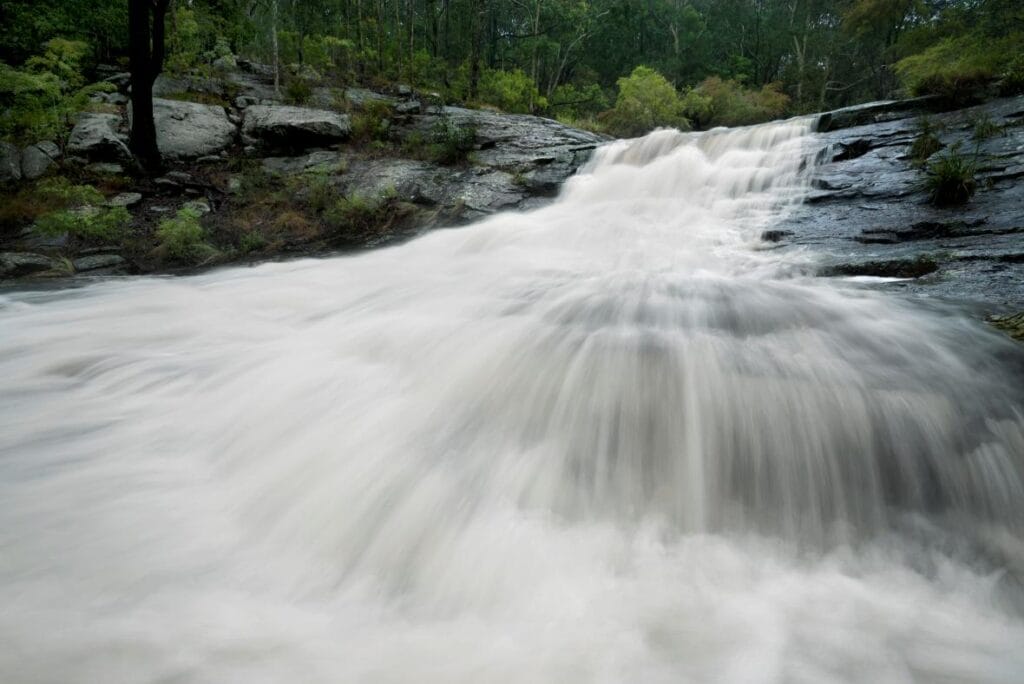
Bordering the northern edge of Lake Macquarie, Glenrock State Conservation Area combines towering eucalypt forest, coastal rainforest, freshwater creeks and a secluded stretch of coastline just minutes from Newcastle. One of the best ways to explore the reserve is the 6.8-kilometre Yuelarbah Walking Track, which follows elevated boardwalks through shaded forest before passing creeks, seasonal waterfalls and Leichhardt Lookout, with sweeping views across Glenrock Lagoon, Burwood Beach and the Pacific Ocean.
Continue beyond the lookout to Glenrock Lagoon and Burwood Beach, where forest, lagoon and ocean meet within one spectacular coastal landscape. Glenrock is also one of the region’s most popular mountain biking destinations, with an extensive network of trails through the reserve. With bushwalking, mountain biking, wildlife and beautiful coastal scenery, Glenrock offers one of the most rewarding outdoor experiences around Lake Macquarie.
💡 Local Tip. Continue beyond Leichhardt Lookout to Glenrock Lagoon and Burwood Beach rather than turning around at the viewpoint. Visit after steady rainfall to see Flaggy Creek and the seasonal waterfalls at their best, and wear sturdy footwear as the track can become slippery in wet conditions.
3. Speers Point Park
Award-winning play spaces, lakefront scenery and endless outdoor fun make Speers Point Park a favourite for families.
Location: Park Road, Speers Point | Cost: Free | Allow: 2–4 hrs | Best For: Families, children & outdoor recreation | Highlights: Variety Playground • Flying foxes • Water play • Scooter track • Lake foreshore • cafe • MAP mima | Best Time: Year-round | Parking: Free
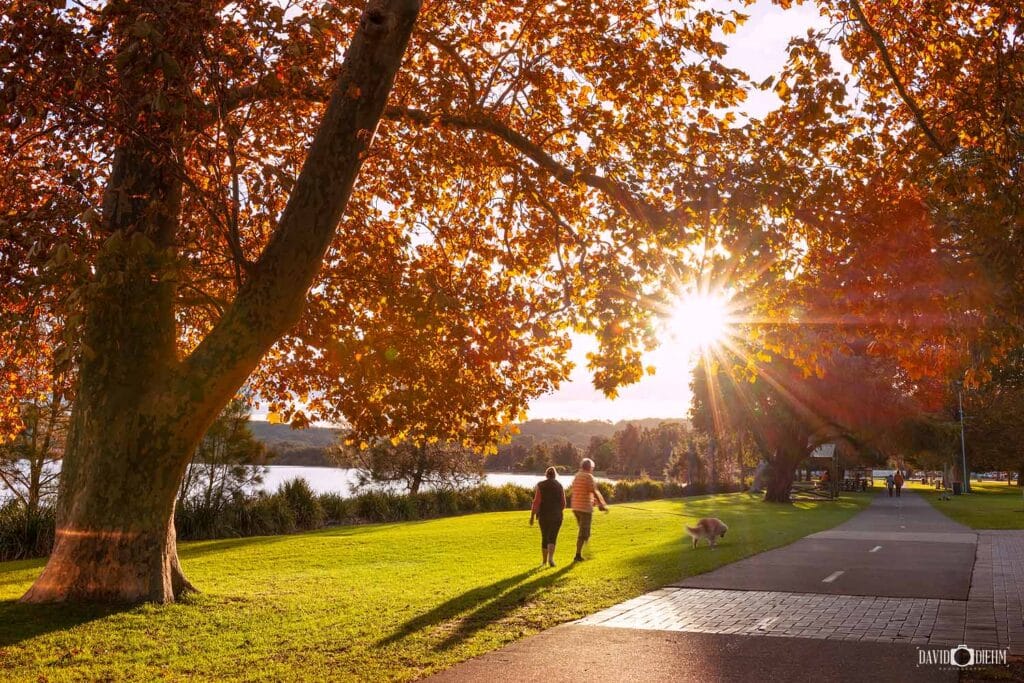

If you’re visiting Lake Macquarie with children, Speers Point Park should be high on your itinerary. Set on the shores of Lake Macquarie, this expansive waterfront park is home to the Lake Macquarie Variety Playground, featuring giant climbing structures, tube slides, flying foxes, swings, water play and interactive areas designed for children of different ages and abilities. Shaded picnic areas, free barbecues and wide open lawns make it an easy place to spend several hours or enjoy a relaxed family picnic by the lake.
Beyond the playground, flat shared pathways follow the waterfront, making the park popular for walking and cycling. The precinct is also home to Multi-Arts Pavilion, mima (MAP mima), a contemporary arts and performance space hosting exhibitions, creative experiences and events throughout the year. With an off-leash dog park, nearby swim centre, markets and regular community events, Speers Point Park offers plenty to explore beyond the playground.
💡 Local Tip. Take a walk out along the Speers Point jetty for beautiful views across Lake Macquarie and a different perspective of the foreshore. It’s also a popular spot for fishing, or simply exploring the waterfront with the kids before heading back to the playground and park.
4. Fernleigh Track
Walk, cycle or run through bushland and historic railway tunnels on one of Lake Macquarie’s most popular shared trails.
Location: Adamstown to Belmont | Cost: Free | Allow: 1–4 hrs | Best For: Walkers, cyclists, runners & families | Highlights: Fernleigh Tunnel • Historic railway line • Bushland • Belmont Lagoon • Wetlands | Best Time: Early morning or late afternoon | Parking: Free at several access points
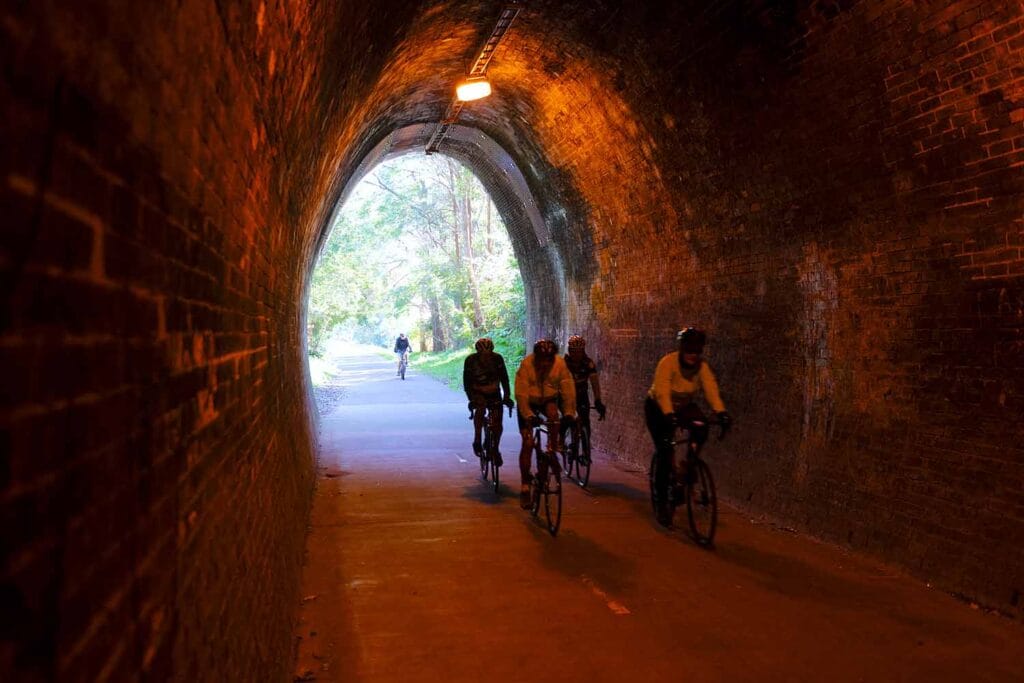
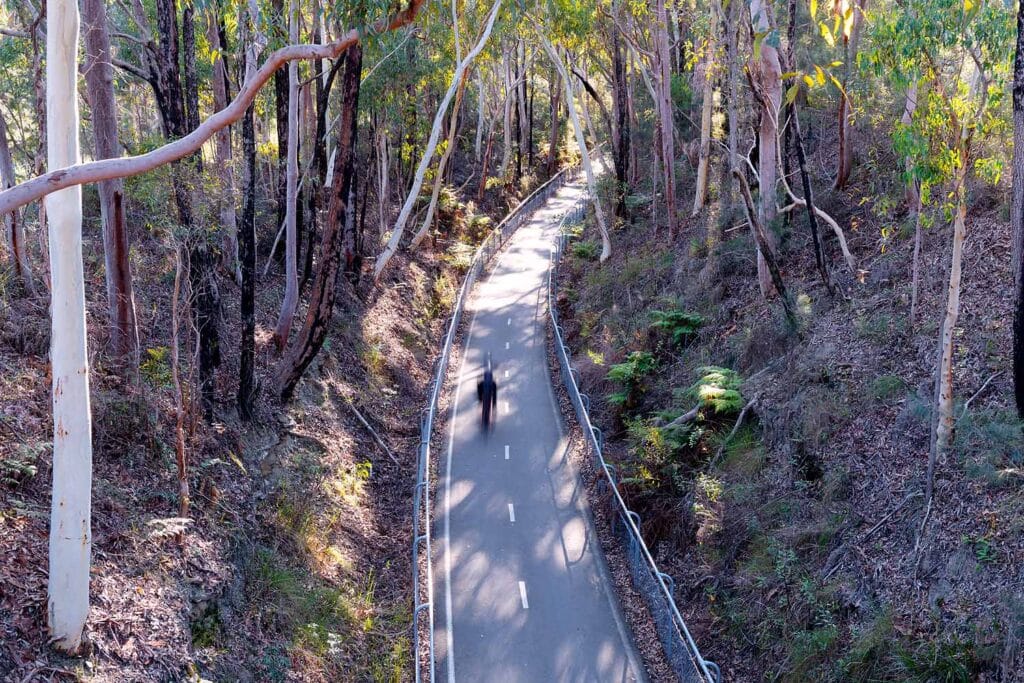
One of the best ways to experience Lake Macquarie on foot or bike, the Fernleigh Track stretches 15.5 kilometres between Adamstown and Belmont, following the route of the former Belmont railway line. This fully sealed shared path winds through towering eucalypt forest, peaceful bushland and wetlands, with the historic 181-metre Fernleigh Tunnel, completed in 1891, one of its most recognisable landmarks.
Approaching Belmont, the track passes through Belmont Lagoon Nature Reserve, where boardwalks, wetlands and native birdlife provide a scenic finish to the journey. Gentle gradients and multiple access points make it ideal for walking, running and cycling, from short family rides to completing the full trail. From Belmont, cyclists and walkers can continue along the Fernleigh Awabakal Shared Track (FAST) through Belmont Wetlands State Park towards Blacksmiths.
💡 Local Tip. For a quieter ride or walk, start at Belmont and head south along the Fernleigh Awabakal Shared Track (FAST) rather than tackling the entire Fernleigh Track. This section winds through Belmont Wetlands State Park and past Belmont Lagoon, with peaceful bushland, wetland boardwalks and plenty of birdlife. It’s a great option if you’re short on time or exploring with kids.
5. Redhead Beach
Golden sand, legendary surf and the historic Shark Tower make Redhead Beach one of Lake Macquarie’s most iconic beaches.
Location: Redhead | Cost: Free | Allow: 2–4 hrs | Best For: Families, surfers & beach lovers | Highlights: Shark Tower • Swimming • Surfing • Fishing • Whale watching • Dog-friendly area | Best Time: Year-round | Parking: Free
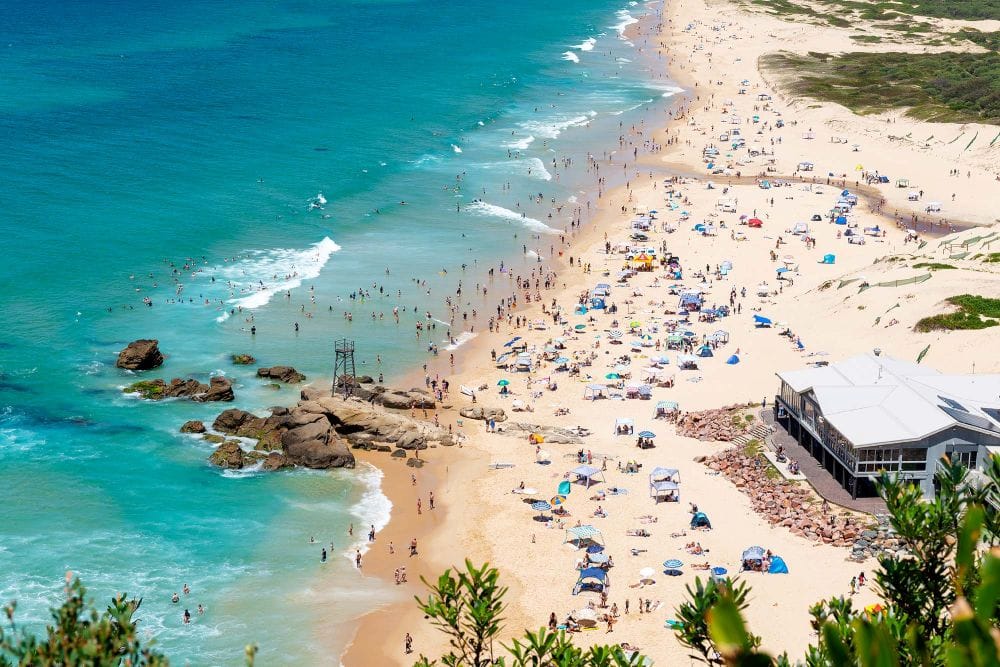
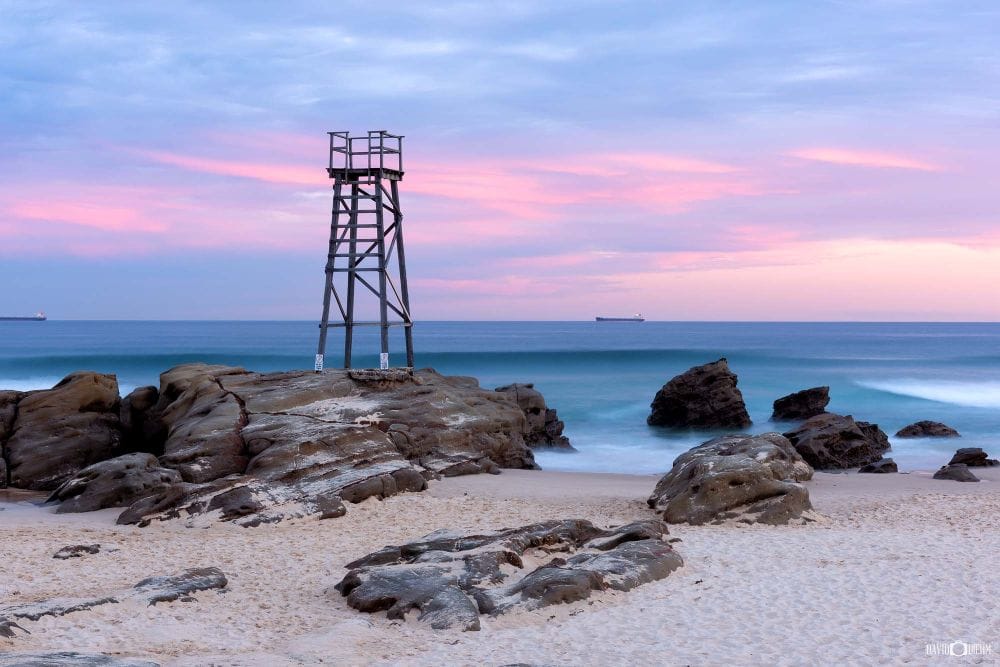
Stretching almost nine kilometres south towards Blacksmiths Beach, Redhead Beach is one of Lake Macquarie’s most impressive stretches of coastline, backed by dramatic cliffs, coastal dunes and seemingly endless golden sand. Popular for swimming, surfing, fishing and beach walks, its most recognisable landmark is the historic Redhead Shark Tower, a reminder of the area’s surf lifesaving history and one of the Hunter Region’s most photographed coastal icons.
The surrounding headland offers spectacular views along the coast and is particularly beautiful at sunrise, while winter brings opportunities to spot migrating humpback whales offshore. Families can enjoy the patrolled swimming area during the warmer months, with nearby Webb Park, local cafés and the Redhead Bike Pump Track adding to a day by the beach. With its wide-open coastline, surf culture and iconic Shark Tower, Redhead Beach is one of the best beaches to visit in Lake Macquarie.
💡 Local Tip. For the best experience, arrive around 30 minutes before sunrise and walk up to the Redhead Shark Tower. It’s one of the Hunter Region’s premier sunrise photography locations, while the elevated headland also offers excellent whale watching between May and November. If you’re visiting with your dog, continue south past Second Creek to the designated off-leash section of the beach.
6. Naru Beach, Elizabeth Island & Swansea Sand Islands
Turquoise water, white sand and secluded islands make Naru Beach one of Lake Macquarie’s most beautiful hidden gems.
Location: Naru Street, Marks Point | Cost: Free | Allow: 1–4 hrs | Best For: Families, swimmers, paddlers & boaters | Highlights: Naru Beach • Elizabeth Island • Sand islands • Swimming • Kayaking • Paddleboarding | Best Time: Calm mornings or high tide | Parking: Limited free parking
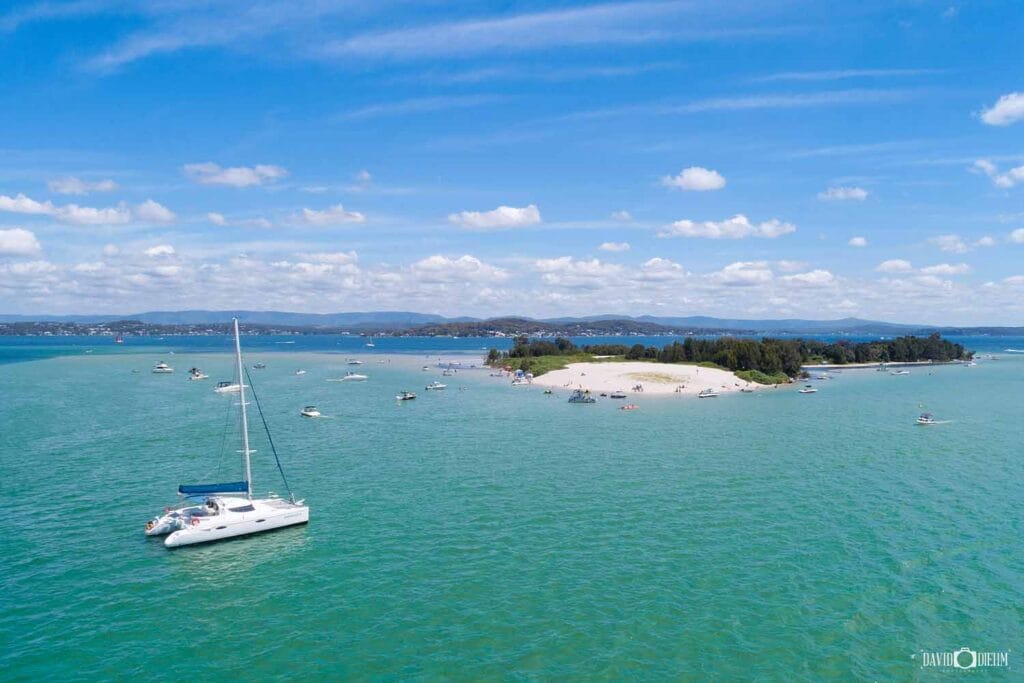

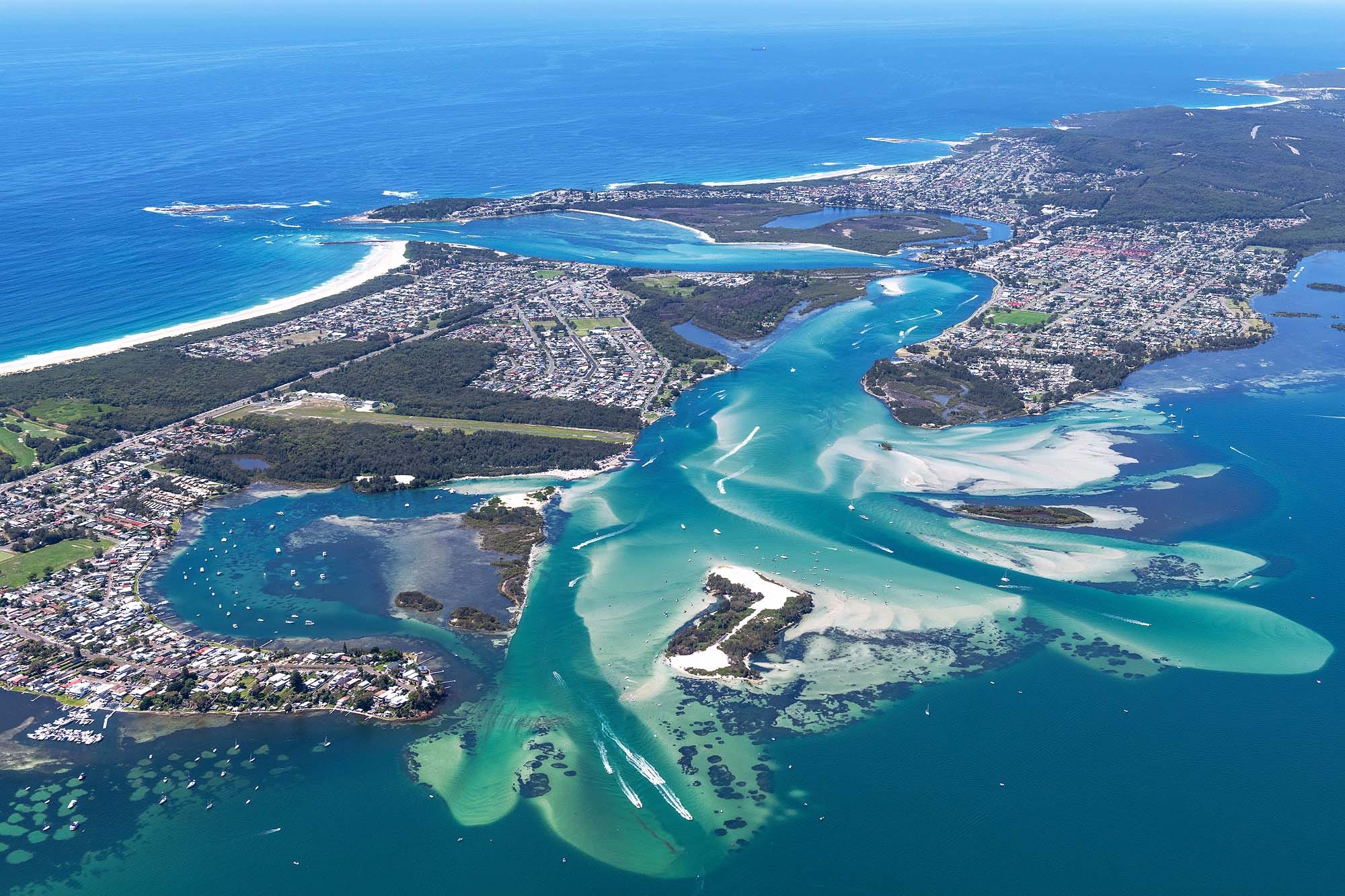
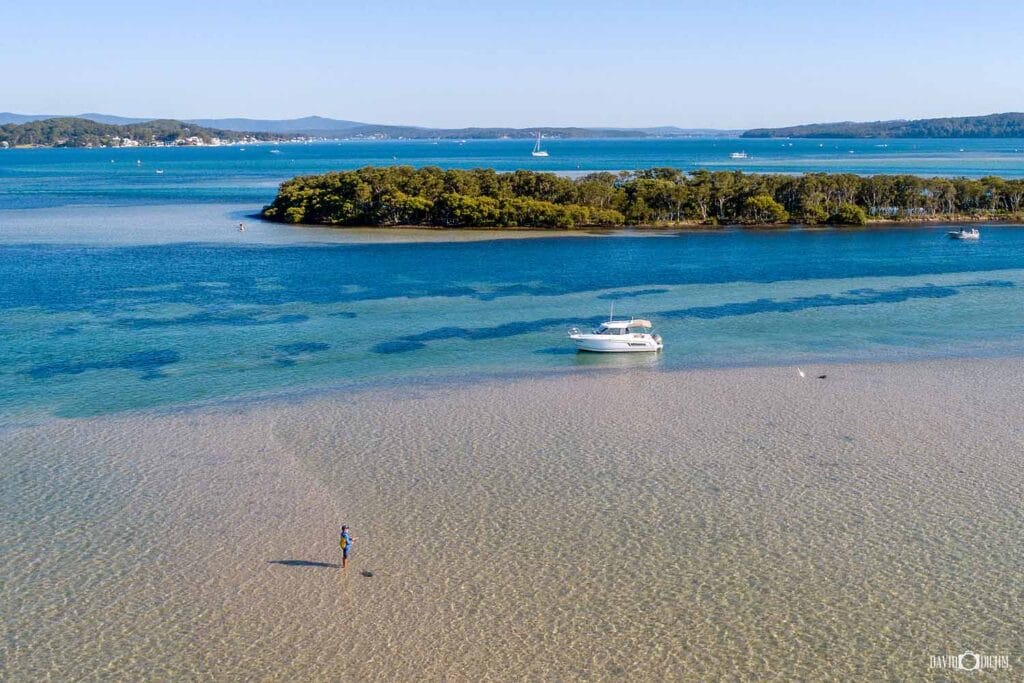
Hidden at the end of Naru Street in Marks Point, Naru Beach is one of Lake Macquarie’s most beautiful swimming and paddling spots, with white sand and shallow water that can glow brilliant shades of turquoise on calm days. Just offshore, Elizabeth Island and the Swansea Sand Islands create an ever-changing landscape of sandbars, shallow lagoons and tidal channels shaped by the movement of water through nearby Swansea Channel.
The sheltered shallows are popular with families, while kayaking and paddleboarding are great ways to explore the surrounding sand islands and waterways. Boats also gather around the exposed sandbars during summer for swimming and relaxing on the water. With its white sand, clear shallows and striking turquoise water, Naru Beach offers a surprisingly tropical-looking side of Lake Macquarie and is particularly spectacular during the warmer months.
💡 Local Tip. Arrive early on a calm summer morning before the boats arrive and bring everything you need, including drinking water, shade and sun protection. A kayak or paddleboard is the perfect way to explore Elizabeth Island and the surrounding sandbars, allowing you to discover secluded beaches and crystal-clear channels that many visitors never see.
7. Watagans National Park
Ancient rainforest, spectacular waterfalls and mountain lookouts make the Watagans one of Lake Macquarie’s best natural escapes.
Location: Martinsville | Cost: Free | Allow: Half–full day | Best For: Hikers, families & nature lovers | Highlights: Gap Creek Falls • Boarding House Dam • Heaton Lookout • Rainforest walks • Scenic drives | Best Time: Year-round, especially after rainfall | Parking: Free

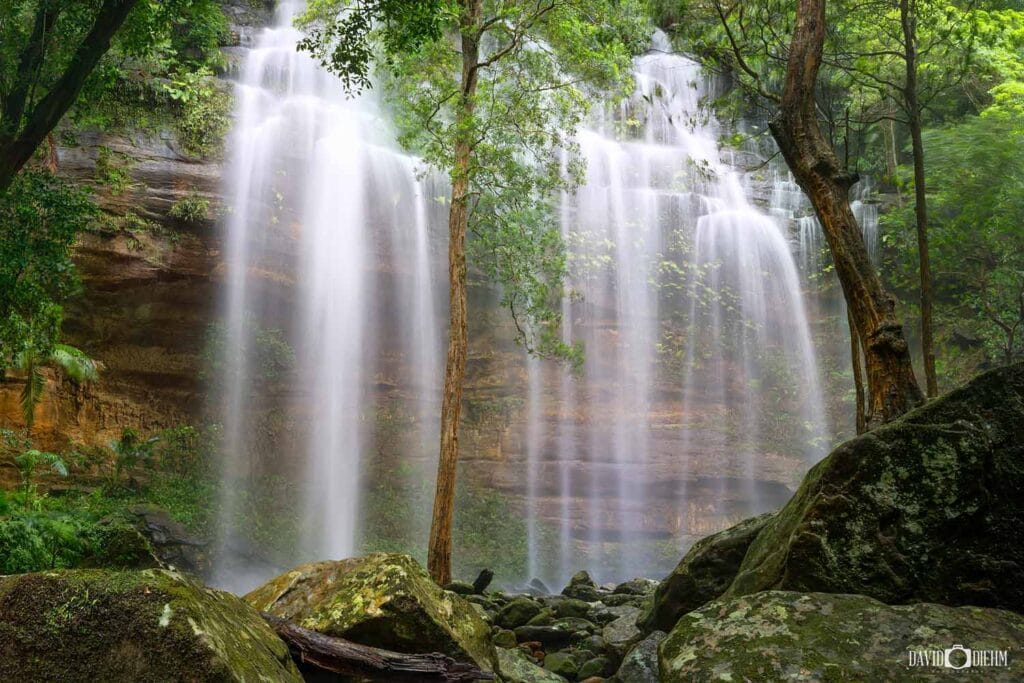
Rising above the western shores of Lake Macquarie, Watagans National Park protects more than 7,500 hectares of rainforest, towering eucalypt forest and rugged mountain scenery. Just over an hour from Newcastle, the park offers a completely different experience to the coast, with waterfalls, scenic lookouts and peaceful bushwalking trails. One of its highlights is Gap Creek Falls, where a rainforest walk through giant ferns and moss-covered boulders leads to an impressive 40-metre waterfall cascading into a natural rock amphitheatre.
Nearby, Boarding House Dam offers an easy rainforest walk, picnic area and distinctive moss-covered rock wall, while Heaton Lookout provides sweeping views across Lake Macquarie, the Hunter Valley and surrounding ranges. With bushwalking, mountain biking, camping and sections of the Great North Walk, the Watagans are one of the best places around Lake Macquarie to escape the coast and experience the region’s spectacular hinterland.
💡 Local Tip. Allow at least half a day to explore the park properly. Start at Gap Creek Falls early in the morning before continuing to Boarding House Dam for a picnic lunch, then finish at Heaton Lookout in the afternoon for spectacular views across Lake Macquarie and the Hunter Valley. If visiting after heavy rain, drive carefully as some unsealed roads can become rough or slippery.
8. Catherine Hill Bay & Rock Pools
Heritage charm, a pristine beach and spectacular ocean rock pools make Catherine Hill Bay one of Lake Macquarie’s coastal highlights.
Location: Catherine Hill Bay | Cost: Free | Allow: 2–4 hrs | Best For: Beach lovers, families & photographers | Highlights: Beach • Ocean rock pools • Historic jetty • Heritage village • Swimming • Surfing | Best Time: Year-round | Parking: Free


Few places around Lake Macquarie combine heritage and spectacular coastal scenery quite like Catherine Hill Bay. Nestled beside Wallarah National Park, this heritage-listed former mining village dates back to the 1860s and is home to one of the region’s most beautiful beaches. Its wide stretch of golden sand is popular for swimming, surfing, fishing and beach walks, while the historic village and remnants of its coal-mining past give Catherine Hill Bay a character unlike anywhere else along the coast.
Beyond the beach, a scenic coastal walk leads across rugged headlands to the Catherine Hill Bay Rock Pools, a collection of crystal-clear natural pools surrounded by dramatic sandstone cliffs and ocean views. Popular for swimming, snorkelling and photography, the rock pools are one of Lake Macquarie’s true hidden gems. During winter, the surrounding headlands also provide an excellent vantage point for spotting migrating humpback whales travelling along the coast.
💡 Local Tip. Visit on a calm day at low tide for the best conditions at the rock pools, and bring snorkelling gear to explore the crystal-clear water. Wear sturdy footwear and carry plenty of water for the coastal walk. While you’re there, take time to see the historic Catherine Hill Bay jetty while it’s still standing. The iconic structure has been listed for removal due to its deteriorating condition, making now a particularly special time to see and photograph this piece of the village’s coal-mining heritage.
9. Warners Bay Foreshore & Sculpture Walk
Waterfront walks, lakeside dining and spectacular sunsets make Warners Bay one of Lake Macquarie’s most popular foreshore destinations.
Location: The Esplanade, Warners Bay | Cost: Free | Allow: 1–4 hrs | Best For: Families, couples, walkers & food lovers | Highlights: Foreshore • Sculpture Walk • Cafés & restaurants • Walking • Cycling • Sunsets | Best Time: Year-round | Parking: Free & timed parking

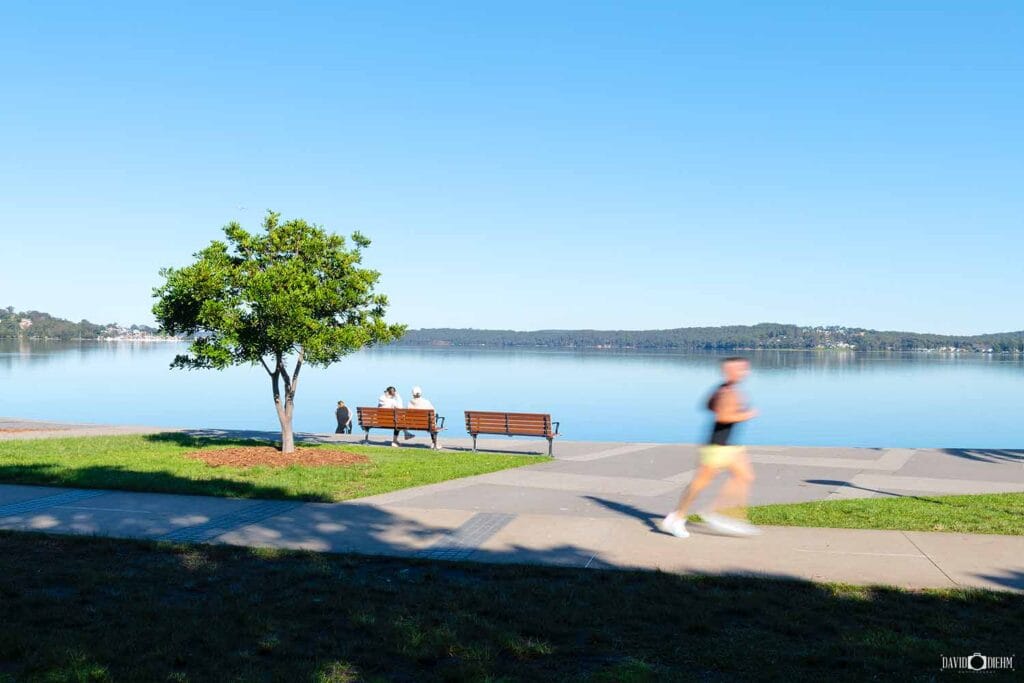
If there’s one place that captures the relaxed lifestyle of Lake Macquarie, it’s Warners Bay Foreshore. Stretching along the lake’s eastern shoreline, this vibrant waterfront precinct is popular for walking, cycling, picnics and simply enjoying the view. The Esplanade is lined with cafés, restaurants and ice cream shops overlooking the water, while the Warners Bay jetty is a great spot for a stroll, fishing or taking in beautiful views across the lake.
Families can enjoy Warner Park Playground, while the flat shared pathway follows the shoreline towards Eleebana and Speers Point, making it perfect for walking and cycling. Along the way, the Warners Bay Sculpture Walk features contemporary artworks beside the lake, adding an open-air gallery to the waterfront experience. With lakeside dining, parklands, public art and some of Lake Macquarie’s best sunset views, Warners Bay is a wonderful place to experience the region’s relaxed lakeside lifestyle.
💡 Local Tip. Arrive in the late afternoon and stroll the Sculpture Walk before choosing one of the waterfront cafés or restaurants for dinner. As the sun sets across Lake Macquarie, the foreshore comes alive with walkers, cyclists and locals enjoying the relaxed atmosphere. It’s one of the best places in the Hunter Region to experience a classic lakeside sunset.
10. Green Point Reserve & Sea Eagle Lookout
Peaceful bushland, waterfront trails and panoramic lake views make Green Point Reserve one of Lake Macquarie’s hidden gems.
Location: The Shores Way, Belmont | Cost: Free | Allow: 1–3 hrs | Best For: Families, walkers & nature lovers | Highlights: Sea Eagle Lookout • Lake views • Boardwalks • Jetty • Bushland • Picnics | Best Time: Year-round | Parking: Free

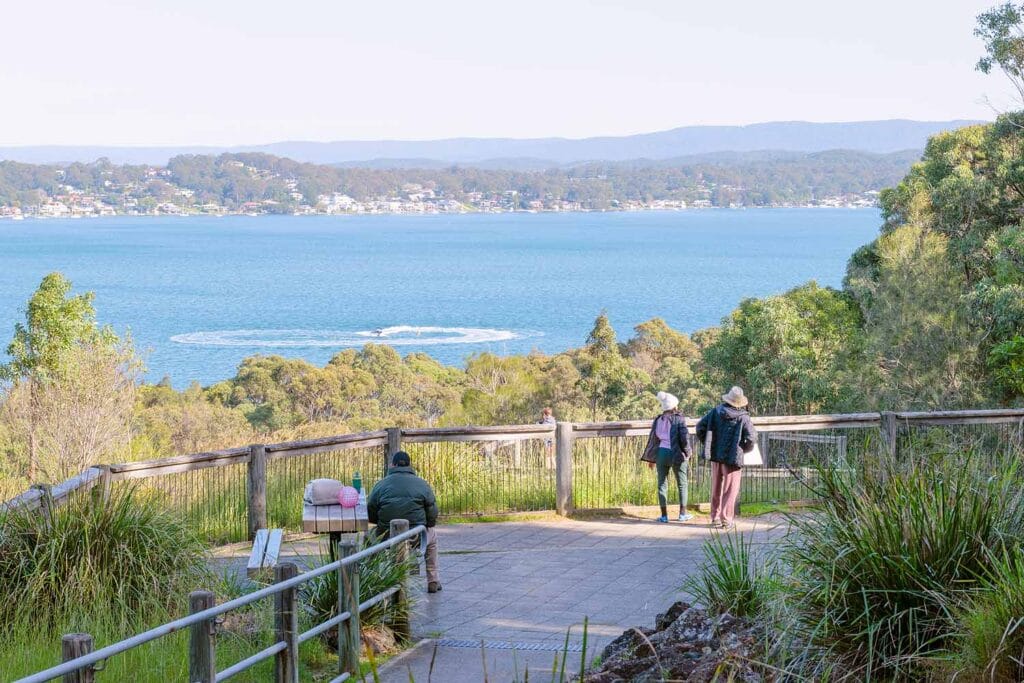
Set on the eastern shores of Lake Macquarie, Green Point Reserve is a peaceful bushland escape where walking trails and boardwalks wind through towering eucalypts, wetlands and along the waterfront. At the heart of the reserve is Sea Eagle Lookout, with multi-level viewing platforms offering sweeping views across Lake Macquarie towards Belmont, Swansea and the surrounding shoreline. Keep an eye overhead for the white-bellied sea eagles that give the lookout its name.
Beyond the lookout, visitors can explore the bushland trails, enjoy a picnic by the water or cast a line from the lakeside jetty. Families can also make use of the playground and barbecue facilities, while the lake views, wildlife and peaceful surroundings make Green Point a beautiful spot for photography or a relaxed afternoon outdoors. It’s one of Lake Macquarie’s most underrated reserves and a great place to escape into nature without travelling far.
💡 Local Tip. Visit Sea Eagle Lookout about an hour before sunset, when warm golden light sweeps across the lake and sailing boats drift quietly over the water. Afterwards, wander the foreshore boardwalks or settle in with a picnic as the evening light transforms one of Lake Macquarie’s most peaceful waterfront settings.
11. Mount Sugarloaf Lookout
Panoramic views across Lake Macquarie, Newcastle and the Hunter Valley make Mount Sugarloaf one of the region’s best lookouts.
Location: Mount Sugarloaf Road, West Wallsend | Cost: Free | Allow: 30–90 mins | Best For: Families, photographers & nature lovers | Highlights: Panoramic views • Sunrise • Sunset • Bushwalking • Picnic area | Best Time: Year-round | Parking: Free


Rising 412 metres above sea level on the western edge of Lake Macquarie, Mount Sugarloaf Lookout offers some of the most spectacular panoramic views in the Hunter Region. From the summit, sweeping views extend across Lake Macquarie, Newcastle and its harbour. A commemorative plaque near the summit marks the rare snowfalls of July 1965 and 1975, two memorable weather events in the Lower Hunter’s history.
A short climb from the summit car park leads to the main viewing area, where you can appreciate the incredible scale of the surrounding landscape. The summit precinct also offers picnic areas, free barbecues and bushwalking trails through native forest. Visit for sunrise, sunset or after dark, when the lights of Newcastle and Lake Macquarie stretch across the horizon, making Mount Sugarloaf one of the region’s most rewarding scenic lookouts.
💡 Local Tip. Arrive 30–45 minutes before sunrise to catch the first light over Lake Macquarie and Newcastle, often with mist filling the valleys below. Alternatively, stay after sunset to watch the city lights come alive across the region.
12. Whale Watching in Lake Macquarie (Lookouts & Cruises)
See humpback whales migrating along the Lake Macquarie coastline during one of Australia’s greatest wildlife spectacles.
Location: Lake Macquarie coastline | Cost: Free from lookouts; cruises extra | Allow: 1–3 hrs | Best For: Families, photographers & wildlife lovers | Highlights: Humpback whales • Coastal lookouts • Whale cruises • Dolphins | Best Time: May–November | Parking: Free at major lookouts
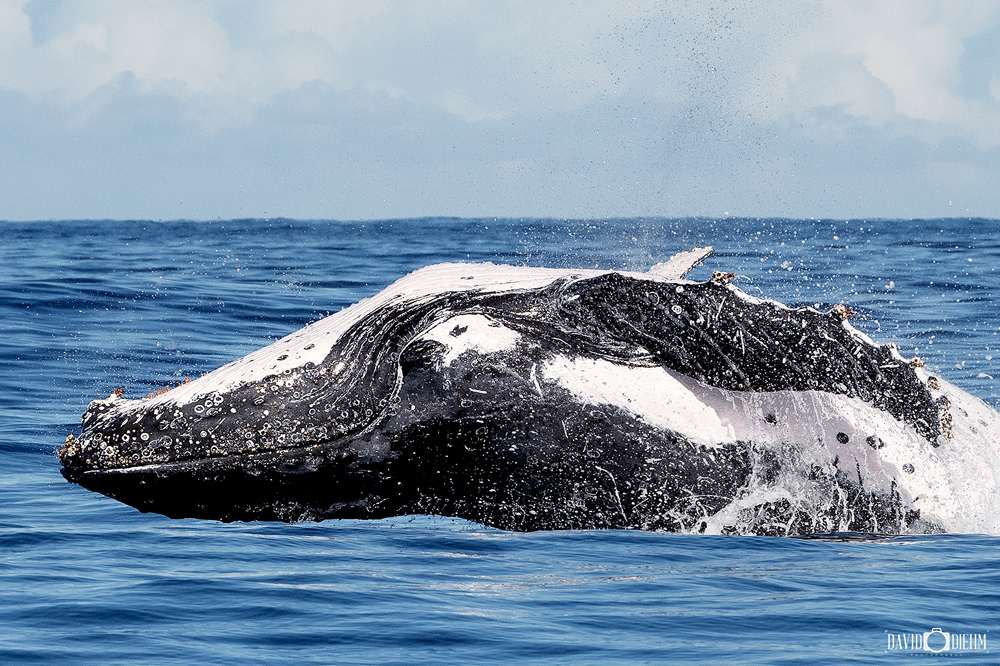
Each year, the coastline surrounding Lake Macquarie becomes a spectacular vantage point for the annual humpback whale migration, as thousands of whales travel along Australia’s east coast between Antarctica and the warmer waters of Queensland. From elevated coastal lookouts, visitors can watch whales breaching, tail-slapping and travelling remarkably close to shore, making whale watching one of Lake Macquarie’s most memorable seasonal experiences.
For a closer encounter, CoastXP’s Whale Discovery Cruise departs from Swansea and takes visitors offshore to experience migrating humpbacks from the water, with dolphins and other marine life also regularly encountered. On land, Redhead Lookout is one of the best whale-watching locations, with other excellent vantage points including Catherine Hill Bay Headland, Dudley Bluff, Caves Beach and Swansea Heads. Many can easily be combined with a beach visit or coastal walk for a memorable day exploring the Lake Macquarie coastline.
💡 Local Tip. For the best land-based viewing, head to Redhead Lookout at the end of Cowlishaw Street between June and August with binoculars and scan the horizon. For a closer encounter, join a CoastXP Whale Discovery Cruise from Swansea.
13. Walk the Red Bluff Boardwalk
An elevated boardwalk over the water and panoramic lake views make Red Bluff one of Lake Macquarie’s most scenic walks.
Location: Eleebana to Warners Bay | Cost: Free | Allow: 30–90 mins | Best For: Walkers, cyclists & families | Highlights: Over-water boardwalk • Lake views • Walking • Cycling • Sunsets | Best Time: Year-round | Parking: Free
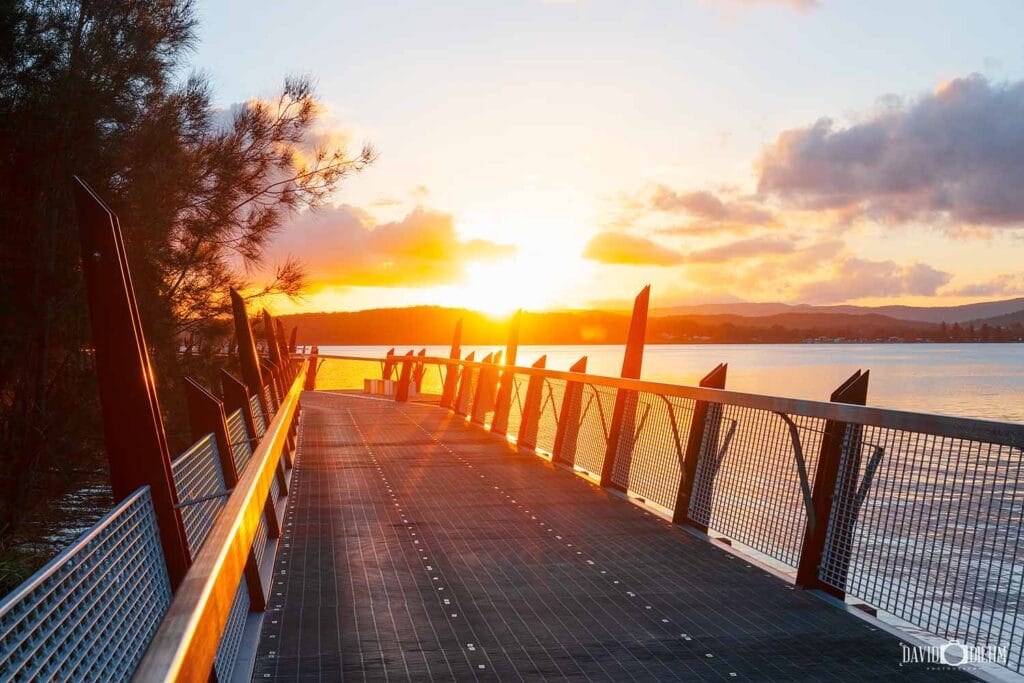
Stretching 380 metres above the water between Eleebana and Warners Bay, the Eleebana Boardwalk is one of Lake Macquarie’s most distinctive waterfront walks. The pathway winds around Red Bluff, offering uninterrupted views across the lake towards Belmont, Valentine and the western shoreline. Its unique over-water setting makes it popular for walking, cycling and photography, particularly in the early morning and around sunset.
The boardwalk forms part of the shared pathway connecting Eleebana with Warners Bay Foreshore, making it easy to continue your walk or ride along the lake. Along the way, keep an eye out for pelicans, black swans and yachts passing across the water, while the boardwalk itself passes above environmentally sensitive seagrass meadows. For anyone looking for scenic things to do in Lake Macquarie, the Red Bluff Boardwalk is one of the region’s most enjoyable waterfront walks.
💡 Local Tip. Visit during the final hour before sunset when the lake is often at its calmest and the boardwalk is bathed in warm golden light. Pause halfway along the walkway to watch yachts gliding across the water and enjoy one of the best panoramic views on the lake before continuing into Warners Bay for dinner or a coffee by the waterfront.
14. Explore Pirrita Island Boardwalk
Elevated boardwalks, mangrove forests and tidal waters make Pirrita Island one of Lake Macquarie’s most unique waterfront walks.
Location: Pirrita Island, Swansea | Cost: Free | Allow: 30–60 mins | Best For: Families, photographers & nature lovers | Highlights: Boardwalk • Mangroves • Swansea Channel • Birdwatching • Tidal wetlands | Best Time: Year-round | Parking: Free


Connected to Swansea by a pedestrian bridge, Pirrita Island offers a peaceful walk through one of Lake Macquarie’s fascinating coastal wetland environments. Elevated boardwalks wind through mangroves and tidal channels, with beautiful views across Swansea Channel where the tides constantly reshape the landscape. Clear shallows, exposed sandbars and abundant wildlife make it particularly rewarding for birdwatching and photography, with pelicans, black swans, cormorants, herons and other coastal species regularly seen throughout the wetlands.
The walk also reveals the island’s rich cultural and local history through interpretive signs along the boardwalk. Formerly known as Coon Island, it was officially renamed Pirrita Island, with Pirrita an Awabakal word referring to the mangrove oysters once abundant in the area. Combining wetlands, wildlife, local history and constantly changing views across Swansea Channel, Pirrita Island is one of Lake Macquarie’s most enjoyable short waterfront walks.
💡 Local Tip. Visit around the turn of the tide to experience Swansea Channel at its most spectacular, when crystal-clear water races between the lake and the ocean and constantly reshapes the surrounding sandbars. Afterwards, continue to nearby Naru Beach, Blacksmiths Beach or Swansea Channel to experience even more of this remarkable corner of Lake Macquarie.
15. Swim at Belmont Baths
Located on the Belmont foreshore, Belmont Baths is one of Lake Macquarie’s most popular swimming spots, with a large mesh-enclosed swimming area providing calm, sheltered water ideal for families and casual swimmers. The sandy foreshore, shaded picnic areas and nearby playground make it an easy place to spend a few hours, with cafés and restaurants just across the road.
A standout feature is the 70-metre jetty, which extends into Lake Macquarie and offers beautiful views across the water, particularly around sunset. Belmont Baths is also one of the region’s most accessible swimming locations, with a gently sloping access ramp, accessible amenities and a free Mobi-Chair available for water access. Whether you’re visiting for a swim, family picnic or waterfront stroll, Belmont Baths is a relaxed and welcoming place to enjoy the lake.

Calm, protected waters and excellent facilities make Belmont Baths one of Lake Macquarie’s best family swimming spots.
Location: Brooks Parade, Belmont | Cost: Free | Allow: 1–3 hrs | Best For: Families, young children & swimming | Highlights: Protected swimming • Jetty • Sandy foreshore • Playground • Lake views | Best Time: Year-round | Parking: Free
💡 Local Tip. Pack a picnic or grab takeaway from one of Belmont’s nearby cafés and spend the afternoon by the lake. If you’re visiting during summer, arrive earlier in the day to secure a shady picnic table, and don’t forget to walk the full length of the jetty for some of the best views across Lake Macquarie.
16. Grannies Pool
Calm, sheltered waters make Grannies Pool one of Lake Macquarie’s favourite swimming spots for families with young children.
Location: Ungala Road, Blacksmiths | Cost: Free | Allow: 1–3 hrs | Best For: Families & young children | Highlights: Sheltered swimming • Beach access • Blacksmiths Beach • Breakwall walk • Swansea Channel | Best Time: High tide | Parking: Free

Tucked beside Swansea Channel at the southern end of Blacksmiths Beach, Grannies Pool is one of Lake Macquarie’s favourite family swimming spots. Protected from the surf by the breakwall, the shallow tidal pool provides calm, sheltered water ideal for toddlers, young children and families looking for a relaxed place to swim. Accessible pathways, beach matting and viewing areas also make this much-loved local spot easier for visitors of different ages and abilities to enjoy.
After a swim, follow the nearby Blacksmiths Breakwall for views across Swansea Channel as fishing boats and yachts travel between Lake Macquarie and the Pacific Ocean. Just minutes away, Blacksmiths Beach offers kilometres of golden sand for swimming, surfing and beach walks. Together, Grannies Pool and its surrounding coastline make for an easy and enjoyable family day out in Lake Macquarie.
💡 Local Tip. Time your visit for high tide when Grannies Pool is at its best, then pack a picnic and make a day of it. After a swim, wander along the Blacksmiths Breakwall to watch boats passing through Swansea Channel before finishing with a stroll along nearby Blacksmiths Beach—it’s one of the most enjoyable family outings anywhere on Lake Macquarie.
17. Ghosties Beach & Sea Cave Walk
Remote beaches, towering cliffs and a hidden sea cave make the Ghosties Beach Walk one of Lake Macquarie’s best coastal adventures.
Location: Catherine Hill Bay | Cost: Free | Allow: 1.5–2.5 hrs | Best For: Walkers, photographers & adventure seekers | Highlights: Ghosties Beach • Sea cave • Moonee Beach • Sandstone cliffs • Rock platforms | Best Time: Low tide & calm conditions | Parking: Free

Leaving Catherine Hill Bay behind, the Moonee Beach and Ghosties Beach coastal walk follows one of Lake Macquarie’s most spectacular and secluded stretches of coastline. The track descends onto the golden sands of Moonee Beach before continuing south past rugged sandstone cliffs, rock platforms and untouched beaches. With few crowds and little development, the walk has a genuine sense of remoteness that feels worlds away from the region’s busier coastal attractions.
Beyond Ghosties Beach lies the walk’s unforgettable highlight—a spectacular walk-through sea cave carved into the sandstone cliffs by the Pacific Ocean. Best explored at low tide and during calm ocean conditions, the cave is one of Lake Macquarie’s most remarkable natural attractions. The combination of secluded beaches, dramatic cliffs and hidden coastal formations makes this a rewarding adventure for walkers, photographers and anyone looking to discover Lake Macquarie’s wilder side.
💡 Local Tip. Plan your walk around low tide and aim to arrive early in the morning when the beaches are often completely deserted. Allow plenty of time to explore the sandstone cliffs and sea cave before retracing your steps along the shoreline. If you’re a photographer, sunrise and the final hour before sunset produce beautiful golden light across the cliffs and create one of the most spectacular coastal scenes anywhere in Lake Macquarie.
18. Explore Valentine Foreshore
Towering trees, colourful dinghies and calm waters make Valentine Foreshore one of Lake Macquarie’s most picturesque waterfront spots.
Location: Valentine Crescent, Valentine | Cost: Free | Allow: 1–3 hrs | Best For: Families, couples & photographers | Highlights: Waterfront • Colourful dinghies • Public wharf • Fishing • Kayaking • Sunsets | Best Time: Year-round | Parking: Free

Set on the peaceful shores of Lake Macquarie, Valentine Foreshore is one of the region’s most picturesque waterfront locations. One of its most recognisable sights is the collection of colourful row boats positioned beneath the waterfront trees, creating a beautiful lakeside scene that has become a favourite with locals and photographers. The expansive grassy reserve is perfect for picnics, kayaking or simply relaxing beside the water, while the nearby Valentine Bowling Club provides a popular spot for a meal or drink overlooking the lake.
A standout feature is the distinctive zig-zag public wharf, which extends almost 100 metres into the lake and provides beautiful views across the water. It’s a popular spot for fishing, watching yachts and exploring the waterfront, particularly around sunset. With its colourful boats, peaceful foreshore and unique wharf, Valentine is a beautiful place to slow down and enjoy the relaxed lakeside atmosphere of Lake Macquarie.
💡 Local Tip. Bring a picnic blanket, pick up takeaway fish and chips, pizza or coffee from nearby shops or bowling club and arrive about an hour before sunset. Wander to the end of the zig-zag wharf before finding a spot beneath the magnificent fig trees. As the golden light catches the colourful dinghies and reflects across the calm waters of the Bay, you’ll quickly discover why this is one of Lake Macquarie’s most photographed waterfront locations.
19. Explore Toronto Foreshore & Baths
Heritage baths, waterfront parks and sweeping lake views make Toronto Foreshore one of Lake Macquarie’s most relaxing lakeside destinations.
Location: Toronto Foreshore | Cost: Free | Allow: 2–4 hrs | Best For: Families, couples & swimmers | Highlights: Toronto Baths • Waterfront parks • Swimming • Marina • Cafés • Foreshore walks | Best Time: Year-round | Parking: Free

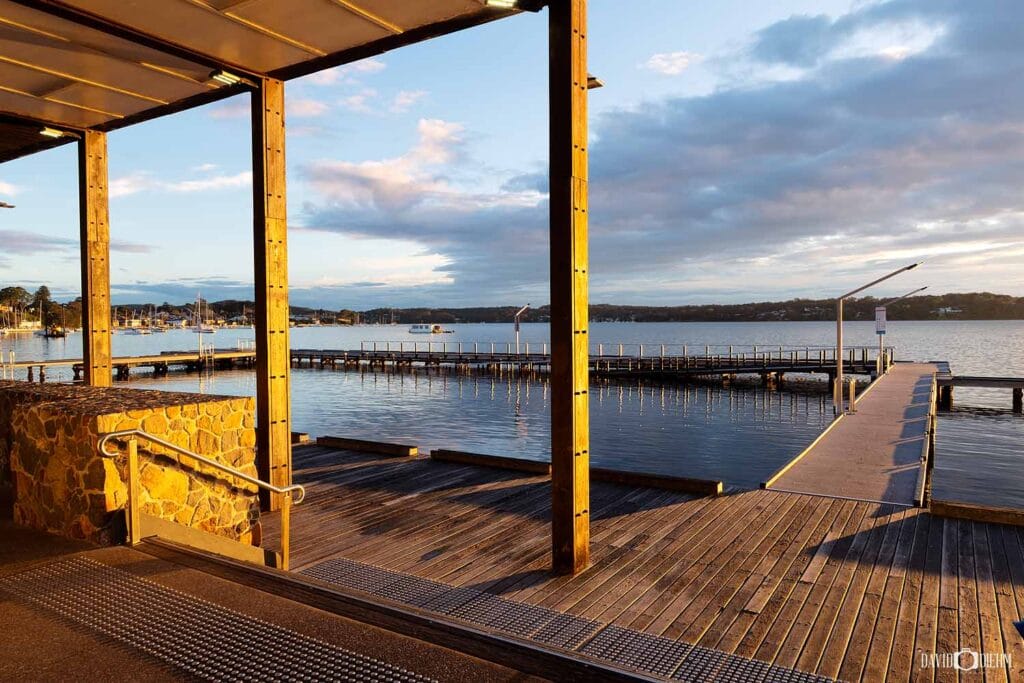
Stretching along the western shores of Lake Macquarie, Toronto Foreshore is the heart of this relaxed lakeside town, with waterfront pathways winding beneath magnificent fig trees past parklands, picnic areas and jetties. One of its highlights is the historic Toronto Baths, a beautifully restored enclosed swimming area with calm, protected water ideal for families and casual swimmers, while the surrounding boardwalk offers beautiful views across the lake.
Beyond the baths, the foreshore is perfect for a waterfront walk, picnic or simply relaxing beneath the trees and watching boats drift across the water. Toronto’s town centre is only a short walk away, with cafés, restaurants and shops making it easy to combine a visit with breakfast or lunch. With swimming, waterfront walks and beautiful lake views, Toronto Foreshore is a wonderful place to experience the quieter western side of Lake Macquarie.
💡 Local Tip. Grab a takeaway coffee or fish and chips from the town centre before wandering down to the foreshore. Find a spot beneath the magnificent fig trees overlooking Toronto Baths and stay until late afternoon, when the western shoreline is bathed in warm golden light and the lake becomes one of the most peaceful places in Lake Macquarie.
20. Explore Wangi Wangi
Sailing boats, waterfront scenery and spectacular sunsets make Wangi Wangi one of Lake Macquarie’s most picturesque villages.
Location: Wangi Wangi | Cost: Free | Allow: 2–4 hrs | Best For: Couples, families & nature lovers | Highlights: Foreshore • Wangi Point • Sailing • Boating • Fishing • Wangi Circuit Walk | Best Time: Year-round | Parking: Free

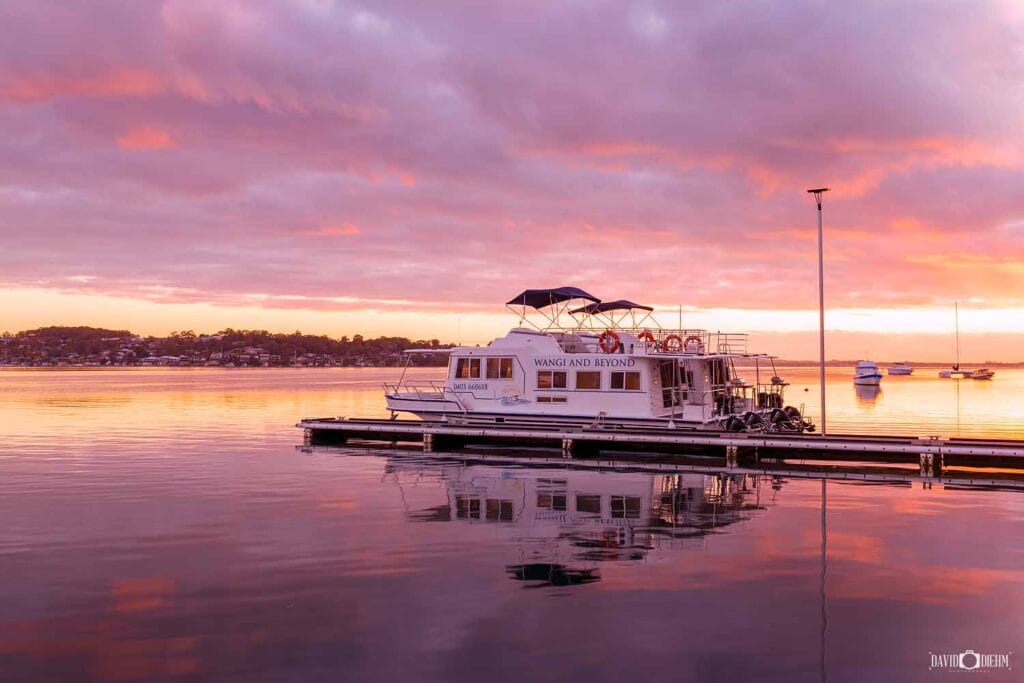
Set on a narrow peninsula extending into Lake Macquarie, Wangi Wangi is one of the lake’s most picturesque waterfront villages, with peaceful bays, leafy reserves and beautiful water views in almost every direction. Life here revolves around the lake, with sheltered waters popular for sailing, kayaking, paddleboarding and fishing, while yachts moored across the bay add to Wangi Wangi’s relaxed lakeside character.
The foreshore is perfect for a picnic, waterfront walk or simply relaxing beneath the trees, while nearby Wangi Point offers bushwalking and more opportunities to explore the shoreline. Facing west across the lake, Wangi Wangi is also one of the best places in Lake Macquarie to watch the sunset, when golden light reflects across the water and silhouetted yachts create a beautiful end to the day.
💡 Local Tip. Arrive in the late afternoon and spend a few hours exploring the foreshore before settling in for sunset. Grab takeaway from one of the local cafés or enjoy dinner overlooking the lake, then wander along the waterfront as the sky changes colour. On calm evenings, the reflections across Wangi Bay create some of the most spectacular sunset photography opportunities anywhere on Lake Macquarie.
21. Dudley Beach & Blowhole
A secluded surf beach, dramatic sandstone cliffs and a natural blowhole make Dudley one of Lake Macquarie’s coastal gems.
Location: Dudley | Cost: Free | Allow: 1.5–3 hrs | Best For: Nature lovers, photographers & surfers | Highlights: Dudley Beach • Blowhole • Sandstone cliffs • Rock pools • Surfing • Sunrise | Best Time: Year-round | Parking: Free
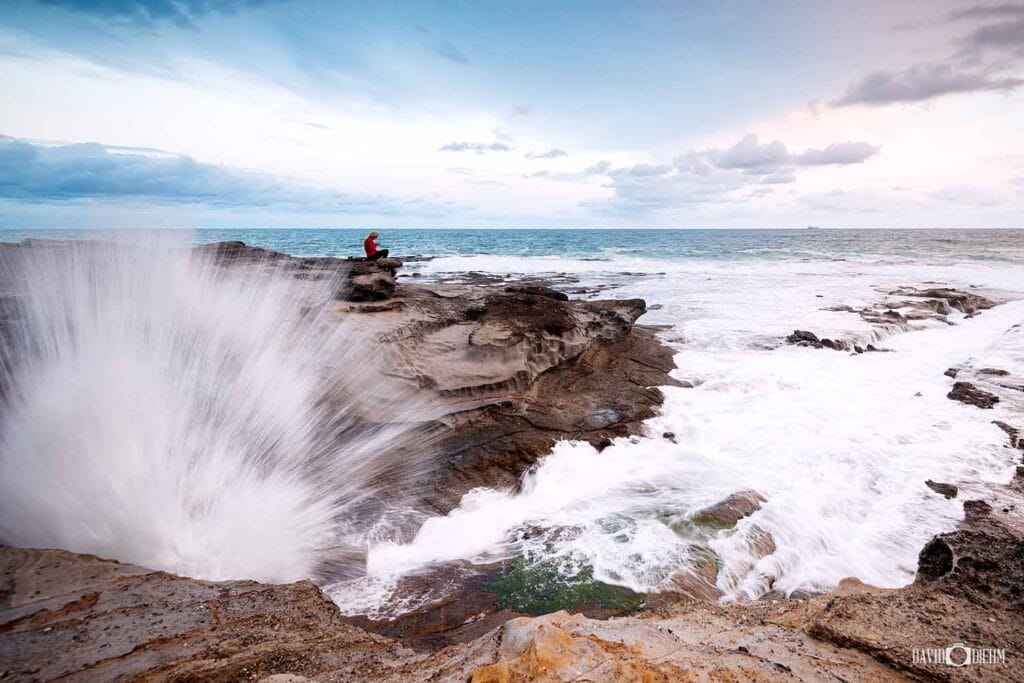
Bordering the northern edge of Lake Macquarie, Dudley Beach is one of the region’s most rugged and unspoilt coastal destinations. Hidden beneath towering sandstone cliffs and surrounded by native bushland, the secluded beach is popular for surfing, beach walks and photography. At the southern end, a natural blowhole carved into the sandstone can send water surging into the air when conditions are right, while nearby rock platforms reveal tidal pools, striking rock formations and remnants of an ancient fossilised forest.
Dudley is particularly beautiful at sunrise, when the first light illuminates the cliffs and coastline. Experienced surfers are drawn to its consistent swell, while walkers and photographers can explore the beach and surrounding headlands. With its secluded setting, dramatic geology and wild coastal scenery, Dudley Beach offers a completely different experience to Lake Macquarie’s busier beaches.
💡 Local Tip. The Dudley blowhole is only active during a large swell combined with high tide, so check conditions before visiting. Always keep a safe distance from the rock platforms, which can be slippery and exposed to unpredictable waves. For photographers, sunrise offers the best light across the cliffs and coastline.
22. Explore Swansea Channel & Swansea Bridge
Passing boats, powerful tides and the iconic Swansea Bridge make Swansea Channel one of Lake Macquarie’s most fascinating waterways.
Location: Swansea | Cost: Free | Allow: 1–3 hrs | Best For: Families, photographers & anglers | Highlights: Swansea Channel • Swansea Bridge • Boats • Fishing • Pelicans • Black Neds Bay | Best Time: Year-round | Parking: Free

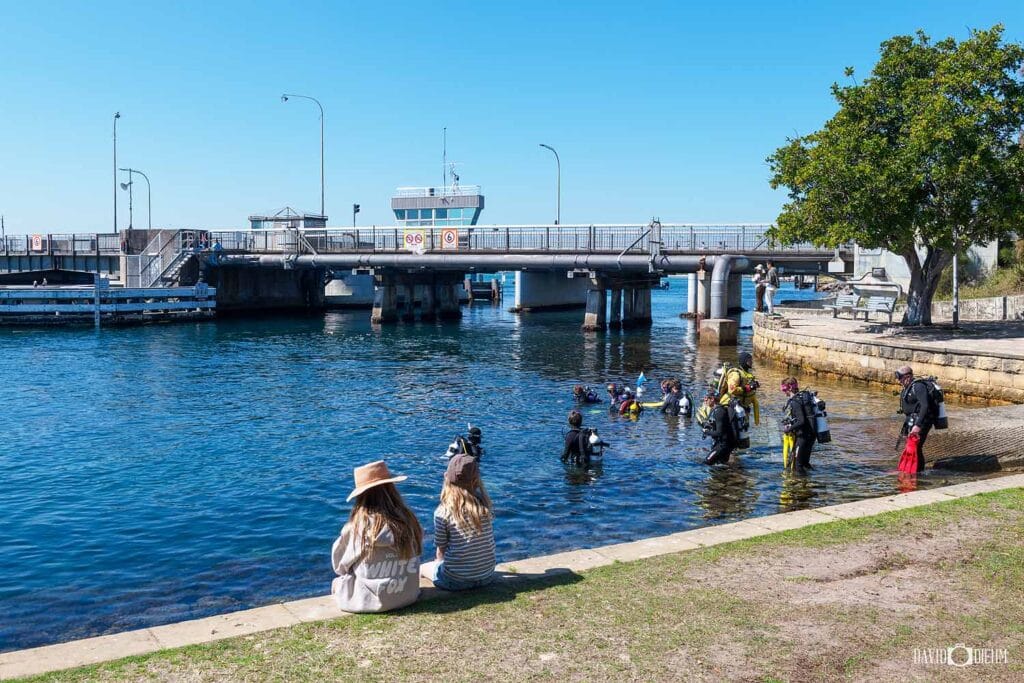
Connecting Lake Macquarie with the Pacific Ocean, Swansea Channel is the heart of the region’s boating activity and one of the most interesting places to watch life on the water. Fishing boats head out to sea, yachts cruise through the channel and pelicans gather along the shoreline, while strong tidal currents flow beneath the bridge throughout the day.
A highlight is watching the Swansea Bridge open to allow yachts and larger vessels to pass between the lake and ocean, a distinctive part of everyday life in Swansea. Visitors can also dive or snorkel the channel, fish from the shoreline, explore the waterfront pathways or simply watch the boats from nearby parks and reserves. With diving, fishing, boating and plenty of waterfront activity, Swansea Channel offers a fascinating glimpse into the connection between Lake Macquarie and the Pacific Ocean.
💡 Local Tip. Grab a coffee from one of the nearby cafés and find a spot along the foreshore before a scheduled bridge opening to watch yachts and cruisers pass through. If you’re planning to dive Swansea Channel, experience or a guided dive is recommended, as diving and snorkelling conditions are highly tide-dependent.
23. Explore Pulbah Island
Untouched bushland and peaceful waters make Pulbah Island one of Lake Macquarie’s most unique natural escapes.
Location: Southern Lake Macquarie | Cost: Free | Allow: 2–4 hrs | Best For: Boaters, kayakers & nature lovers | Highlights: Nature reserve • Bushland • Boating • Kayaking • Fishing • Wildlife | Best Time: Calm conditions | Access: Private watercraft only

Rising from the southern waters of Lake Macquarie, Pulbah Island is one of the lake’s most striking natural landmarks. Protected as a nature reserve and covered in dense native forest, the undeveloped island provides a beautiful contrast to the surrounding lakeside towns and marinas. Its rugged shoreline, secluded coves and abundant birdlife make it a fascinating place to explore from the water.
The best way to experience Pulbah Island is by boat or kayak, cruising along its shoreline and taking in the sandstone cliffs, towering eucalypts and peaceful surroundings. The deeper waters around the island are also popular with recreational anglers chasing species such as flathead, bream and mulloway. Whether viewed from Wangi Wangi or Toronto, or explored from the water, Pulbah Island showcases the wild and untouched side of Lake Macquarie.
💡 Local Tip. Choose a calm morning to explore the waters around Pulbah Island, when the lake is often mirror-like and the reflections are at their best. Wangi Wangi, Balcolyn and Cams Wharf are excellent launching points for boats and kayaks, while the foreshores around Wangi Wangi and Toronto provide some of the best land-based views of the island without needing to venture onto the water.
24. Belmont Wetlands State Park
Coastal dunes, freshwater wetlands and native bushland make Belmont Wetlands State Park one of Lake Macquarie’s most diverse natural escapes.
Location: 119 Kalaroo Road, Redhead | Cost: Free entry; camping & 4WD permits extra | Allow: 2–4 hrs | Best For: Nature lovers, campers & 4WD enthusiasts | Highlights: Nine Mile Beach • Sand dunes • Wetlands • Camping • 4WD • Walking • Birdwatching | Best Time: Year-round | Parking: Free
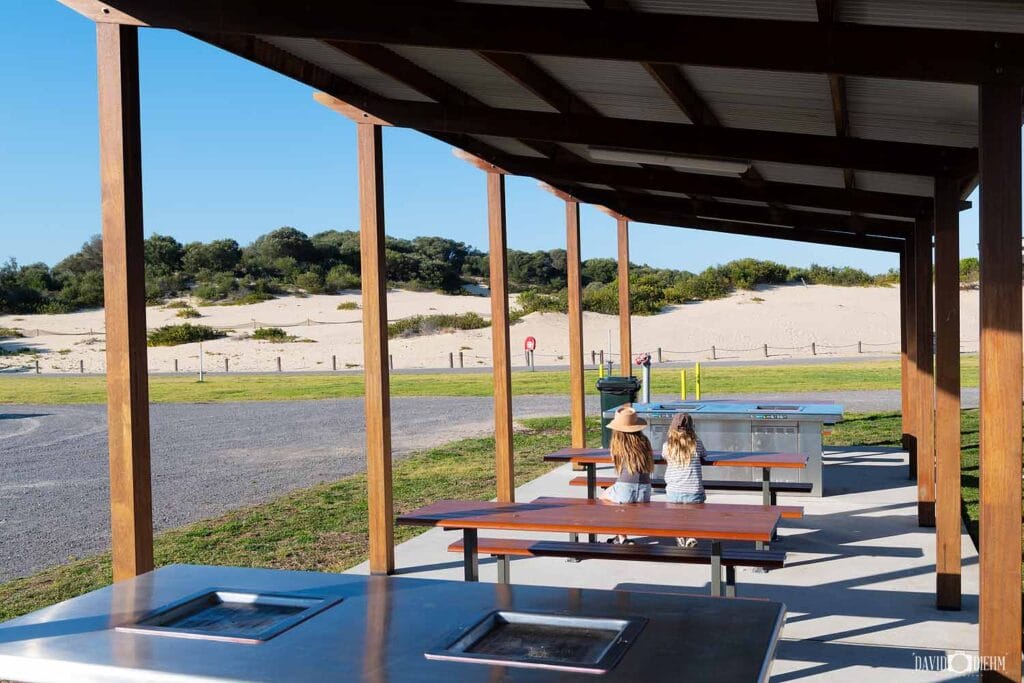
Covering more than 549 hectares between Redhead and Belmont, Belmont Wetlands State Park protects a diverse landscape of wetlands, coastal bushland, towering sand dunes and Nine Mile Beach. Walking trails wind through the park’s wetlands and native vegetation, providing excellent opportunities for birdwatching, photography and exploring nature, while connections with the Fernleigh Track make it easy to combine a visit with walking or cycling.
For something more adventurous, Belmont Wetlands is one of the few places in the Hunter where visitors can drive onto the beach with a permit, with designated 4WD access leading onto Nine Mile Beach for fishing and coastal exploring. The park also offers a large campground with unpowered sites, hot showers and BBQ facilities, making it a great base for a weekend by the ocean. With walking, camping, fishing and 4WD adventures, Belmont Wetlands offers a completely different side of Lake Macquarie’s coastline.
💡 Local Tip. Arrive around sunrise to experience Belmont Wetlands at its most peaceful. The soft morning light creates beautiful conditions for photography across the sand dunes and Nine Mile Beach, while wildlife is often at its most active. If you plan on driving onto the beach, purchase your 4WD permit before you arrive and try to visit early on weekends and school holidays, as access is limited and can reach capacity during busy periods.
25. Explore Croudace Bay Park
A pirate playground, lakeside paths and outdoor activities make Croudace Bay Park one of Lake Macquarie’s best family destinations.
Location: Croudace Bay Road, Eleebana | Cost: Free | Allow: 2–4 hrs | Best For: Families & young children | Highlights: Pirate playground • Skate park • Cycling • Dog park • Basketball • Lake foreshore | Best Time: Year-round | Parking: Free


Set along the eastern shores of Lake Macquarie, Croudace Bay Park is a fantastic waterfront destination for families, combining expansive parklands, lake views and plenty of space to play and explore. The park is home to the popular Thomas H Halton Park playground, with play equipment for different ages, while large grassy areas, picnic facilities and shady trees make it an easy spot to spend a relaxed morning or afternoon by the lake.
Beyond the playground, the foreshore is perfect for walking, cycling, picnics and fishing, with shared pathways following the water and plenty of places to stop and enjoy the view. The open parklands are also popular for sport and recreation, while the peaceful shoreline provides opportunities to spot local birdlife. With plenty of room for kids to explore, Croudace Bay Park is one of Lake Macquarie’s best free family-friendly attractions.
💡 Local Tip. Pack scooters, bikes or roller skates to make the most of the wide looping pathways, then bring a picnic or fire up one of the free electric barbecues while the kids explore the pirate playground. Arriving later in the afternoon is a great way to avoid the hottest part of the day and finish with a beautiful sunset over Lake Macquarie.
26. Ride the Redhead Pump Track
Flowing berms, rollers and jumps make Redhead Pump Track one of Lake Macquarie’s best free attractions for riders of all ages.
Location: Beach Road, Redhead | Cost: Free | Allow: 30 mins–2 hrs | Best For: Families, BMX, bikes & scooters | Highlights: Pump track • BMX • Mountain biking • Scooters • Skateboards • Jumps | Best Time: Year-round | Parking: Free

Located just moments from Redhead Beach, the Redhead Pump Track is one of Lake Macquarie’s best free activities for kids and families. Designed by renowned pump track specialists Velosolutions, the purpose-built asphalt circuit features smooth rollers, sweeping berms and jumps that allow riders to build speed and momentum using body movement rather than constant pedalling. Beginners can comfortably roll around the circuit, while more experienced riders can link jumps, build speed and challenge their skills.
Suitable for bikes, BMXs and scooters, the track is designed to grow with the rider, making it just as enjoyable for young children developing balance and confidence as it is for experienced riders. With Redhead Beach and Webb Park nearby, it’s easy to combine a session at the pump track with a swim, picnic or beach walk for a great family day out.
💡 Local Tip. Bring helmets, plenty of water and a sense of adventure. Visit early in the morning or later in the afternoon for cooler conditions and fewer riders, then finish your day with a swim or fish and chips at nearby Redhead Beach. It’s one of Lake Macquarie’s best combinations of adventure and relaxation for families.
27. Ride the Rathmines Youth Hub & Pump Track
A skate park, flowing pump track and lakeside setting make Rathmines Youth Hub one of Lake Macquarie’s best spots for young riders.
Location: Stilling Street, Rathmines | Cost: Free | Allow: 1–3 hrs | Best For: Families, BMX, scooters & skateboarders | Highlights: Skate park • Pump track • BMX • Scooters • Basketball • Playground | Best Time: Year-round | Parking: Free


Set on the shores of Lake Macquarie, Rathmines Youth Hub is one of the region’s best free outdoor recreation spaces, combining a modern skate park, pump track and family-friendly facilities beside Catalina Bay. The plaza-style skate park features banks, rails, ledges, stairs and ramps for different skill levels, while the 120-metre Velosolutions pump track provides a flowing circuit of rollers, berms and jumps for BMX bikes, mountain bikes, scooters and skateboards.
Beyond the riding facilities, the precinct includes a playground, half basketball court, picnic shelters, barbecues and expansive lawns, making it a great option for families with children of different ages. With the peaceful Rathmines foreshore just moments away, it’s easy to combine a session at the skate park or pump track with a picnic, lakeside walk or exploration of nearby Catalina Bay.
💡 Local Tip. Pack bikes, scooters, skateboards and a basketball to make the most of everything the precinct has to offer. After your ride, enjoy a picnic beside the lake or combine your visit with the nearby Rathmines Catalina Heritage Walk for a perfect mix of adventure, history and spectacular waterfront scenery.
28. Walk Across the Cooranbong Swing Bridge
A historic suspension bridge, tranquil creek and surrounding bushland make the Cooranbong Swing Bridge a charming family-friendly stop.
Location: Sandy Creek Reserve, Cooranbong | Cost: Free | Allow: 30–90 mins | Best For: Families, walkers & photographers | Highlights: Swing bridge • Dora Creek • Wildlife • Bushland • Picnic areas | Best Time: Year-round | Parking: Free
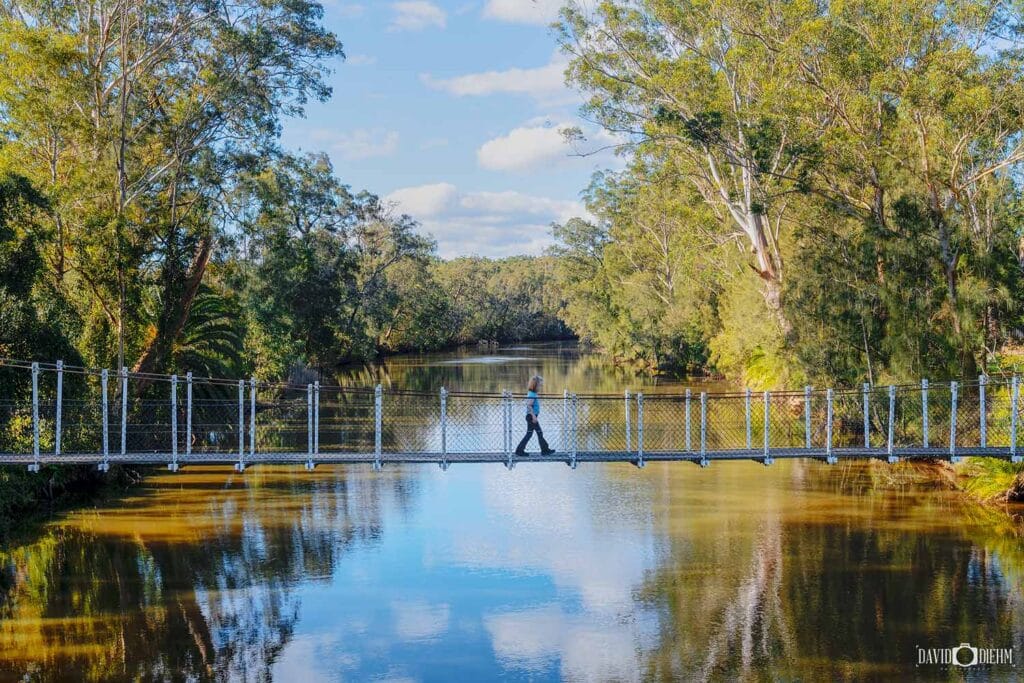

Stretching across Dora Creek, the Cooranbong Swing Bridge is one of western Lake Macquarie’s most unique historic landmarks. Built in 1934, the suspension bridge was originally constructed so employees of the nearby Sanitarium factory could cross the creek without relying on boats or swimming to work. More than 90 years later, visitors can still walk across the gently swaying bridge while enjoying peaceful views along Dora Creek and the surrounding bushland.
Beside the bridge, Sandy Creek Reserve offers shady walking paths, open lawns and picnic areas beneath towering eucalypts, making it a relaxing place to explore with the family. Keep an eye out for turtles, water dragons and native birdlife along the creek, particularly during the quieter morning and afternoon hours. Combining local history, nature and a little adventure, the Cooranbong Swing Bridge reveals a quieter and lesser-known side of Lake Macquarie.
💡 Local Tip. Pack a picnic and allow extra time to explore Sandy Creek Reserve after crossing the bridge. Early mornings are particularly beautiful, with calm reflections on Dora Creek and the best chance of spotting turtles, kingfishers and other native wildlife along the water’s edge.
29. Ride the Edgeworth Miniature Railway
Miniature trains, steam locomotives and old-fashioned charm make Edgeworth Miniature Railway a favourite family day out.
Location: Velinda Street, Edgeworth | Cost: $3 per ride; under 2s free | Allow: 2–3 hrs | Best For: Families, young children & train lovers | Highlights: Miniature trains • Steam locomotives • Train rides • Picnic grounds • Family fun | Best Time: Last Sunday of the month | Parking: Free

For a classic family day out, Edgeworth Miniature Railway has been delighting generations of Hunter families with rides aboard beautifully maintained miniature steam and diesel locomotives. Operated by volunteers from the Lake Macquarie Live Steam Locomotive Society, the trains wind through landscaped grounds, crossing bridges and passing miniature stations along the way.
Open to the public on the last Sunday of each month, the railway is particularly popular with families and young children, with plenty of surrounding space to spread out a picnic rug and enjoy the day. Children can experience the excitement of riding behind a real miniature steam locomotive, while parents and grandparents may find themselves reliving visits from years gone by. With its relaxed community atmosphere, nostalgic charm and affordable family fun, Edgeworth Miniature Railway is one of Lake Macquarie’s most unique family attractions.
💡 Local Tip. Pack a picnic blanket and arrive before the trains begin running to enjoy the relaxed atmosphere while watching the locomotives prepare for the afternoon. Most children won’t want just one ride, so grab a few extra tickets, settle beneath the trees and make an afternoon of it. Don’t forget to wear fully enclosed shoes, they’re required for all passengers riding the trains.
30. Boating, Kayaking & Paddleboarding on Lake Macquarie
Boating, kayaking and paddleboarding are some of the best ways to explore Lake Macquarie’s secluded bays, islands and waterways.
Location: Across Lake Macquarie | Cost: Free with own equipment; hire available | Allow: 1–3 hrs | Best For: Families, couples & water lovers | Highlights: Boating • Kayaking • Paddleboarding • Pulbah Island • Naru Beach • Secluded bays | Best Time: Calm mornings | Parking: Varies by launch point


With more than 170 kilometres of shoreline, Lake Macquarie is made for exploring from the water. Whether you’re cruising by boat, paddling a kayak or gliding across the lake on a stand-up paddleboard, its sheltered bays, islands and quiet coves offer everything from relaxed family outings to full-day adventures.
Popular places to get on the water include Naru Beach, Marks Point, Swansea and Wangi Wangi, while boaters can venture further afield to destinations such as Pulbah Island, Elizabeth Island and the Swansea Sand Islands. Early mornings are particularly beautiful, when calm conditions can turn the lake glassy and pelicans, black swans and other birdlife are active along the shoreline.
With numerous boat ramps around the lake and equipment hire available at selected locations, boating, kayaking and paddleboarding are some of the best things to do in Lake Macquarie for anyone wanting to experience the lake from the water.
💡 Local Tip. Launch just before sunrise for the calmest conditions and the most spectacular reflections. Wangi Wangi, Naru Beach and Trinity Point are all excellent starting points, with sheltered waters that are particularly well suited to beginners while still offering beautiful scenery for experienced paddlers.
31. Go Fishing on Lake Macquarie
Location: Across Lake Macquarie | Cost: NSW fishing fee applies | Allow: 1–6 hrs | Best For: Families, beginners & experienced anglers | Highlights: Swansea Channel • Marks Point • Belmont • Pulbah Island • Jetty fishing • Boat fishing | Best Time: Year-round | Parking: Varies by location
💡 Local Tip. Fish around sunrise or sunset when the lake is peaceful and fish are most active. Make sure you have a current NSW Recreational Fishing Licence and check Fish Newy for local reports, tides and fishing advice.
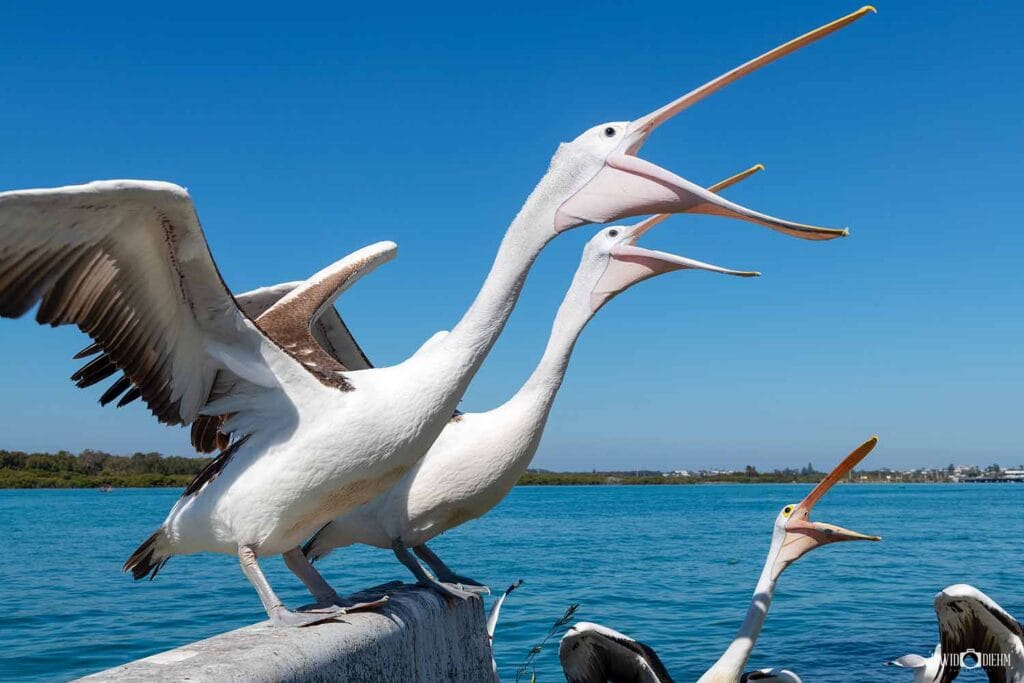
For a fun wildlife encounter, visit Swansea Boat Ramp from late morning, when large pelicans often gather around returning fishermen hoping for a feed, especially entertaining for kids.
32. Experience Lake Macquarie's Sailing Culture
Colourful yachts and a vibrant sailing culture are an iconic part of the Lake Macquarie waterfront experience.
Location: Across Lake Macquarie | Cost: Free to watch | Allow: 1–3 hrs | Best For: Families, photographers & sailing enthusiasts | Highlights: Yacht racing • Twilight sailing • Belmont 16s • Wangi Wangi • Toronto • Sunsets | Best Time: Year-round | Parking: Varies by location

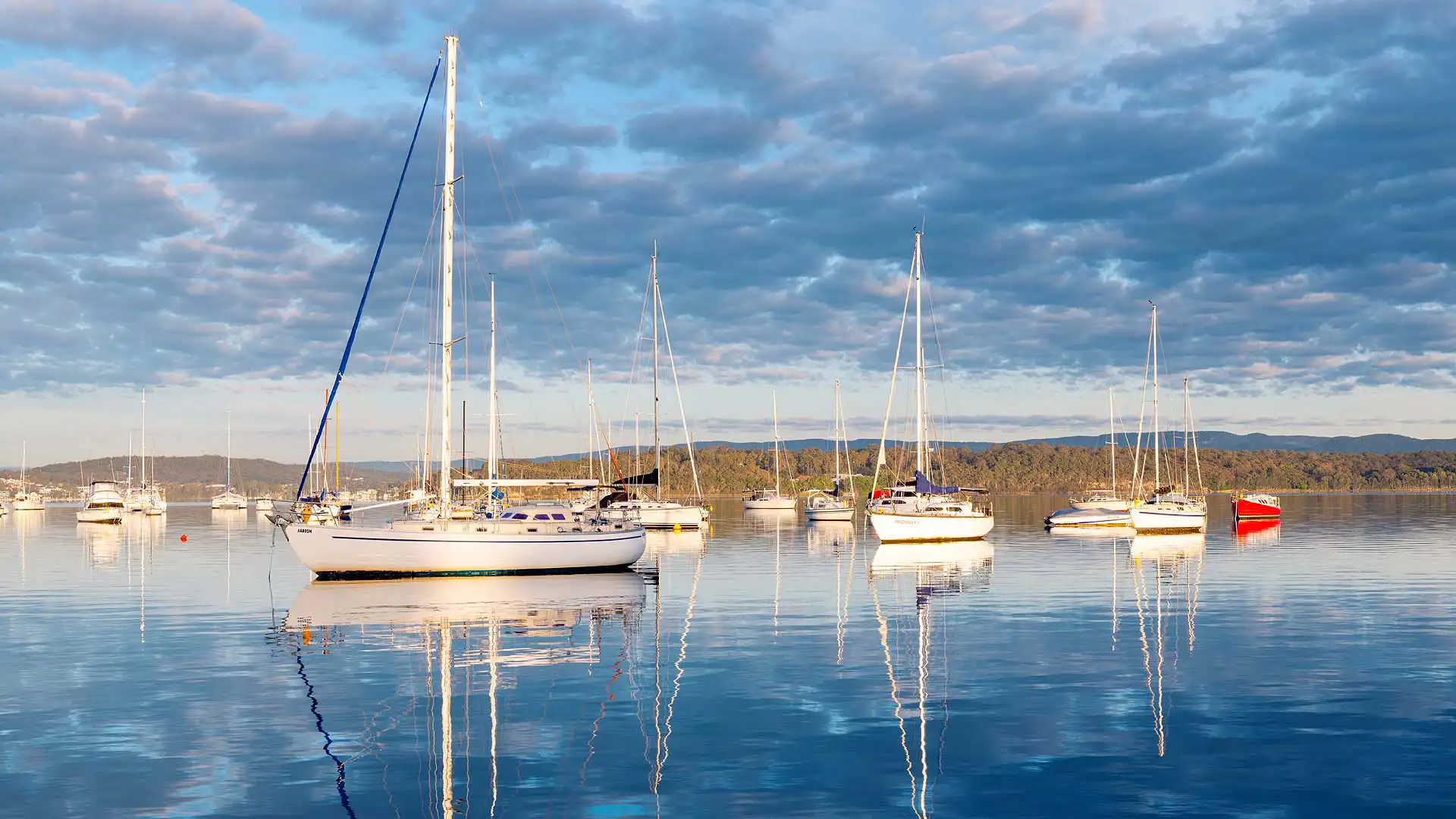
With more than 170 kilometres of shoreline and vast stretches of open water, Lake Macquarie is one of Australia’s premier sailing destinations. Throughout the warmer months, yachts regularly fill the lake, their white sails and colourful spinnakers creating a spectacular sight against forested hills, quiet bays and lakeside towns. Whether you’re a sailing enthusiast or simply watching from shore, it’s a wonderful way to experience Lake Macquarie’s relaxed waterfront lifestyle.
Belmont 16s Sailing Club is one of the best places to watch the action over lunch or a drink, while Warners Bay, Toronto, Valentine and Wangi Wangi also provide excellent vantage points from waterfront parks and jetties. Late afternoon is particularly beautiful, when the breeze fills the sails and the setting sun lights up the lake, creating one of Lake Macquarie’s most photogenic scenes.
💡 Local Tip. For the best experience, visit Belmont 16s, Warners Bay Foreshore, Toronto Foreshore or Wangi Wangi on a Saturday or Sunday afternoon during the sailing season. Arrive late in the day, enjoy dinner overlooking the lake and stay for sunset, when the combination of golden light, colourful sails and calm water creates one of Lake Macquarie’s most memorable views.
33. Skydive Over Lake Macquarie
A 15,000-foot tandem skydive offers the ultimate adrenaline rush with spectacular aerial views across Lake Macquarie and the coastline.
Location: Lake Macquarie Airport, Marks Point | Cost: Paid experience | Allow: 2–4 hrs | Best For: Adventure & thrill seekers | Highlights: Tandem skydive • 15,000 feet • Freefall • Lake views • Coastal views | Best Time: Clear mornings | Parking: Free


For one of Lake Macquarie’s ultimate adventure experiences, take to the skies for a tandem skydive from approximately 15,000 feet. After climbing high above the coastline, you’ll jump securely harnessed to an experienced instructor and experience around 60 seconds of freefall, reaching speeds of more than 200 kilometres per hour before the parachute opens.
The adrenaline rush is followed by a peaceful descent beneath the canopy, with spectacular views across Lake Macquarie, Newcastle and the Pacific Ocean, and towards the Hunter Valley on clear days. Tandem skydives depart from Lake Macquarie Airport at Marks Point, with equipment, training and safety briefings provided before the jump. Whether it’s a bucket-list adventure or milestone celebration, skydiving offers an unforgettable way to experience Lake Macquarie from an entirely different perspective.
💡 Local Tip. Book an early morning jump if possible. Visibility is often at its best, the air is typically calmer, and you’ll enjoy the clearest views across Lake Macquarie, Newcastle and the coastline. If you’re bringing family or friends, they can watch the parachutes descend from the airport and celebrate with you after you land.
34. Aerobatic Flight Experience with Matt Hall Racing
High-performance aerobatics and spectacular aerial views make this one of Lake Macquarie’s most exhilarating aviation experiences.
Location: Lake Macquarie Airport, Marks Point | Cost: Paid experience | Allow: 1.5–2.5 hrs | Best For: Adventure seekers & aviation enthusiasts | Highlights: Aerobatics • Loops • Barrel rolls • High-G manoeuvres • Aerial views | Best Time: Clear days | Parking: Free

For the ultimate adrenaline rush, take to the skies above Lake Macquarie in the legendary Extra 300L aerobatic aircraft. Departing from Lake Macquarie Airport at Marks Point, the experience combines loops, barrel rolls, steep climbs, high-speed dives and high-G turns with spectacular aerial views across the lake, Swansea Channel and the Pacific coastline.
Flights are operated by Matt Hall Racing’s experienced aerobatic pilots, with a safety briefing provided before taking to the skies. Between the heart-racing manoeuvres, you’ll have time to appreciate a perspective of Lake Macquarie that few people ever experience. Whether you’re celebrating a special occasion or searching for a bucket-list adventure, an aerobatic flight offers one of the most unique and exhilarating things to do in Lake Macquarie.
💡 Local Tip. Bring the family along to watch from the airport viewing areas, where you can see the aircraft take off and land, as well as catch some of the aerobatic manoeuvres from the ground.
35. Awaba Mountain Bike Park
Purpose-built trails, flowing singletrack and forest scenery make Awaba Mountain Bike Park one of Lake Macquarie’s best riding destinations.
Location: Mount Faulk Road, Cooranbong | Cost: Free | Allow: 2–4 hrs | Best For: Mountain bikers & adventure seekers | Highlights: Flow trails • Downhill • Cross-country • Technical trails • Beginner skills area | Best Time: Year-round | Parking: Free

Tucked away in the forests of the Watagans, Awaba Mountain Bike Park is one of the Hunter Region’s premier mountain biking destinations, with purpose-built trails winding through beautiful native bushland. The extensive network caters for riders of all abilities, from beginner-friendly development trails to flowing cross-country loops, technical rock features and fast berms.
Experienced riders can take on the park’s challenging downhill trails, including the famous Monkey track, while newer riders can build their skills on easier trails before progressing through the network. Maintained by the Hunter Mountain Bike Association, Awaba regularly hosts mountain biking events while retaining a relaxed, welcoming atmosphere. Whether you’re visiting for a couple of hours or spending the day exploring the trails, Awaba offers one of Lake Macquarie’s best outdoor adventures for mountain bikers.
💡 Local Tip. Visit after a few dry days when the trails are usually riding at their best. Before heading out, check the Hunter Mountain Bike Association website or social media pages for any temporary trail closures or upcoming events, and choose trails that match your riding ability to make the most of your visit.
36. Waterfront Dining at Belmont & Warners Bay
Waterfront dining, beautiful lake views and colourful sunsets make eating out one of Lake Macquarie’s most enjoyable experiences.
Location: Belmont & Warners Bay | Cost: Varies | Allow: 1.5–3 hrs | Best For: Couples, families & food lovers | Highlights: Waterfront dining • Cafés • Belmont 16s • Lake Macquarie Yacht Club • Sunset views | Best Time: Late afternoon & sunset | Parking: Free


With beautiful lake views and a relaxed atmosphere, waterfront dining is one of the best ways to experience Lake Macquarie. Warners Bay is the region’s best-known lakeside dining precinct, with cafés and restaurants lining The Esplanade overlooking the foreshore. Grab breakfast or lunch by the water, enjoy dinner as the sun sets, or simply pick up takeaway and find a spot on the grass. During the warmer months, Music in the Podium brings live music and a lively atmosphere to the waterfront.
Further south, Belmont offers another great waterfront dining experience, with venues around Belmont 16s, Lake Macquarie Yacht Club and the surrounding foreshore overlooking the lake and its marinas. Whether it’s morning coffee, a long lunch or dinner at sunset, dining beside the water is a perfect way to enjoy Lake Macquarie’s relaxed lakeside lifestyle.
💡 Local Tip. Book an outdoor table around 30 minutes before sunset or grab takeaway and enjoy a picnic on the foreshore instead. If you’re visiting Warners Bay during summer, check whether Music in the Podium is on—it’s one of the best ways to experience the community atmosphere of Lake Macquarie, with live music, families relaxing on picnic rugs and the lake providing a spectacular natural backdrop.
37. Visit a Local Market
Fresh produce, artisan stalls and a lively community atmosphere make Lake Macquarie’s local markets a great weekend experience.
Location: Across Lake Macquarie | Cost: Free entry | Allow: 2–4 hrs | Best For: Families, food lovers & local shopping | Highlights: Homegrown Markets • Warners Bay Markets • Farmers markets • Local produce • Handmade goods • Street food | Best Time: Weekend mornings | Parking: Free at most locations


Lake Macquarie’s local markets are a great way to experience the region’s relaxed community atmosphere, with fresh food, handmade products, local art, live music and street food all part of the experience. The Homegrown Markets at Speers Point Park, held on the first and third Sunday of each month, are among the largest, with more than 120 stalls set beneath the trees beside the lake.
The Warners Bay Markets, held on the second Saturday of each month, combine boutique stalls and food with a beautiful waterfront setting, while the Lake Macquarie City Farmers Market at Glendale is held every Saturday morning and focuses on fresh produce and artisan goods. Whether you’re browsing local creations, grabbing breakfast or enjoying a morning by the water, the markets offer a relaxed way to experience Lake Macquarie’s local community.
💡 Local Tip. Bring a reusable shopping bag, arrive early for the best selection and don’t rush. Grab a coffee, chat with the stallholders and take time to explore the surrounding foreshore or parks afterwards. The markets are at their best when you treat them as a morning out rather than simply a place to shop.
38. Museum of Art and Culture, yapang (MAC yapang)
Contemporary art, lakeside sculptures and beautiful grounds make MAC yapang one of Lake Macquarie’s best cultural experiences.
Location: 2A First Street, Booragul | Cost: Free | Allow: 1–3 hrs | Best For: Art lovers, families & culture seekers | Highlights: Art exhibitions • Sculpture Park • Awaba House • Aboriginal culture • Lake views • Café | Best Time: Year-round | Parking: Free


Set among beautiful gardens on the shores of Lake Macquarie, the Museum of Art and Culture, yapang (MAC yapang) combines contemporary art, outdoor sculpture and spectacular lake views. Formerly the Lake Macquarie City Art Gallery, the museum hosts a changing program of exhibitions, while its peaceful waterfront setting makes it worth visiting even if you’re not usually an art gallery enthusiast.
Outside, the five-hectare Sculpture Park features large-scale works positioned among mature trees and landscaped gardens overlooking the lake, with pathways leading around the grounds and historic Awaba House. With free admission, regularly changing exhibitions, a café and plenty to explore outdoors, MAC yapang offers an enjoyable mix of art, culture and nature and is one of Lake Macquarie’s most distinctive cultural attractions.
💡 Local Tip. Visit in the morning when the sculpture park is at its quietest and the soft light filters through the mature trees, creating beautiful conditions for photography. If you’re visiting on a Wednesday or Saturday, join the free 11 am guided exhibition tour before relaxing with a coffee overlooking Lake Macquarie
39. Visit Dobell House
The former home and studio of Sir William Dobell offers a fascinating glimpse into the life of one of Australia’s greatest artists.
Location: 47 Dobell Drive, Wangi Wangi | Cost: Admission fee applies | Allow: 1–2 hrs | Best For: Art lovers & history enthusiasts | Highlights: Dobell’s home • Artist’s studio • Guided tours • Australian art • Heritage | Best Time: During opening hours | Parking: Free

Hidden amongst the quiet streets of Wangi Wangi, Dobell House was the home and studio of celebrated Australian artist Sir William Dobell for almost three decades. Originally built as a small holiday cottage in the 1920s, Dobell purchased the property in 1942 and made Wangi Wangi his permanent home, finding inspiration and refuge in the peaceful lakeside surroundings. Today, the heritage-listed house provides a fascinating glimpse into the private life of one of Australia’s most influential artists.
Visitors can explore Dobell’s preserved studio and living spaces, along with photographs, personal possessions and memorabilia that tell the story of his life and remarkable artistic career. Volunteer guides provide further insight into the man behind the paintings, while the intimate setting retains the character of the home in which he lived and worked. For art and history lovers, Dobell House is one of Lake Macquarie’s most unique cultural attractions.
💡 Local Tip. Combine your visit with a stroll along nearby Wangi Wangi Foreshore or enjoy lunch overlooking the lake. Experiencing the peaceful waterfront after touring the house offers a deeper appreciation of the quiet beauty that inspired Sir William Dobell and made Wangi Wangi his home for so many years.
40. Explore Rathmines Park & Its WWII Heritage
Lakeside parks, swimming, walking trails and fascinating WWII history make Rathmines Park one of Lake Macquarie’s most interesting foreshore destinations.
Location: Dorrington Road, Rathmines | Cost: Free | Allow: 2–4 hrs | Best For: Families, history lovers & outdoor recreation | Highlights: Catalina Memorial • WWII heritage • Lake swimming • Foreshore walks • Playground • Picnics • Catalina Bay | Best Time: Year-round | Parking: Free
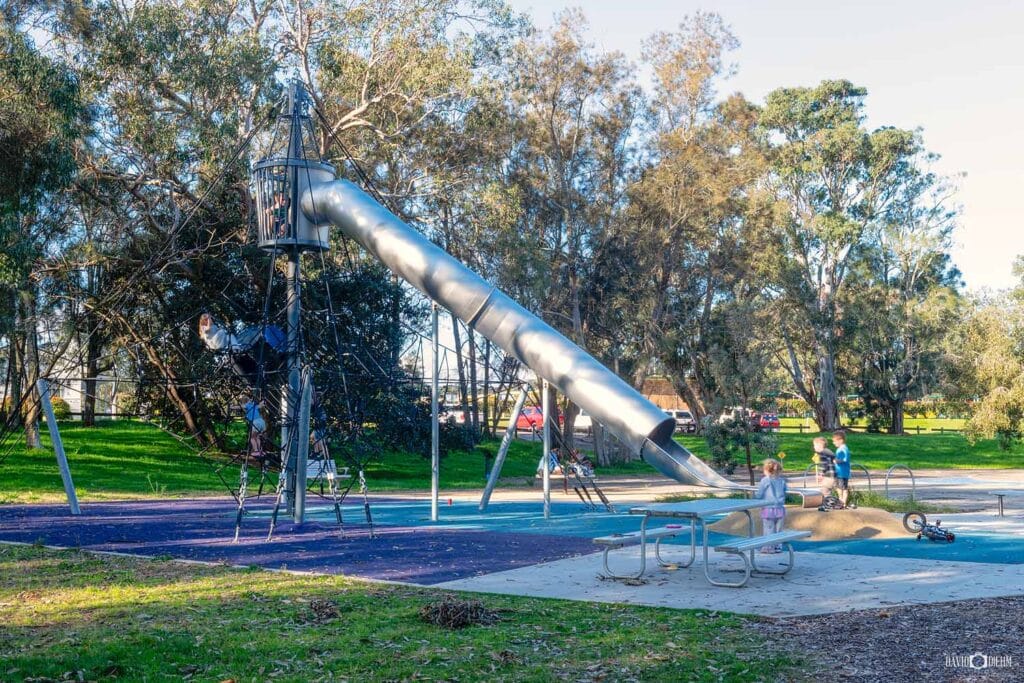

It’s hard to imagine that the peaceful shores of Rathmines Park were once home to Australia’s largest flying boat base, playing an important role during World War II. From Catalina Bay, flying boats departed on long-range reconnaissance, rescue and patrol missions throughout the Pacific. Today, the Rathmines Catalina Heritage Walk provides a fascinating glimpse into this remarkable chapter of Lake Macquarie’s wartime and aviation history.
The easy 1.1-kilometre walk follows the foreshore past the Catalina Memorial, interpretive displays and surviving wartime landmarks, but there’s much more to Rathmines Park than its history. Families can enjoy the lakeside playgrounds, open grassed areas, picnic and barbecue facilities, swimming and waterfront paths, making it an easy place to spend a few hours by the lake. For families looking for things to do in Lake Macquarie, Rathmines Park offers a great mix of history, outdoor recreation and beautiful waterfront scenery.
💡 Local Tip. Allow extra time after completing the heritage walk to relax beside Catalina Bay. Bring a picnic or coffee and spend a few quiet moments overlooking the water while reading the interpretive signs—it’s surprisingly easy to imagine Catalina flying boats once moored where sailing boats now drift peacefully across the lake.
Famous for its spectacular sea caves, golden sand and coastal scenery, Caves Beach is one of Lake Macquarie’s must-visit beaches.
Location: Caves Beach | Cost: Free | Allow: 2–3 hours | Best For: Families, photographers & nature lovers | Highlights: Sea caves • Swimming • Rock pools • Sunrise | Best Time: Low tide | Parking: Free
Located on the Swansea Peninsula around 30 minutes south of Newcastle, Caves Beach is one of Lake Macquarie’s most iconic coastal destinations, famous for its spectacular network of sea caves carved into the sandstone headland. Accessible only at low tide, the caves attract visitors from across Australia and were recognised as part of Australia’s Top 10 Beaches in 2025. The interconnected caves, tunnels and rock pools are fascinating to explore and particularly spectacular at sunrise, when golden light streams through the cave entrances.
Beyond the caves, the wide stretch of golden sand is popular for swimming, surfing, fishing and beach walks, with beautiful views across the Pacific Ocean. Combining unique geology, family-friendly facilities and spectacular coastal scenery, Caves Beach is easily one of the best things to do in Lake Macquarie and a must-see when visiting the region.
💡 Local Tip. Plan your visit for around 60–90 minutes before low tide to give yourself plenty of time to safely explore the sea caves before the water begins to rise. Sunrise at low tide offers the best combination of beautiful light, fewer crowds and stunning reflections inside the caves. Wear sturdy footwear, as the sandstone can become slippery when wet.
Coastal rainforest, waterfalls, scenic lookouts and secluded beaches make Glenrock one of Lake Macquarie’s best natural escapes.
Location: Burwood Road, Kahibah | Cost: Free | Allow: 2–4 hrs | Best For: Bushwalkers, families & nature lovers | Highlights: Yuelarbah Track • Leichhardt Lookout • Glenrock Lagoon • Burwood Beach • Waterfalls | Best Time: After rainfall or autumn–spring | Parking: Free
Bordering the northern edge of Lake Macquarie, Glenrock State Conservation Area combines towering eucalypt forest, coastal rainforest, freshwater creeks and a secluded stretch of coastline just minutes from Newcastle. One of the best ways to explore the reserve is the 6.8-kilometre Yuelarbah Walking Track, which follows elevated boardwalks through shaded forest before passing creeks, seasonal waterfalls and Leichhardt Lookout, with sweeping views across Glenrock Lagoon, Burwood Beach and the Pacific Ocean.
Continue beyond the lookout to Glenrock Lagoon and Burwood Beach, where forest, lagoon and ocean meet within one spectacular coastal landscape. Glenrock is also one of the region’s most popular mountain biking destinations, with an extensive network of trails through the reserve. With bushwalking, mountain biking, wildlife and beautiful coastal scenery, Glenrock offers one of the most rewarding outdoor experiences around Lake Macquarie.
💡 Local Tip. Continue beyond Leichhardt Lookout to Glenrock Lagoon and Burwood Beach rather than turning around at the viewpoint. Visit after steady rainfall to see Flaggy Creek and the seasonal waterfalls at their best, and wear sturdy footwear as the track can become slippery in wet conditions.
Award-winning play spaces, lakefront scenery and endless outdoor fun make Speers Point Park a favourite for families.
Location: Park Road, Speers Point | Cost: Free | Allow: 2–4 hrs | Best For: Families, children & outdoor recreation | Highlights: Variety Playground • Flying foxes • Water play • Scooter track • Lake foreshore • cafe • MAP mima | Best Time: Year-round | Parking: Free
If you’re visiting Lake Macquarie with children, Speers Point Park should be high on your itinerary. Set on the shores of Lake Macquarie, this expansive waterfront park is home to the Lake Macquarie Variety Playground, featuring giant climbing structures, tube slides, flying foxes, swings, water play and interactive areas designed for children of different ages and abilities. Shaded picnic areas, free barbecues and wide open lawns make it an easy place to spend several hours or enjoy a relaxed family picnic by the lake.
Beyond the playground, flat shared pathways follow the waterfront, making the park popular for walking and cycling. The precinct is also home to Multi-Arts Pavilion, mima (MAP mima), a contemporary arts and performance space hosting exhibitions, creative experiences and events throughout the year. With an off-leash dog park, nearby swim centre, markets and regular community events, Speers Point Park offers plenty to explore beyond the playground.
💡 Local Tip. Take a walk out along the Speers Point jetty for beautiful views across Lake Macquarie and a different perspective of the foreshore. It’s also a popular spot for fishing, or simply exploring the waterfront with the kids before heading back to the playground and park.
Walk, cycle or run through bushland and historic railway tunnels on one of Lake Macquarie’s most popular shared trails.
Location: Adamstown to Belmont | Cost: Free | Allow: 1–4 hrs | Best For: Walkers, cyclists, runners & families | Highlights: Fernleigh Tunnel • Historic railway line • Bushland • Belmont Lagoon • Wetlands | Best Time: Early morning or late afternoon | Parking: Free at several access points
One of the best ways to experience Lake Macquarie on foot or bike, the Fernleigh Track stretches 15.5 kilometres between Adamstown and Belmont, following the route of the former Belmont railway line. This fully sealed shared path winds through towering eucalypt forest, peaceful bushland and wetlands, with the historic 181-metre Fernleigh Tunnel, completed in 1891, one of its most recognisable landmarks.
Approaching Belmont, the track passes through Belmont Lagoon Nature Reserve, where boardwalks, wetlands and native birdlife provide a scenic finish to the journey. Gentle gradients and multiple access points make it ideal for walking, running and cycling, from short family rides to completing the full trail. From Belmont, cyclists and walkers can continue along the Fernleigh Awabakal Shared Track (FAST) through Belmont Wetlands State Park towards Blacksmiths.
💡 Local Tip. For a quieter ride or walk, start at Belmont and head south along the Fernleigh Awabakal Shared Track (FAST) rather than tackling the entire Fernleigh Track. This section winds through Belmont Wetlands State Park and past Belmont Lagoon, with peaceful bushland, wetland boardwalks and plenty of birdlife. It’s a great option if you’re short on time or exploring with kids.
Golden sand, legendary surf and the historic Shark Tower make Redhead Beach one of Lake Macquarie’s most iconic beaches.
Location: Redhead | Cost: Free | Allow: 2–4 hrs | Best For: Families, surfers & beach lovers | Highlights: Shark Tower • Swimming • Surfing • Fishing • Whale watching • Dog-friendly area | Best Time: Year-round | Parking: Free
Stretching almost nine kilometres south towards Blacksmiths Beach, Redhead Beach is one of Lake Macquarie’s most impressive stretches of coastline, backed by dramatic cliffs, coastal dunes and seemingly endless golden sand. Popular for swimming, surfing, fishing and beach walks, its most recognisable landmark is the historic Redhead Shark Tower, a reminder of the area’s surf lifesaving history and one of the Hunter Region’s most photographed coastal icons.
The surrounding headland offers spectacular views along the coast and is particularly beautiful at sunrise, while winter brings opportunities to spot migrating humpback whales offshore. Families can enjoy the patrolled swimming area during the warmer months, with nearby Webb Park, local cafés and the Redhead Bike Pump Track adding to a day by the beach. With its wide-open coastline, surf culture and iconic Shark Tower, Redhead Beach is one of the best beaches to visit in Lake Macquarie.
💡 Local Tip. For the best experience, arrive around 30 minutes before sunrise and walk up to the Redhead Shark Tower. It’s one of the Hunter Region’s premier sunrise photography locations, while the elevated headland also offers excellent whale watching between May and November. If you’re visiting with your dog, continue south past Second Creek to the designated off-leash section of the beach.
Turquoise water, white sand and secluded islands make Naru Beach one of Lake Macquarie’s most beautiful hidden gems.
Location: Naru Street, Marks Point | Cost: Free | Allow: 1–4 hrs | Best For: Families, swimmers, paddlers & boaters | Highlights: Naru Beach • Elizabeth Island • Sand islands • Swimming • Kayaking • Paddleboarding | Best Time: Calm mornings or high tide | Parking: Limited free parking
Hidden at the end of Naru Street in Marks Point, Naru Beach is one of Lake Macquarie’s most beautiful swimming and paddling spots, with white sand and shallow water that can glow brilliant shades of turquoise on calm days. Just offshore, Elizabeth Island and the Swansea Sand Islands create an ever-changing landscape of sandbars, shallow lagoons and tidal channels shaped by the movement of water through nearby Swansea Channel.
The sheltered shallows are popular with families, while kayaking and paddleboarding are great ways to explore the surrounding sand islands and waterways. Boats also gather around the exposed sandbars during summer for swimming and relaxing on the water. With its white sand, clear shallows and striking turquoise water, Naru Beach offers a surprisingly tropical-looking side of Lake Macquarie and is particularly spectacular during the warmer months.
💡 Local Tip. Arrive early on a calm summer morning before the boats arrive and bring everything you need, including drinking water, shade and sun protection. A kayak or paddleboard is the perfect way to explore Elizabeth Island and the surrounding sandbars, allowing you to discover secluded beaches and crystal-clear channels that many visitors never see.
Ancient rainforest, spectacular waterfalls and mountain lookouts make the Watagans one of Lake Macquarie’s best natural escapes.
Location: Martinsville | Cost: Free | Allow: Half–full day | Best For: Hikers, families & nature lovers | Highlights: Gap Creek Falls • Boarding House Dam • Heaton Lookout • Rainforest walks • Scenic drives | Best Time: Year-round, especially after rainfall | Parking: Free
Rising above the western shores of Lake Macquarie, Watagans National Park protects more than 7,500 hectares of rainforest, towering eucalypt forest and rugged mountain scenery. Just over an hour from Newcastle, the park offers a completely different experience to the coast, with waterfalls, scenic lookouts and peaceful bushwalking trails. One of its highlights is Gap Creek Falls, where a rainforest walk through giant ferns and moss-covered boulders leads to an impressive 40-metre waterfall cascading into a natural rock amphitheatre.
Nearby, Boarding House Dam offers an easy rainforest walk, picnic area and distinctive moss-covered rock wall, while Heaton Lookout provides sweeping views across Lake Macquarie, the Hunter Valley and surrounding ranges. With bushwalking, mountain biking, camping and sections of the Great North Walk, the Watagans are one of the best places around Lake Macquarie to escape the coast and experience the region’s spectacular hinterland.
💡 Local Tip. Allow at least half a day to explore the park properly. Start at Gap Creek Falls early in the morning before continuing to Boarding House Dam for a picnic lunch, then finish at Heaton Lookout in the afternoon for spectacular views across Lake Macquarie and the Hunter Valley. If visiting after heavy rain, drive carefully as some unsealed roads can become rough or slippery.
Heritage charm, a pristine beach and spectacular ocean rock pools make Catherine Hill Bay one of Lake Macquarie’s coastal highlights.
Location: Catherine Hill Bay | Cost: Free | Allow: 2–4 hrs | Best For: Beach lovers, families & photographers | Highlights: Beach • Ocean rock pools • Historic jetty • Heritage village • Swimming • Surfing | Best Time: Year-round | Parking: Free
Few places around Lake Macquarie combine heritage and spectacular coastal scenery quite like Catherine Hill Bay. Nestled beside Wallarah National Park, this heritage-listed former mining village dates back to the 1860s and is home to one of the region’s most beautiful beaches. Its wide stretch of golden sand is popular for swimming, surfing, fishing and beach walks, while the historic village and remnants of its coal-mining past give Catherine Hill Bay a character unlike anywhere else along the coast.
Beyond the beach, a scenic coastal walk leads across rugged headlands to the Catherine Hill Bay Rock Pools, a collection of crystal-clear natural pools surrounded by dramatic sandstone cliffs and ocean views. Popular for swimming, snorkelling and photography, the rock pools are one of Lake Macquarie’s true hidden gems. During winter, the surrounding headlands also provide an excellent vantage point for spotting migrating humpback whales travelling along the coast.
💡 Local Tip. Visit on a calm day at low tide for the best conditions at the rock pools, and bring snorkelling gear to explore the crystal-clear water. Wear sturdy footwear and carry plenty of water for the coastal walk. While you’re there, take time to see the historic Catherine Hill Bay jetty while it’s still standing. The iconic structure has been listed for removal due to its deteriorating condition, making now a particularly special time to see and photograph this piece of the village’s coal-mining heritage.
Waterfront walks, lakeside dining and spectacular sunsets make Warners Bay one of Lake Macquarie’s most popular foreshore destinations.
Location: The Esplanade, Warners Bay | Cost: Free | Allow: 1–4 hrs | Best For: Families, couples, walkers & food lovers | Highlights: Foreshore • Sculpture Walk • Cafés & restaurants • Walking • Cycling • Sunsets | Best Time: Year-round | Parking: Free & timed parking
If there’s one place that captures the relaxed lifestyle of Lake Macquarie, it’s Warners Bay Foreshore. Stretching along the lake’s eastern shoreline, this vibrant waterfront precinct is popular for walking, cycling, picnics and simply enjoying the view. The Esplanade is lined with cafés, restaurants and ice cream shops overlooking the water, while the Warners Bay jetty is a great spot for a stroll, fishing or taking in beautiful views across the lake.
Families can enjoy Warner Park Playground, while the flat shared pathway follows the shoreline towards Eleebana and Speers Point, making it perfect for walking and cycling. Along the way, the Warners Bay Sculpture Walk features contemporary artworks beside the lake, adding an open-air gallery to the waterfront experience. With lakeside dining, parklands, public art and some of Lake Macquarie’s best sunset views, Warners Bay is a wonderful place to experience the region’s relaxed lakeside lifestyle.
💡 Local Tip. Arrive in the late afternoon and stroll the Sculpture Walk before choosing one of the waterfront cafés or restaurants for dinner. As the sun sets across Lake Macquarie, the foreshore comes alive with walkers, cyclists and locals enjoying the relaxed atmosphere. It’s one of the best places in the Hunter Region to experience a classic lakeside sunset.
Peaceful bushland, waterfront trails and panoramic lake views make Green Point Reserve one of Lake Macquarie’s hidden gems.
Location: The Shores Way, Belmont | Cost: Free | Allow: 1–3 hrs | Best For: Families, walkers & nature lovers | Highlights: Sea Eagle Lookout • Lake views • Boardwalks • Jetty • Bushland • Picnics | Best Time: Year-round | Parking: Free
Set on the eastern shores of Lake Macquarie, Green Point Reserve is a peaceful bushland escape where walking trails and boardwalks wind through towering eucalypts, wetlands and along the waterfront. At the heart of the reserve is Sea Eagle Lookout, with multi-level viewing platforms offering sweeping views across Lake Macquarie towards Belmont, Swansea and the surrounding shoreline. Keep an eye overhead for the white-bellied sea eagles that give the lookout its name.
Beyond the lookout, visitors can explore the bushland trails, enjoy a picnic by the water or cast a line from the lakeside jetty. Families can also make use of the playground and barbecue facilities, while the lake views, wildlife and peaceful surroundings make Green Point a beautiful spot for photography or a relaxed afternoon outdoors. It’s one of Lake Macquarie’s most underrated reserves and a great place to escape into nature without travelling far.
💡 Local Tip. Visit Sea Eagle Lookout about an hour before sunset, when warm golden light sweeps across the lake and sailing boats drift quietly over the water. Afterwards, wander the foreshore boardwalks or settle in with a picnic as the evening light transforms one of Lake Macquarie’s most peaceful waterfront settings.
Panoramic views across Lake Macquarie, Newcastle and the Hunter Valley make Mount Sugarloaf one of the region’s best lookouts.
Location: Mount Sugarloaf Road, West Wallsend | Cost: Free | Allow: 30–90 mins | Best For: Families, photographers & nature lovers | Highlights: Panoramic views • Sunrise • Sunset • Bushwalking • Picnic area | Best Time: Year-round | Parking: Free
Rising 412 metres above sea level on the western edge of Lake Macquarie, Mount Sugarloaf Lookout offers some of the most spectacular panoramic views in the Hunter Region. From the summit, sweeping views extend across Lake Macquarie, Newcastle and its harbour. A commemorative plaque near the summit marks the rare snowfalls of July 1965 and 1975, two memorable weather events in the Lower Hunter’s history.
A short climb from the summit car park leads to the main viewing area, where you can appreciate the incredible scale of the surrounding landscape. The summit precinct also offers picnic areas, free barbecues and bushwalking trails through native forest. Visit for sunrise, sunset or after dark, when the lights of Newcastle and Lake Macquarie stretch across the horizon, making Mount Sugarloaf one of the region’s most rewarding scenic lookouts.
💡 Local Tip. Arrive 30–45 minutes before sunrise to catch the first light over Lake Macquarie and Newcastle, often with mist filling the valleys below. Alternatively, stay after sunset to watch the city lights come alive across the region.
See humpback whales migrating along the Lake Macquarie coastline during one of Australia’s greatest wildlife spectacles.
Location: Lake Macquarie coastline | Cost: Free from lookouts; cruises extra | Allow: 1–3 hrs | Best For: Families, photographers & wildlife lovers | Highlights: Humpback whales • Coastal lookouts • Whale cruises • Dolphins | Best Time: May–November | Parking: Free at major lookouts
Each year, the coastline surrounding Lake Macquarie becomes a spectacular vantage point for the annual humpback whale migration, as thousands of whales travel along Australia’s east coast between Antarctica and the warmer waters of Queensland. From elevated coastal lookouts, visitors can watch whales breaching, tail-slapping and travelling remarkably close to shore, making whale watching one of Lake Macquarie’s most memorable seasonal experiences.
For a closer encounter, CoastXP’s Whale Discovery Cruise departs from Swansea and takes visitors offshore to experience migrating humpbacks from the water, with dolphins and other marine life also regularly encountered. On land, Redhead Lookout is one of the best whale-watching locations, with other excellent vantage points including Catherine Hill Bay Headland, Dudley Bluff, Caves Beach and Swansea Heads. Many can easily be combined with a beach visit or coastal walk for a memorable day exploring the Lake Macquarie coastline.
💡 Local Tip. For the best land-based viewing, head to Redhead Lookout at the end of Cowlishaw Street between June and August with binoculars and scan the horizon. For a closer encounter, join a CoastXP Whale Discovery Cruise from Swansea.
An elevated boardwalk over the water and panoramic lake views make Red Bluff one of Lake Macquarie’s most scenic walks.
Location: Eleebana to Warners Bay | Cost: Free | Allow: 30–90 mins | Best For: Walkers, cyclists & families | Highlights: Over-water boardwalk • Lake views • Walking • Cycling • Sunsets | Best Time: Year-round | Parking: Free
Stretching 380 metres above the water between Eleebana and Warners Bay, the Eleebana Boardwalk is one of Lake Macquarie’s most distinctive waterfront walks. The pathway winds around Red Bluff, offering uninterrupted views across the lake towards Belmont, Valentine and the western shoreline. Its unique over-water setting makes it popular for walking, cycling and photography, particularly in the early morning and around sunset.
The boardwalk forms part of the shared pathway connecting Eleebana with Warners Bay Foreshore, making it easy to continue your walk or ride along the lake. Along the way, keep an eye out for pelicans, black swans and yachts passing across the water, while the boardwalk itself passes above environmentally sensitive seagrass meadows. For anyone looking for scenic things to do in Lake Macquarie, the Red Bluff Boardwalk is one of the region’s most enjoyable waterfront walks.
💡 Local Tip. Visit during the final hour before sunset when the lake is often at its calmest and the boardwalk is bathed in warm golden light. Pause halfway along the walkway to watch yachts gliding across the water and enjoy one of the best panoramic views on the lake before continuing into Warners Bay for dinner or a coffee by the waterfront.
Elevated boardwalks, mangrove forests and tidal waters make Pirrita Island one of Lake Macquarie’s most unique waterfront walks.
Location: Pirrita Island, Swansea | Cost: Free | Allow: 30–60 mins | Best For: Families, photographers & nature lovers | Highlights: Boardwalk • Mangroves • Swansea Channel • Birdwatching • Tidal wetlands | Best Time: Year-round | Parking: Free
Connected to Swansea by a pedestrian bridge, Pirrita Island offers a peaceful walk through one of Lake Macquarie’s fascinating coastal wetland environments. Elevated boardwalks wind through mangroves and tidal channels, with beautiful views across Swansea Channel where the tides constantly reshape the landscape. Clear shallows, exposed sandbars and abundant wildlife make it particularly rewarding for birdwatching and photography, with pelicans, black swans, cormorants, herons and other coastal species regularly seen throughout the wetlands.
The walk also reveals the island’s rich cultural and local history through interpretive signs along the boardwalk. Formerly known as Coon Island, it was officially renamed Pirrita Island, with Pirrita an Awabakal word referring to the mangrove oysters once abundant in the area. Combining wetlands, wildlife, local history and constantly changing views across Swansea Channel, Pirrita Island is one of Lake Macquarie’s most enjoyable short waterfront walks.
💡 Local Tip. Visit around the turn of the tide to experience Swansea Channel at its most spectacular, when crystal-clear water races between the lake and the ocean and constantly reshapes the surrounding sandbars. Afterwards, continue to nearby Naru Beach, Blacksmiths Beach or Swansea Channel to experience even more of this remarkable corner of Lake Macquarie.
Calm, protected waters and excellent facilities make Belmont Baths one of Lake Macquarie’s best family swimming spots.
Location: Brooks Parade, Belmont | Cost: Free | Allow: 1–3 hrs | Best For: Families, young children & swimming | Highlights: Protected swimming • Jetty • Sandy foreshore • Playground • Lake views | Best Time: Year-round | Parking: Free
Located on the Belmont foreshore, Belmont Baths is one of Lake Macquarie’s most popular swimming spots, with a large mesh-enclosed swimming area providing calm, sheltered water ideal for families and casual swimmers. The sandy foreshore, shaded picnic areas and nearby playground make it an easy place to spend a few hours, with cafés and restaurants just across the road.
A standout feature is the 70-metre jetty, which extends into Lake Macquarie and offers beautiful views across the water, particularly around sunset. Belmont Baths is also one of the region’s most accessible swimming locations, with a gently sloping access ramp, accessible amenities and a free Mobi-Chair available for water access. Whether you’re visiting for a swim, family picnic or waterfront stroll, Belmont Baths is a relaxed and welcoming place to enjoy the lake.
💡 Local Tip. Pack a picnic or grab takeaway from one of Belmont’s nearby cafés and spend the afternoon by the lake. If you’re visiting during summer, arrive earlier in the day to secure a shady picnic table, and don’t forget to walk the full length of the jetty for some of the best views across Lake Macquarie.
Calm, sheltered waters make Grannies Pool one of Lake Macquarie’s favourite swimming spots for families with young children.
Location: Ungala Road, Blacksmiths | Cost: Free | Allow: 1–3 hrs | Best For: Families & young children | Highlights: Sheltered swimming • Beach access • Blacksmiths Beach • Breakwall walk • Swansea Channel | Best Time: High tide | Parking: Free
Tucked beside Swansea Channel at the southern end of Blacksmiths Beach, Grannies Pool is one of Lake Macquarie’s favourite family swimming spots. Protected from the surf by the breakwall, the shallow tidal pool provides calm, sheltered water ideal for toddlers, young children and families looking for a relaxed place to swim. Accessible pathways, beach matting and viewing areas also make this much-loved local spot easier for visitors of different ages and abilities to enjoy.
After a swim, follow the nearby Blacksmiths Breakwall for views across Swansea Channel as fishing boats and yachts travel between Lake Macquarie and the Pacific Ocean. Just minutes away, Blacksmiths Beach offers kilometres of golden sand for swimming, surfing and beach walks. Together, Grannies Pool and its surrounding coastline make for an easy and enjoyable family day out in Lake Macquarie.
💡 Local Tip. Time your visit for high tide when Grannies Pool is at its best, then pack a picnic and make a day of it. After a swim, wander along the Blacksmiths Breakwall to watch boats passing through Swansea Channel before finishing with a stroll along nearby Blacksmiths Beach—it’s one of the most enjoyable family outings anywhere on Lake Macquarie.
Remote beaches, towering cliffs and a hidden sea cave make the Ghosties Beach Walk one of Lake Macquarie’s best coastal adventures.
Location: Catherine Hill Bay | Cost: Free | Allow: 1.5–2.5 hrs | Best For: Walkers, photographers & adventure seekers | Highlights: Ghosties Beach • Sea cave • Moonee Beach • Sandstone cliffs • Rock platforms | Best Time: Low tide & calm conditions | Parking: Free
Leaving Catherine Hill Bay behind, the Moonee Beach and Ghosties Beach coastal walk follows one of Lake Macquarie’s most spectacular and secluded stretches of coastline. The track descends onto the golden sands of Moonee Beach before continuing south past rugged sandstone cliffs, rock platforms and untouched beaches. With few crowds and little development, the walk has a genuine sense of remoteness that feels worlds away from the region’s busier coastal attractions.
Beyond Ghosties Beach lies the walk’s unforgettable highlight—a spectacular walk-through sea cave carved into the sandstone cliffs by the Pacific Ocean. Best explored at low tide and during calm ocean conditions, the cave is one of Lake Macquarie’s most remarkable natural attractions. The combination of secluded beaches, dramatic cliffs and hidden coastal formations makes this a rewarding adventure for walkers, photographers and anyone looking to discover Lake Macquarie’s wilder side.
💡 Local Tip. Plan your walk around low tide and aim to arrive early in the morning when the beaches are often completely deserted. Allow plenty of time to explore the sandstone cliffs and sea cave before retracing your steps along the shoreline. If you’re a photographer, sunrise and the final hour before sunset produce beautiful golden light across the cliffs and create one of the most spectacular coastal scenes anywhere in Lake Macquarie.
Towering trees, colourful dinghies and calm waters make Valentine Foreshore one of Lake Macquarie’s most picturesque waterfront spots.
Location: Valentine Crescent, Valentine | Cost: Free | Allow: 1–3 hrs | Best For: Families, couples & photographers | Highlights: Waterfront • Colourful dinghies • Public wharf • Fishing • Kayaking • Sunsets | Best Time: Year-round | Parking: Free
Set on the peaceful shores of Lake Macquarie, Valentine Foreshore is one of the region’s most picturesque waterfront locations. One of its most recognisable sights is the collection of colourful row boats positioned beneath the waterfront trees, creating a beautiful lakeside scene that has become a favourite with locals and photographers. The expansive grassy reserve is perfect for picnics, kayaking or simply relaxing beside the water, while the nearby Valentine Bowling Club provides a popular spot for a meal or drink overlooking the lake.
A standout feature is the distinctive zig-zag public wharf, which extends almost 100 metres into the lake and provides beautiful views across the water. It’s a popular spot for fishing, watching yachts and exploring the waterfront, particularly around sunset. With its colourful boats, peaceful foreshore and unique wharf, Valentine is a beautiful place to slow down and enjoy the relaxed lakeside atmosphere of Lake Macquarie.
💡 Local Tip. Bring a picnic blanket, pick up takeaway fish and chips, pizza or coffee from nearby shops or bowling club and arrive about an hour before sunset. Wander to the end of the zig-zag wharf before finding a spot beneath the magnificent fig trees. As the golden light catches the colourful dinghies and reflects across the calm waters of the Bay, you’ll quickly discover why this is one of Lake Macquarie’s most photographed waterfront locations.
Heritage baths, waterfront parks and sweeping lake views make Toronto Foreshore one of Lake Macquarie’s most relaxing lakeside destinations.
Location: Toronto Foreshore | Cost: Free | Allow: 2–4 hrs | Best For: Families, couples & swimmers | Highlights: Toronto Baths • Waterfront parks • Swimming • Marina • Cafés • Foreshore walks | Best Time: Year-round | Parking: Free
Stretching along the western shores of Lake Macquarie, Toronto Foreshore is the heart of this relaxed lakeside town, with waterfront pathways winding beneath magnificent fig trees past parklands, picnic areas and jetties. One of its highlights is the historic Toronto Baths, a beautifully restored enclosed swimming area with calm, protected water ideal for families and casual swimmers, while the surrounding boardwalk offers beautiful views across the lake.
Beyond the baths, the foreshore is perfect for a waterfront walk, picnic or simply relaxing beneath the trees and watching boats drift across the water. Toronto’s town centre is only a short walk away, with cafés, restaurants and shops making it easy to combine a visit with breakfast or lunch. With swimming, waterfront walks and beautiful lake views, Toronto Foreshore is a wonderful place to experience the quieter western side of Lake Macquarie.
💡 Local Tip. Grab a takeaway coffee or fish and chips from the town centre before wandering down to the foreshore. Find a spot beneath the magnificent fig trees overlooking Toronto Baths and stay until late afternoon, when the western shoreline is bathed in warm golden light and the lake becomes one of the most peaceful places in Lake Macquarie.
Sailing boats, waterfront scenery and spectacular sunsets make Wangi Wangi one of Lake Macquarie’s most picturesque villages.
Location: Wangi Wangi | Cost: Free | Allow: 2–4 hrs | Best For: Couples, families & nature lovers | Highlights: Foreshore • Wangi Point • Sailing • Boating • Fishing • Wangi Circuit Walk | Best Time: Year-round | Parking: Free
Set on a narrow peninsula extending into Lake Macquarie, Wangi Wangi is one of the lake’s most picturesque waterfront villages, with peaceful bays, leafy reserves and beautiful water views in almost every direction. Life here revolves around the lake, with sheltered waters popular for sailing, kayaking, paddleboarding and fishing, while yachts moored across the bay add to Wangi Wangi’s relaxed lakeside character.
The foreshore is perfect for a picnic, waterfront walk or simply relaxing beneath the trees, while nearby Wangi Point offers bushwalking and more opportunities to explore the shoreline. Facing west across the lake, Wangi Wangi is also one of the best places in Lake Macquarie to watch the sunset, when golden light reflects across the water and silhouetted yachts create a beautiful end to the day.
💡 Local Tip. Arrive in the late afternoon and spend a few hours exploring the foreshore before settling in for sunset. Grab takeaway from one of the local cafés or enjoy dinner overlooking the lake, then wander along the waterfront as the sky changes colour. On calm evenings, the reflections across Wangi Bay create some of the most spectacular sunset photography opportunities anywhere on Lake Macquarie.
A secluded surf beach, dramatic sandstone cliffs and a natural blowhole make Dudley one of Lake Macquarie’s coastal gems.
Location: Dudley | Cost: Free | Allow: 1.5–3 hrs | Best For: Nature lovers, photographers & surfers | Highlights: Dudley Beach • Blowhole • Sandstone cliffs • Rock pools • Surfing • Sunrise | Best Time: Year-round | Parking: Free
Bordering the northern edge of Lake Macquarie, Dudley Beach is one of the region’s most rugged and unspoilt coastal destinations. Hidden beneath towering sandstone cliffs and surrounded by native bushland, the secluded beach is popular for surfing, beach walks and photography. At the southern end, a natural blowhole carved into the sandstone can send water surging into the air when conditions are right, while nearby rock platforms reveal tidal pools, striking rock formations and remnants of an ancient fossilised forest.
Dudley is particularly beautiful at sunrise, when the first light illuminates the cliffs and coastline. Experienced surfers are drawn to its consistent swell, while walkers and photographers can explore the beach and surrounding headlands. With its secluded setting, dramatic geology and wild coastal scenery, Dudley Beach offers a completely different experience to Lake Macquarie’s busier beaches.
💡 Local Tip. The Dudley blowhole is only active during a large swell combined with high tide, so check conditions before visiting. Always keep a safe distance from the rock platforms, which can be slippery and exposed to unpredictable waves. For photographers, sunrise offers the best light across the cliffs and coastline.
Passing boats, powerful tides and the iconic Swansea Bridge make Swansea Channel one of Lake Macquarie’s most fascinating waterways.
Location: Swansea | Cost: Free | Allow: 1–3 hrs | Best For: Families, photographers & anglers | Highlights: Swansea Channel • Swansea Bridge • Boats • Fishing • Pelicans • Black Neds Bay | Best Time: Year-round | Parking: Free
Connecting Lake Macquarie with the Pacific Ocean, Swansea Channel is the heart of the region’s boating activity and one of the most interesting places to watch life on the water. Fishing boats head out to sea, yachts cruise through the channel and pelicans gather along the shoreline, while strong tidal currents flow beneath the bridge throughout the day.
A highlight is watching the Swansea Bridge open to allow yachts and larger vessels to pass between the lake and ocean, a distinctive part of everyday life in Swansea. Visitors can also dive or snorkel the channel, fish from the shoreline, explore the waterfront pathways or simply watch the boats from nearby parks and reserves. With diving, fishing, boating and plenty of waterfront activity, Swansea Channel offers a fascinating glimpse into the connection between Lake Macquarie and the Pacific Ocean.
💡 Local Tip. Grab a coffee from one of the nearby cafés and find a spot along the foreshore before a scheduled bridge opening to watch yachts and cruisers pass through. If you’re planning to dive Swansea Channel, experience or a guided dive is recommended, as diving and snorkelling conditions are highly tide-dependent.
Untouched bushland and peaceful waters make Pulbah Island one of Lake Macquarie’s most unique natural escapes.
Location: Southern Lake Macquarie | Cost: Free | Allow: 2–4 hrs | Best For: Boaters, kayakers & nature lovers | Highlights: Nature reserve • Bushland • Boating • Kayaking • Fishing • Wildlife | Best Time: Calm conditions | Access: Private watercraft only
Rising from the southern waters of Lake Macquarie, Pulbah Island is one of the lake’s most striking natural landmarks. Protected as a nature reserve and covered in dense native forest, the undeveloped island provides a beautiful contrast to the surrounding lakeside towns and marinas. Its rugged shoreline, secluded coves and abundant birdlife make it a fascinating place to explore from the water.
The best way to experience Pulbah Island is by boat or kayak, cruising along its shoreline and taking in the sandstone cliffs, towering eucalypts and peaceful surroundings. The deeper waters around the island are also popular with recreational anglers chasing species such as flathead, bream and mulloway. Whether viewed from Wangi Wangi or Toronto, or explored from the water, Pulbah Island showcases the wild and untouched side of Lake Macquarie.
💡 Local Tip. Choose a calm morning to explore the waters around Pulbah Island, when the lake is often mirror-like and the reflections are at their best. Wangi Wangi, Balcolyn and Cams Wharf are excellent launching points for boats and kayaks, while the foreshores around Wangi Wangi and Toronto provide some of the best land-based views of the island without needing to venture onto the water.
Coastal dunes, freshwater wetlands and native bushland make Belmont Wetlands State Park one of Lake Macquarie’s most diverse natural escapes.
Location: 119 Kalaroo Road, Redhead | Cost: Free entry; camping & 4WD permits extra | Allow: 2–4 hrs | Best For: Nature lovers, campers & 4WD enthusiasts | Highlights: Nine Mile Beach • Sand dunes • Wetlands • Camping • 4WD • Walking • Birdwatching | Best Time: Year-round | Parking: Free
Covering more than 549 hectares between Redhead and Belmont, Belmont Wetlands State Park protects a diverse landscape of wetlands, coastal bushland, towering sand dunes and Nine Mile Beach. Walking trails wind through the park’s wetlands and native vegetation, providing excellent opportunities for birdwatching, photography and exploring nature, while connections with the Fernleigh Track make it easy to combine a visit with walking or cycling.
For something more adventurous, Belmont Wetlands is one of the few places in the Hunter where visitors can drive onto the beach with a permit, with designated 4WD access leading onto Nine Mile Beach for fishing and coastal exploring. The park also offers a large campground with unpowered sites, hot showers and BBQ facilities, making it a great base for a weekend by the ocean. With walking, camping, fishing and 4WD adventures, Belmont Wetlands offers a completely different side of Lake Macquarie’s coastline.
💡 Local Tip. Arrive around sunrise to experience Belmont Wetlands at its most peaceful. The soft morning light creates beautiful conditions for photography across the sand dunes and Nine Mile Beach, while wildlife is often at its most active. If you plan on driving onto the beach, purchase your 4WD permit before you arrive and try to visit early on weekends and school holidays, as access is limited and can reach capacity during busy periods.
A pirate playground, lakeside paths and outdoor activities make Croudace Bay Park one of Lake Macquarie’s best family destinations.
Location: Croudace Bay Road, Eleebana | Cost: Free | Allow: 2–4 hrs | Best For: Families & young children | Highlights: Pirate playground • Skate park • Cycling • Dog park • Basketball • Lake foreshore | Best Time: Year-round | Parking: Free
Set along the eastern shores of Lake Macquarie, Croudace Bay Park is a fantastic waterfront destination for families, combining expansive parklands, lake views and plenty of space to play and explore. The park is home to the popular Thomas H Halton Park playground, with play equipment for different ages, while large grassy areas, picnic facilities and shady trees make it an easy spot to spend a relaxed morning or afternoon by the lake.
Beyond the playground, the foreshore is perfect for walking, cycling, picnics and fishing, with shared pathways following the water and plenty of places to stop and enjoy the view. The open parklands are also popular for sport and recreation, while the peaceful shoreline provides opportunities to spot local birdlife. With plenty of room for kids to explore, Croudace Bay Park is one of Lake Macquarie’s best free family-friendly attractions.
💡 Local Tip. Pack scooters, bikes or roller skates to make the most of the wide looping pathways, then bring a picnic or fire up one of the free electric barbecues while the kids explore the pirate playground. Arriving later in the afternoon is a great way to avoid the hottest part of the day and finish with a beautiful sunset over Lake Macquarie.
Flowing berms, rollers and jumps make Redhead Pump Track one of Lake Macquarie’s best free attractions for riders of all ages.
Location: Beach Road, Redhead | Cost: Free | Allow: 30 mins–2 hrs | Best For: Families, BMX, bikes & scooters | Highlights: Pump track • BMX • Mountain biking • Scooters • Skateboards • Jumps | Best Time: Year-round | Parking: Free
Located just moments from Redhead Beach, the Redhead Pump Track is one of Lake Macquarie’s best free activities for kids and families. Designed by renowned pump track specialists Velosolutions, the purpose-built asphalt circuit features smooth rollers, sweeping berms and jumps that allow riders to build speed and momentum using body movement rather than constant pedalling. Beginners can comfortably roll around the circuit, while more experienced riders can link jumps, build speed and challenge their skills.
Suitable for bikes, BMXs and scooters, the track is designed to grow with the rider, making it just as enjoyable for young children developing balance and confidence as it is for experienced riders. With Redhead Beach and Webb Park nearby, it’s easy to combine a session at the pump track with a swim, picnic or beach walk for a great family day out.
💡 Local Tip. Bring helmets, plenty of water and a sense of adventure. Visit early in the morning or later in the afternoon for cooler conditions and fewer riders, then finish your day with a swim or fish and chips at nearby Redhead Beach. It’s one of Lake Macquarie’s best combinations of adventure and relaxation for families.
A skate park, flowing pump track and lakeside setting make Rathmines Youth Hub one of Lake Macquarie’s best spots for young riders.
Location: Stilling Street, Rathmines | Cost: Free | Allow: 1–3 hrs | Best For: Families, BMX, scooters & skateboarders | Highlights: Skate park • Pump track • BMX • Scooters • Basketball • Playground | Best Time: Year-round | Parking: Free
Set on the shores of Lake Macquarie, Rathmines Youth Hub is one of the region’s best free outdoor recreation spaces, combining a modern skate park, pump track and family-friendly facilities beside Catalina Bay. The plaza-style skate park features banks, rails, ledges, stairs and ramps for different skill levels, while the 120-metre Velosolutions pump track provides a flowing circuit of rollers, berms and jumps for BMX bikes, mountain bikes, scooters and skateboards.
Beyond the riding facilities, the precinct includes a playground, half basketball court, picnic shelters, barbecues and expansive lawns, making it a great option for families with children of different ages. With the peaceful Rathmines foreshore just moments away, it’s easy to combine a session at the skate park or pump track with a picnic, lakeside walk or exploration of nearby Catalina Bay.
💡 Local Tip. Pack bikes, scooters, skateboards and a basketball to make the most of everything the precinct has to offer. After your ride, enjoy a picnic beside the lake or combine your visit with the nearby Rathmines Catalina Heritage Walk for a perfect mix of adventure, history and spectacular waterfront scenery.
A historic suspension bridge, tranquil creek and surrounding bushland make the Cooranbong Swing Bridge a charming family-friendly stop.
Location: Sandy Creek Reserve, Cooranbong | Cost: Free | Allow: 30–90 mins | Best For: Families, walkers & photographers | Highlights: Swing bridge • Dora Creek • Wildlife • Bushland • Picnic areas | Best Time: Year-round | Parking: Free
Stretching across Dora Creek, the Cooranbong Swing Bridge is one of western Lake Macquarie’s most unique historic landmarks. Built in 1934, the suspension bridge was originally constructed so employees of the nearby Sanitarium factory could cross the creek without relying on boats or swimming to work. More than 90 years later, visitors can still walk across the gently swaying bridge while enjoying peaceful views along Dora Creek and the surrounding bushland.
Beside the bridge, Sandy Creek Reserve offers shady walking paths, open lawns and picnic areas beneath towering eucalypts, making it a relaxing place to explore with the family. Keep an eye out for turtles, water dragons and native birdlife along the creek, particularly during the quieter morning and afternoon hours. Combining local history, nature and a little adventure, the Cooranbong Swing Bridge reveals a quieter and lesser-known side of Lake Macquarie.
💡 Local Tip. Pack a picnic and allow extra time to explore Sandy Creek Reserve after crossing the bridge. Early mornings are particularly beautiful, with calm reflections on Dora Creek and the best chance of spotting turtles, kingfishers and other native wildlife along the water’s edge.
Miniature trains, steam locomotives and old-fashioned charm make Edgeworth Miniature Railway a favourite family day out.
Location: Velinda Street, Edgeworth | Cost: $3 per ride; under 2s free | Allow: 2–3 hrs | Best For: Families, young children & train lovers | Highlights: Miniature trains • Steam locomotives • Train rides • Picnic grounds • Family fun | Best Time: Last Sunday of the month | Parking: Free
For a classic family day out, Edgeworth Miniature Railway has been delighting generations of Hunter families with rides aboard beautifully maintained miniature steam and diesel locomotives. Operated by volunteers from the Lake Macquarie Live Steam Locomotive Society, the trains wind through landscaped grounds, crossing bridges and passing miniature stations along the way.
Open to the public on the last Sunday of each month, the railway is particularly popular with families and young children, with plenty of surrounding space to spread out a picnic rug and enjoy the day. Children can experience the excitement of riding behind a real miniature steam locomotive, while parents and grandparents may find themselves reliving visits from years gone by. With its relaxed community atmosphere, nostalgic charm and affordable family fun, Edgeworth Miniature Railway is one of Lake Macquarie’s most unique family attractions.
💡 Local Tip. Pack a picnic blanket and arrive before the trains begin running to enjoy the relaxed atmosphere while watching the locomotives prepare for the afternoon. Most children won’t want just one ride, so grab a few extra tickets, settle beneath the trees and make an afternoon of it. Don’t forget to wear fully enclosed shoes, they’re required for all passengers riding the trains.
Boating, kayaking and paddleboarding are some of the best ways to explore Lake Macquarie’s secluded bays, islands and waterways.
Location: Across Lake Macquarie | Cost: Free with own equipment; hire available | Allow: 1–3 hrs | Best For: Families, couples & water lovers | Highlights: Boating • Kayaking • Paddleboarding • Pulbah Island • Naru Beach • Secluded bays | Best Time: Calm mornings | Parking: Varies by launch point
With more than 170 kilometres of shoreline, Lake Macquarie is made for exploring from the water. Whether you’re cruising by boat, paddling a kayak or gliding across the lake on a stand-up paddleboard, its sheltered bays, islands and quiet coves offer everything from relaxed family outings to full-day adventures.
Popular places to get on the water include Naru Beach, Marks Point, Swansea and Wangi Wangi, while boaters can venture further afield to destinations such as Pulbah Island, Elizabeth Island and the Swansea Sand Islands. Early mornings are particularly beautiful, when calm conditions can turn the lake glassy and pelicans, black swans and other birdlife are active along the shoreline.
With numerous boat ramps around the lake and equipment hire available at selected locations, boating, kayaking and paddleboarding are some of the best things to do in Lake Macquarie for anyone wanting to experience the lake from the water.

💡 Local Tip. Launch just before sunrise for the calmest conditions and the most spectacular reflections. Wangi Wangi, Naru Beach and Trinity Point are all excellent starting points, with sheltered waters that are particularly well suited to beginners while still offering beautiful scenery for experienced paddlers.
Location: Across Lake Macquarie | Cost: NSW fishing fee applies | Allow: 1–6 hrs | Best For: Families, beginners & experienced anglers | Highlights: Swansea Channel • Marks Point • Belmont • Pulbah Island • Jetty fishing • Boat fishing | Best Time: Year-round | Parking: Varies by location
💡 Local Tip.
Plan your trip around sunrise or sunset when fish are generally most active and the lake is at its most peaceful. Before heading out, make sure you have a current NSW Recreational Fishing Licence and check the latest bag and size limits. If you’re looking for up-to-date local fishing reports, seasonal species, tide information and detailed advice on the best fishing locations around the lake, the Fish Newy website is an excellent resource to check before your visit.
Swansea Boat Ramp is a great spot for a different kind of wildlife encounter. From late morning, large pelicans often gather around returning fishermen, hoping for a free feed as they clean their catch. A fun close-up experience, especially for kids.
Colourful yachts and a vibrant sailing culture are an iconic part of the Lake Macquarie waterfront experience.
Location: Across Lake Macquarie | Cost: Free to watch | Allow: 1–3 hrs | Best For: Families, photographers & sailing enthusiasts | Highlights: Yacht racing • Twilight sailing • Belmont 16s • Wangi Wangi • Toronto • Sunsets | Best Time: Year-round | Parking: Varies by location
With more than 170 kilometres of shoreline and vast stretches of open water, Lake Macquarie is one of Australia’s premier sailing destinations. Throughout the warmer months, yachts regularly fill the lake, their white sails and colourful spinnakers creating a spectacular sight against forested hills, quiet bays and lakeside towns. Whether you’re a sailing enthusiast or simply watching from shore, it’s a wonderful way to experience Lake Macquarie’s relaxed waterfront lifestyle.
Belmont 16s Sailing Club is one of the best places to watch the action over lunch or a drink, while Warners Bay, Toronto, Valentine and Wangi Wangi also provide excellent vantage points from waterfront parks and jetties. Late afternoon is particularly beautiful, when the breeze fills the sails and the setting sun lights up the lake, creating one of Lake Macquarie’s most photogenic scenes.
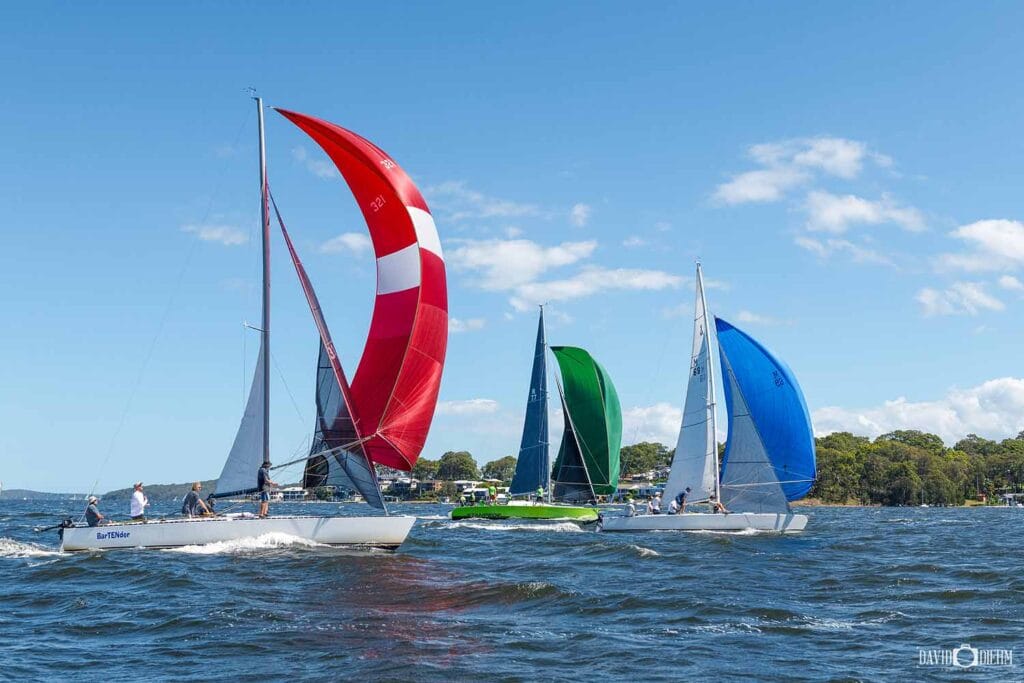
💡 Local Tip. For the best experience, visit Belmont 16s, Warners Bay Foreshore, Toronto Foreshore or Wangi Wangi on a Saturday or Sunday afternoon during the sailing season. Arrive late in the day, enjoy dinner overlooking the lake and stay for sunset, when the combination of golden light, colourful sails and calm water creates one of Lake Macquarie’s most memorable views.
A 15,000-foot tandem skydive offers the ultimate adrenaline rush with spectacular aerial views across Lake Macquarie and the coastline.
Location: Lake Macquarie Airport, Marks Point | Cost: Paid experience | Allow: 2–4 hrs | Best For: Adventure & thrill seekers | Highlights: Tandem skydive • 15,000 feet • Freefall • Lake views • Coastal views | Best Time: Clear mornings | Parking: Free
For one of Lake Macquarie’s ultimate adventure experiences, take to the skies for a tandem skydive from approximately 15,000 feet. After climbing high above the coastline, you’ll jump securely harnessed to an experienced instructor and experience around 60 seconds of freefall, reaching speeds of more than 200 kilometres per hour before the parachute opens.
The adrenaline rush is followed by a peaceful descent beneath the canopy, with spectacular views across Lake Macquarie, Newcastle and the Pacific Ocean, and towards the Hunter Valley on clear days. Tandem skydives depart from Lake Macquarie Airport at Marks Point, with equipment, training and safety briefings provided before the jump. Whether it’s a bucket-list adventure or milestone celebration, skydiving offers an unforgettable way to experience Lake Macquarie from an entirely different perspective.
💡 Local Tip. Book an early morning jump if possible. Visibility is often at its best, the air is typically calmer, and you’ll enjoy the clearest views across Lake Macquarie, Newcastle and the coastline. If you’re bringing family or friends, they can watch the parachutes descend from the airport and celebrate with you after you land.
High-performance aerobatics and spectacular aerial views make this one of Lake Macquarie’s most exhilarating aviation experiences.
Location: Lake Macquarie Airport, Marks Point | Cost: Paid experience | Allow: 1.5–2.5 hrs | Best For: Adventure seekers & aviation enthusiasts | Highlights: Aerobatics • Loops • Barrel rolls • High-G manoeuvres • Aerial views | Best Time: Clear days | Parking: Free
For the ultimate adrenaline rush, take to the skies above Lake Macquarie in the legendary Extra 300L aerobatic aircraft. Departing from Lake Macquarie Airport at Marks Point, the experience combines loops, barrel rolls, steep climbs, high-speed dives and high-G turns with spectacular aerial views across the lake, Swansea Channel and the Pacific coastline.
Flights are operated by Matt Hall Racing’s experienced aerobatic pilots, with a safety briefing provided before taking to the skies. Between the heart-racing manoeuvres, you’ll have time to appreciate a perspective of Lake Macquarie that few people ever experience. Whether you’re celebrating a special occasion or searching for a bucket-list adventure, an aerobatic flight offers one of the most unique and exhilarating things to do in Lake Macquarie.
💡 Local Tip. Bring the family along to watch from the airport viewing areas, where you can see the aircraft take off and land, as well as catch some of the aerobatic manoeuvres from the ground.
Purpose-built trails, flowing singletrack and forest scenery make Awaba Mountain Bike Park one of Lake Macquarie’s best riding destinations.
Location: Mount Faulk Road, Cooranbong | Cost: Free | Allow: 2–4 hrs | Best For: Mountain bikers & adventure seekers | Highlights: Flow trails • Downhill • Cross-country • Technical trails • Beginner skills area | Best Time: Year-round | Parking: Free
Tucked away in the forests of the Watagans, Awaba Mountain Bike Park is one of the Hunter Region’s premier mountain biking destinations, with purpose-built trails winding through beautiful native bushland. The extensive network caters for riders of all abilities, from beginner-friendly development trails to flowing cross-country loops, technical rock features and fast berms.
Experienced riders can take on the park’s challenging downhill trails, including the famous Monkey track, while newer riders can build their skills on easier trails before progressing through the network. Maintained by the Hunter Mountain Bike Association, Awaba regularly hosts mountain biking events while retaining a relaxed, welcoming atmosphere. Whether you’re visiting for a couple of hours or spending the day exploring the trails, Awaba offers one of Lake Macquarie’s best outdoor adventures for mountain bikers.
💡 Local Tip. Visit after a few dry days when the trails are usually riding at their best. Before heading out, check the Hunter Mountain Bike Association website or social media pages for any temporary trail closures or upcoming events, and choose trails that match your riding ability to make the most of your visit.
Waterfront dining, beautiful lake views and colourful sunsets make eating out one of Lake Macquarie’s most enjoyable experiences.
Location: Belmont & Warners Bay | Cost: Varies | Allow: 1.5–3 hrs | Best For: Couples, families & food lovers | Highlights: Waterfront dining • Cafés • Belmont 16s • Lake Macquarie Yacht Club • Sunset views | Best Time: Late afternoon & sunset | Parking: Free
With beautiful lake views and a relaxed atmosphere, waterfront dining is one of the best ways to experience Lake Macquarie. Warners Bay is the region’s best-known lakeside dining precinct, with cafés and restaurants lining The Esplanade overlooking the foreshore. Grab breakfast or lunch by the water, enjoy dinner as the sun sets, or simply pick up takeaway and find a spot on the grass. During the warmer months, Music in the Podium brings live music and a lively atmosphere to the waterfront.
Further south, Belmont offers another great waterfront dining experience, with venues around Belmont 16s, Lake Macquarie Yacht Club and the surrounding foreshore overlooking the lake and its marinas. Whether it’s morning coffee, a long lunch or dinner at sunset, dining beside the water is a perfect way to enjoy Lake Macquarie’s relaxed lakeside lifestyle.
💡 Local Tip. Book an outdoor table around 30 minutes before sunset or grab takeaway and enjoy a picnic on the foreshore instead. If you’re visiting Warners Bay during summer, check whether Music in the Podium is on—it’s one of the best ways to experience the community atmosphere of Lake Macquarie, with live music, families relaxing on picnic rugs and the lake providing a spectacular natural backdrop.
Fresh produce, artisan stalls and a lively community atmosphere make Lake Macquarie’s local markets a great weekend experience.
Location: Across Lake Macquarie | Cost: Free entry | Allow: 2–4 hrs | Best For: Families, food lovers & local shopping | Highlights: Homegrown Markets • Warners Bay Markets • Farmers markets • Local produce • Handmade goods • Street food | Best Time: Weekend mornings | Parking: Free at most locations
Lake Macquarie’s local markets are a great way to experience the region’s relaxed community atmosphere, with fresh food, handmade products, local art, live music and street food all part of the experience. The Homegrown Markets at Speers Point Park, held on the first and third Sunday of each month, are among the largest, with more than 120 stalls set beneath the trees beside the lake.
The Warners Bay Markets, held on the second Saturday of each month, combine boutique stalls and food with a beautiful waterfront setting, while the Lake Macquarie City Farmers Market at Glendale is held every Saturday morning and focuses on fresh produce and artisan goods. Whether you’re browsing local creations, grabbing breakfast or enjoying a morning by the water, the markets offer a relaxed way to experience Lake Macquarie’s local community.
💡 Local Tip. Bring a reusable shopping bag, arrive early for the best selection and don’t rush. Grab a coffee, chat with the stallholders and take time to explore the surrounding foreshore or parks afterwards. The markets are at their best when you treat them as a morning out rather than simply a place to shop.
Contemporary art, lakeside sculptures and beautiful grounds make MAC yapang one of Lake Macquarie’s best cultural experiences.
Location: 2A First Street, Booragul | Cost: Free | Allow: 1–3 hrs | Best For: Art lovers, families & culture seekers | Highlights: Art exhibitions • Sculpture Park • Awaba House • Aboriginal culture • Lake views • Café | Best Time: Year-round | Parking: Free
Set among beautiful gardens on the shores of Lake Macquarie, the Museum of Art and Culture, yapang (MAC yapang) combines contemporary art, outdoor sculpture and spectacular lake views. Formerly the Lake Macquarie City Art Gallery, the museum hosts a changing program of exhibitions, while its peaceful waterfront setting makes it worth visiting even if you’re not usually an art gallery enthusiast.
Outside, the five-hectare Sculpture Park features large-scale works positioned among mature trees and landscaped gardens overlooking the lake, with pathways leading around the grounds and historic Awaba House. With free admission, regularly changing exhibitions, a café and plenty to explore outdoors, MAC yapang offers an enjoyable mix of art, culture and nature and is one of Lake Macquarie’s most distinctive cultural attractions.
💡 Local Tip. Visit in the morning when the sculpture park is at its quietest and the soft light filters through the mature trees, creating beautiful conditions for photography. If you’re visiting on a Wednesday or Saturday, join the free 11 am guided exhibition tour before relaxing with a coffee overlooking Lake Macquarie
The former home and studio of Sir William Dobell offers a fascinating glimpse into the life of one of Australia’s greatest artists.
Location: 47 Dobell Drive, Wangi Wangi | Cost: Admission fee applies | Allow: 1–2 hrs | Best For: Art lovers & history enthusiasts | Highlights: Dobell’s home • Artist’s studio • Guided tours • Australian art • Heritage | Best Time: During opening hours | Parking: Free
Hidden amongst the quiet streets of Wangi Wangi, Dobell House was the home and studio of celebrated Australian artist Sir William Dobell for almost three decades. Originally built as a small holiday cottage in the 1920s, Dobell purchased the property in 1942 and made Wangi Wangi his permanent home, finding inspiration and refuge in the peaceful lakeside surroundings. Today, the heritage-listed house provides a fascinating glimpse into the private life of one of Australia’s most influential artists.
Visitors can explore Dobell’s preserved studio and living spaces, along with photographs, personal possessions and memorabilia that tell the story of his life and remarkable artistic career. Volunteer guides provide further insight into the man behind the paintings, while the intimate setting retains the character of the home in which he lived and worked. For art and history lovers, Dobell House is one of Lake Macquarie’s most unique cultural attractions.
💡 Local Tip. Combine your visit with a stroll along nearby Wangi Wangi Foreshore or enjoy lunch overlooking the lake. Experiencing the peaceful waterfront after touring the house offers a deeper appreciation of the quiet beauty that inspired Sir William Dobell and made Wangi Wangi his home for so many years.
Lakeside parks, swimming, walking trails and fascinating WWII history make Rathmines Park one of Lake Macquarie’s most interesting foreshore destinations.
Location: Dorrington Road, Rathmines | Cost: Free | Allow: 2–4 hrs | Best For: Families, history lovers & outdoor recreation | Highlights: Catalina Memorial • WWII heritage • Lake swimming • Foreshore walks • Playground • Picnics • Catalina Bay | Best Time: Year-round | Parking: Free
It’s hard to imagine that the peaceful shores of Rathmines Park were once home to Australia’s largest flying boat base, playing an important role during World War II. From Catalina Bay, flying boats departed on long-range reconnaissance, rescue and patrol missions throughout the Pacific. Today, the Rathmines Catalina Heritage Walk provides a fascinating glimpse into this remarkable chapter of Lake Macquarie’s wartime and aviation history.
The easy 1.1-kilometre walk follows the foreshore past the Catalina Memorial, interpretive displays and surviving wartime landmarks, but there’s much more to Rathmines Park than its history. Families can enjoy the lakeside playgrounds, open grassed areas, picnic and barbecue facilities, swimming and waterfront paths, making it an easy place to spend a few hours by the lake. With plenty for the kids, beautiful lake views and fascinating WWII heritage, Rathmines Park offers a great mix of history and family-friendly outdoor fun.
💡 Local Tip. Allow extra time after completing the heritage walk to relax beside Catalina Bay. Bring a picnic or coffee and spend a few quiet moments overlooking the water while reading the interpretive signs—it’s surprisingly easy to imagine Catalina flying boats once moored where sailing boats now drift peacefully across the lake.
More Things to Do in Lake Macquarie
With spectacular beaches, an enormous saltwater lake, coastal walks, waterfalls and relaxed waterfront towns, there is no shortage of things to do in Lake Macquarie. Whether you’re visiting for a day, planning a weekend away or exploring your own backyard, the region offers an incredible mix of outdoor adventures, family attractions and beautiful places to visit.
Explore the sea caves at Caves Beach, swim at Belmont Baths or Grannies Pool, cycle the Fernleigh Track, discover waterfalls and rainforest in the Watagans, or enjoy the coastline at Redhead Beach and Catherine Hill Bay. The lake itself opens up even more possibilities, with boating, kayaking, paddleboarding, sailing and fishing, alongside waterfront walks, parks, playgrounds and family-friendly swimming spots.
Beyond the beaches and lake, you’ll find plenty of other Lake Macquarie attractions to explore, from local markets and art at MAC yapang to WWII aviation history at Rathmines Park. You can watch the sunrise over the Pacific, hike through rainforest, enjoy lunch overlooking the water and finish the day watching the sunset from Warners Bay, Valentine or Wangi Wangi.
Whether you’re searching for the best things to do in Lake Macquarie, planning a family day out or looking for new places to visit, I hope this guide helps you discover more of this incredible part of the NSW coast.
For upcoming events, visitor information and more ideas for exploring the region, visit the Lake Macquarie tourism website.
Frequently Asked Questions About Visiting Lake Macquarie
What is Lake Macquarie famous for?
Lake Macquarie is famous for being Australia’s largest coastal saltwater lake. The region is renowned for its beautiful beaches, boating, fishing, sailing, waterfront villages, and outdoor recreation opportunities. Popular attractions include Caves Beach, Catherine Hill Bay, Swansea Channel, Pulbah Island, and the Watagans National Park.
Is Lake Macquarie worth visiting?
Yes, Lake Macquarie is one of New South Wales’ premier coastal destinations. Visitors can enjoy pristine beaches, scenic lakefront parks, boating, fishing, cycling, bushwalking, and waterfront dining. Its combination of natural beauty, outdoor adventure, and relaxed lifestyle makes it an ideal destination for day trips, weekend escapes, and family holidays.
What are the best beaches in Lake Macquarie?
Some of the best beaches in Lake Macquarie include Redhead Beach, Caves Beach, Catherine Hill Bay, Blacksmiths Beach, and Dudley Beach. Each offers a unique experience, from the famous sea caves at Caves Beach to the historic coastal scenery of Catherine Hill Bay and the iconic Shark Tower at Redhead Beach.
How many days do you need in Lake Macquarie?
Most visitors can experience the highlights of Lake Macquarie in two to three days. This allows time to explore the beaches, enjoy lake activities, visit waterfront villages, walk or cycle the Fernleigh Track, and discover natural attractions such as the Swansea Sand Islands and Watagans National Park.
What are the best free things to do in Lake Macquarie?
Many of Lake Macquarie’s most popular attractions are free to enjoy. Visitors can explore Redhead Beach, Caves Beach, Warners Bay Foreshore, Speers Point Park, Belmont Baths, Swansea Channel, and the Fernleigh Track without any entry fees. Swimming, walking, cycling, photography, and wildlife spotting are all popular free activities throughout the region.
What is the best time of year to visit Lake Macquarie?
Lake Macquarie can be enjoyed year-round, but spring and autumn are often considered the best times to visit. These seasons offer mild temperatures, fewer crowds, and excellent conditions for walking, cycling, boating, and exploring the coastline. Summer is ideal for swimming and water sports, while winter provides beautiful clear days and excellent opportunities for photography and whale watching along the coast.
Can you swim in Lake Macquarie?
Yes, swimming is one of the most popular activities in Lake Macquarie, particularly in designated swimming areas, enclosed baths, sheltered bays, and patrolled beaches. Popular locations include Belmont Baths, Grannies Pool, Naru Beach, Swansea Bay, Pelican, the Toronto Foreshore, and numerous waterfront reserves around the lake.
Visitors should always check local conditions, follow safety signage, and swim in appropriate areas, particularly near channels, boat traffic, and deeper sections of the lake. The lake’s generally calm waters provide excellent conditions for families, paddlers, and recreational swimmers, making Lake Macquarie one of New South Wales’ most popular destinations for waterfront recreation.
What is the largest coastal saltwater lake in Australia?
Lake Macquarie is Australia’s largest coastal saltwater lake, covering more than 110 square kilometres. Located on the NSW Central Coast-Hunter border, the lake is renowned for its boating, fishing, sailing, waterfront villages, beaches, and outdoor recreation opportunities.
Can you boat on Lake Macquarie?
Yes, Lake Macquarie is one of Australia’s premier boating destinations. The lake’s expansive waterways, sheltered bays, marinas, and access to the Pacific Ocean via Swansea Channel make it popular for recreational boating, sailing, fishing, kayaking, and paddleboarding.
What fish can you catch in Lake Macquarie?
Lake Macquarie is a popular fishing destination with anglers targeting species including flathead, bream, whiting, tailor, mulloway, and Australian salmon. Fishing can be enjoyed from beaches, jetties, boats, Swansea Channel, and many foreshore locations around the lake.
More Lake Macquarie, Newcastle & Port Stephens Travel Guides
Explore more of the region with my local guides to the best beaches, walks, attractions and places to visit.
Lake Macquarie
Best Beaches in Lake Macquarie NSW – Sea caves, swimming spots, surf beaches and hidden gems.
Best Walks in Lake Macquarie NSW – Coastal walks, lakeside trails, bushwalks and lookouts.
Newcastle
Best Things to Do in Newcastle NSW – Beaches, landmarks, attractions and local favourites.
Best Beaches in Newcastle NSW – Swimming spots, ocean baths, surf beaches and coastal scenery.
Best Walks in Newcastle NSW – Coastal, harbour and bushland walks around Newcastle.
Port Stephens
Best Things to Do in Port Stephens NSW – Beaches, sand dunes, walks, wildlife and must-see attractions.